
What Makes a Reliable Construction Machinery Exporter?

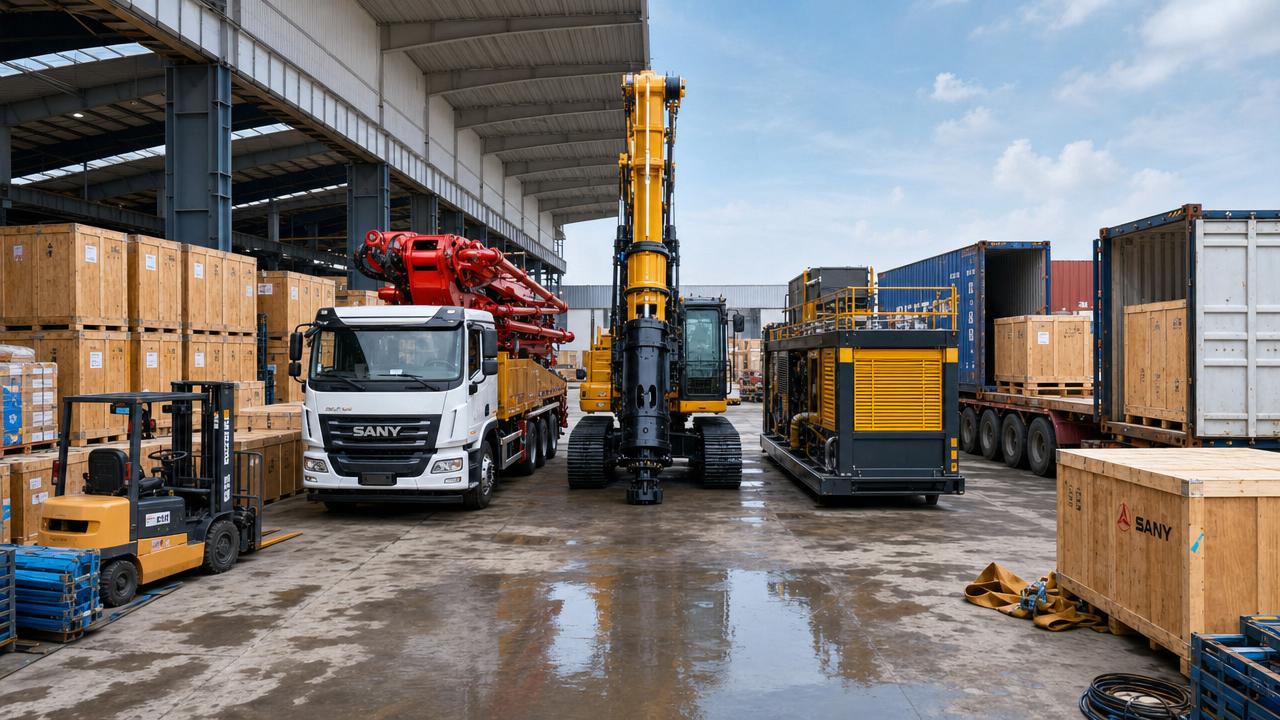
Choosing a reliable construction machinery exporter is not simply a matter of comparing catalog prices or selecting the supplier with the broadest product list. For business evaluators working in concrete, piling, and deep foundation projects, the real question is whether the exporter can consistently deliver compliant equipment, predictable lead times, technical clarity, and long-term support across borders.
In practice, a dependable exporter reduces procurement risk before the machine even leaves the factory. They help buyers verify specifications, manage documentation, support inspections, coordinate logistics, and maintain spare parts availability after commissioning. In contrast, an unreliable exporter may appear competitive at quotation stage but create hidden costs through delays, mismatched configurations, weak communication, and poor service responsiveness.
This article explains what truly makes an exporter reliable, with a focus on the needs of commercial and procurement evaluators assessing construction machinery for high-value projects.
Reliability Starts With Export Capability, Not Just Product Supply
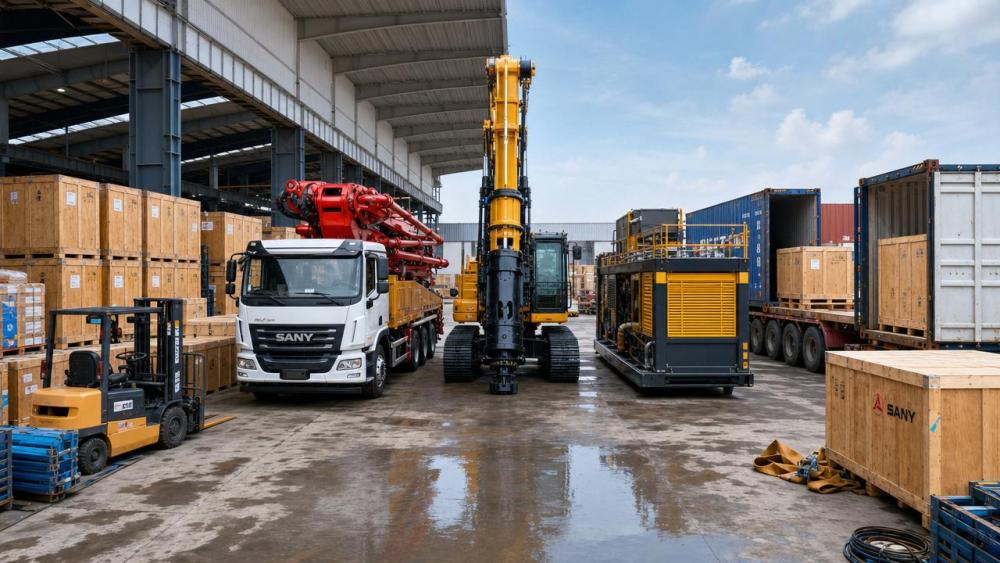
Many suppliers can manufacture or source equipment, but not all of them are capable exporters. That distinction matters. A reliable construction machinery exporter is one that can manage the full chain of international delivery: technical matching, contract clarity, compliance paperwork, packaging, shipping coordination, customs readiness, installation support, and after-sales follow-up.
For evaluators, the first screening principle should be simple: do not judge reliability by brochure quality alone. Judge it by execution capability. Exporters serving concrete pump trucks, mixer trucks, batching plants, rotary drilling rigs, or piling machinery must operate with discipline because these machines are high-value, technically complex, and project-critical. A delayed or wrongly configured machine can affect site productivity, labor planning, cash flow, and contract delivery milestones.
Reliable exporters usually show maturity in how they communicate. They ask detailed application questions, confirm local standards, identify possible shipment constraints early, and explain configuration differences clearly. They do not rush to quote without understanding geology, output requirements, working radius, environmental restrictions, or power conditions.
Can the Exporter Match Equipment to Real Project Conditions?
One of the most important indicators of reliability is whether the exporter understands the jobsite rather than simply selling a model number. In sectors such as deep foundation and concrete systems, equipment suitability directly affects productivity, fuel use, wear rates, safety, and lifecycle cost.
For example, a batching plant for an urban low-emission project may need enclosed dust control, automated weighing, and digital monitoring. A concrete pump truck for high-rise work may require specific boom reach, pressure performance, and stability controls. A rotary drilling rig selected for hard rock conditions needs a different technical conversation than one used in softer formations. A piling machine for noise-sensitive city zones may need solutions aligned with local vibration and environmental limits.
A reliable construction machinery exporter will therefore ask for operating scenarios, target capacity, site constraints, climate conditions, power availability, operator skill level, and maintenance capabilities. They should be able to explain why one configuration is better than another, where optional features create real value, and where buyers can avoid unnecessary cost.
This is especially important for commercial evaluators because misalignment at specification stage often causes the largest hidden losses. Under-specification leads to output bottlenecks and accelerated wear. Over-specification ties up capital in equipment features that the project will never use. Reliable exporters help buyers avoid both mistakes.
Documentation, Compliance, and Traceability Are Non-Negotiable
In international procurement, paperwork is not administrative detail; it is part of the product. A trustworthy exporter must be able to provide complete, accurate, and timely documentation. This includes commercial invoices, packing lists, certificates of origin, inspection records, technical datasheets, operation manuals, spare parts lists, and any market-specific compliance documents required for import or local registration.
For evaluators, document control is one of the fastest ways to separate serious exporters from opportunistic traders. If a supplier is vague about certifications, cannot provide clear serial number traceability, or sends inconsistent specification sheets, that is a warning sign. Machinery import problems often begin with document quality issues rather than product quality issues.
Compliance is especially relevant in today’s market, where environmental regulations, emissions rules, electrical standards, and site safety expectations are tightening. Exporters involved in machinery for concrete batching, pumping, and foundation engineering should understand that buyers are not only purchasing equipment, but also purchasing risk exposure. A machine that fails local compliance checks can create storage costs, project delays, and contract disputes.
Reliable exporters address this early. They confirm destination-country requirements, explain what certifications are available, and identify any adaptation needed before production or shipment. They also maintain consistency between what is quoted, what is manufactured, and what is documented. That consistency is a strong sign of operational reliability.
Delivery Certainty Matters More Than the Cheapest Quote
Price always matters, but for project-based industries, delivery certainty often matters more. A low quotation loses value quickly if the machine arrives late, incomplete, or unsuitable for site conditions. Business evaluators should therefore assess lead time credibility, production planning discipline, and logistics coordination with the same seriousness as unit price.
A reliable construction machinery exporter gives realistic schedules, not just attractive ones. They can explain production status, component dependencies, test procedures, packaging timelines, and shipping options. They also communicate proactively when risks emerge, such as port congestion, documentation delays, or supply chain shortages.
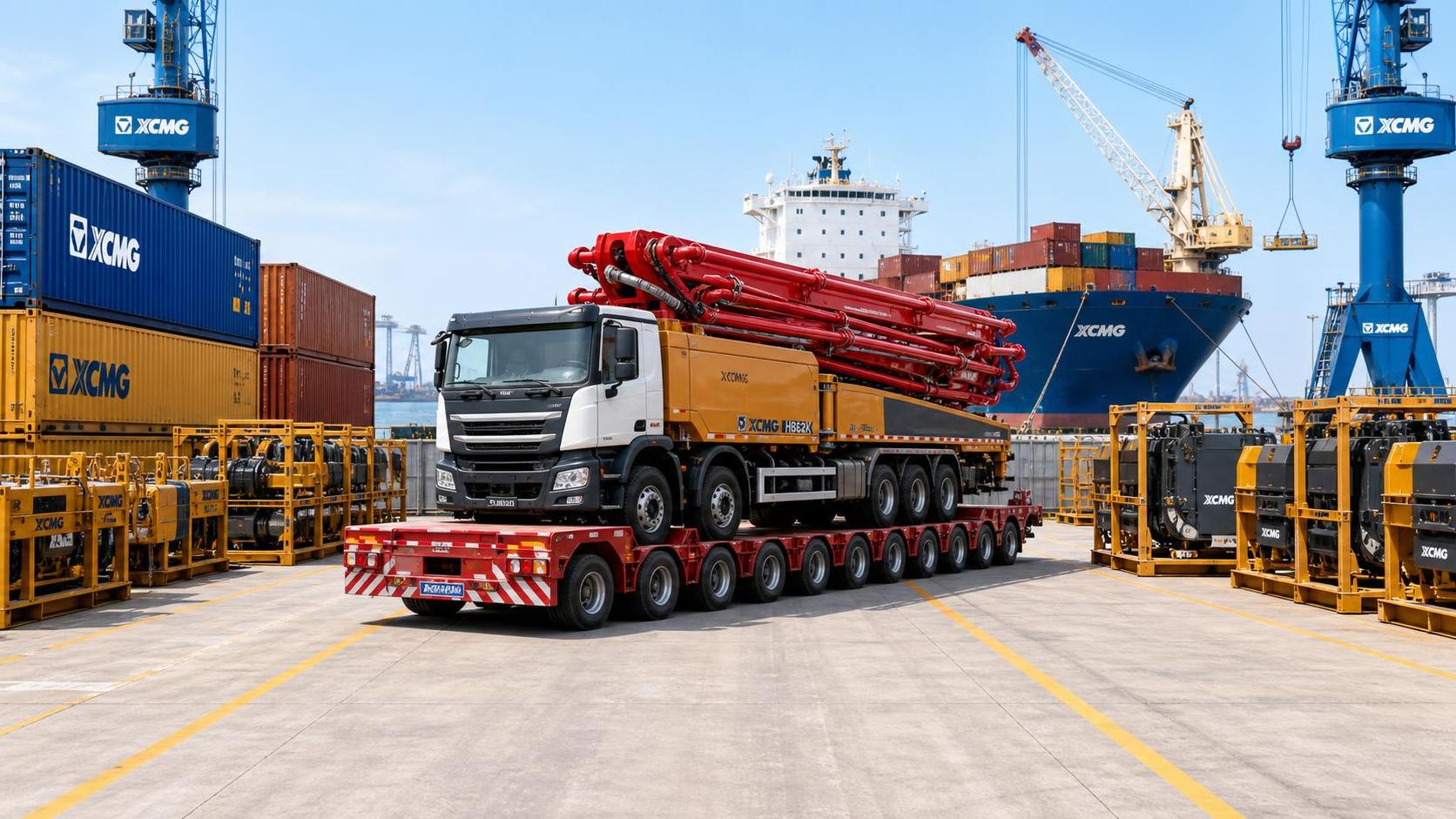
For large and semi-knocked-down equipment such as batching plants, drilling rigs, or specialized piling systems, delivery reliability also includes packaging quality and load planning. Exporters should know how to protect hydraulic systems, electrical components, wear parts, and structural sections during sea and land transit. Poor packing can turn a technically sound order into an on-site installation problem.
Evaluators should ask practical questions: How often does the exporter ship to the target market? Do they provide loading photos and pre-shipment reports? Can they split shipments according to project sequence? What is their process if a critical component is delayed? Clear and structured answers indicate a mature exporter; evasive answers suggest risk.
After-Sales Support Is a Core Reliability Test
A machine purchase is only the beginning of the commercial relationship. In construction machinery, long-term value depends heavily on commissioning support, troubleshooting speed, spare parts supply, and service responsiveness. An exporter that disappears after shipment is not reliable, regardless of how attractive the initial deal looked.
For business evaluators, after-sales capability should be reviewed in commercial terms. Downtime is expensive. A delayed concrete pump on a tower pour, a failed batching plant component during peak production, or a rotary drilling rig waiting for technical clarification can directly affect project progress and penalty exposure.
Reliable exporters usually provide clear service structures. These may include remote diagnostics, multilingual manuals, video support, spare parts recommendations, commissioning guidance, and defined response times. The best exporters also help buyers identify critical wear parts in advance and build a practical initial spare parts package based on machine usage and local supply realities.
For complex systems, support quality often reflects technical depth. If the exporter cannot explain maintenance intervals, common failure points, hydraulic logic, or electrical integration, they may not be able to support the machine effectively after delivery. Strong after-sales capability is therefore not separate from reliability; it is one of its clearest proofs.
Transparency in Commercial Terms Builds Trust
Reliable exporters do not hide risk inside unclear contracts. They define specifications, scope of supply, inspection conditions, payment terms, warranty boundaries, and delivery responsibilities precisely. That level of clarity protects both buyer and seller and reduces the chance of costly disputes later.
Commercial evaluators should be cautious when quotations are overly simplified. A one-line machine description can mask major differences in engine brand, control system level, wear-resistant material grade, automation package, or included accessories. The more complex the equipment, the more detailed the quotation should be.
Transparency also matters in warranty discussions. A dependable exporter will explain what is covered, for how long, under what working conditions, and how claims are processed. They should distinguish between consumables, wear parts, operator misuse, and manufacturing defects. Vague warranty language is a common source of friction in cross-border equipment deals.
Another positive sign is cost honesty. Reliable exporters may not always be the lowest bidder because they include better components, stronger packaging, pre-delivery testing, or more complete support. For serious buyers, this often represents better total value than an initially cheaper but operationally weaker offer.
Reputation Should Be Verified Through Evidence, Not Marketing
Market reputation matters, but evaluators should validate it through proof. A reliable construction machinery exporter should be able to provide references, shipment records, project cases, repeat customer evidence, and technical examples relevant to the buyer’s industry. General claims of “global presence” are not enough.
Ask for examples tied to similar applications. If the buyer needs machinery for foundation engineering in difficult geology, references in comparable ground conditions are more useful than generic export statistics. If the project involves urban concrete production with environmental restrictions, then evidence related to enclosed batching systems, low-emission solutions, or automation upgrades becomes more relevant.
Digital presence can also help, but it should be interpreted carefully. A professional website, product videos, and case studies are useful indicators of seriousness, yet they should support—not replace—documented business capability. Evaluators should cross-check claims with actual technical documents, customer feedback, and shipment history where possible.
A Practical Checklist for Evaluating a Construction Machinery Exporter
To make supplier comparison more objective, business evaluators can use a structured review framework. The strongest exporters generally perform well across several dimensions rather than only one.
First, assess technical understanding. Does the exporter ask intelligent questions about the project and recommend configurations accordingly? Second, review document quality. Are technical specifications, certifications, and commercial terms complete and consistent? Third, examine delivery capability. Are production and logistics timelines realistic and supported by process visibility?
Fourth, test after-sales strength. Is there a clear support mechanism for installation, training, troubleshooting, and spare parts? Fifth, evaluate transparency. Are warranty terms, inclusions, exclusions, and responsibilities clearly written? Sixth, confirm relevant references. Can the exporter demonstrate successful deliveries in similar equipment categories or markets?
Finally, compare total procurement risk instead of headline price. This includes compliance risk, downtime risk, communication risk, and service risk. In high-value machinery procurement, the exporter with the lowest initial quotation is not necessarily the exporter with the lowest commercial risk.
Why This Matters More in Concrete and Deep Foundation Equipment
Reliability evaluation becomes even more important in the concrete and underground engineering sectors because the equipment is deeply tied to project sequencing and structural quality. A failure in a mixer truck fleet, batching plant system, concrete pump, drilling rig, or piling machine does not only affect one asset. It can disrupt a wider chain of site operations.
These sectors also involve demanding operating conditions: abrasive materials, high hydraulic loads, long duty cycles, strict safety expectations, and increasingly complex environmental standards. That means exporters serving these segments need stronger technical literacy and better lifecycle support than those dealing in simpler commodity products.
For procurement and commercial teams, this is where a specialist-oriented exporter or sector-intelligent platform brings value. The best partners understand not only machinery models, but also engineering application logic, regulatory trends, and asset lifecycle economics. That depth improves decision quality and helps buyers avoid selecting equipment on superficial comparisons.
Conclusion
What makes a reliable construction machinery exporter? In short, reliability comes from execution, not promises. A dependable exporter can match equipment to project needs, manage documentation accurately, deliver on schedule, support the machine after arrival, and communicate with commercial transparency throughout the process.
For business evaluators, the most effective approach is to assess exporters through risk reduction rather than simple price comparison. The right exporter protects project timelines, improves equipment suitability, reduces compliance issues, and supports long-term operational performance. In industries such as concrete systems, piling, and deep foundation engineering, that reliability is not a bonus—it is a procurement requirement.
When evaluating your next supplier, look beyond the catalog. The exporter worth choosing is the one that can help your machinery perform successfully not only at the port, but on the jobsite, throughout its service life.
Industry Briefing
Get the top 5 industry headlines delivered to your inbox every morning.