
Construction Safety Gaps That Appear During Equipment Handover

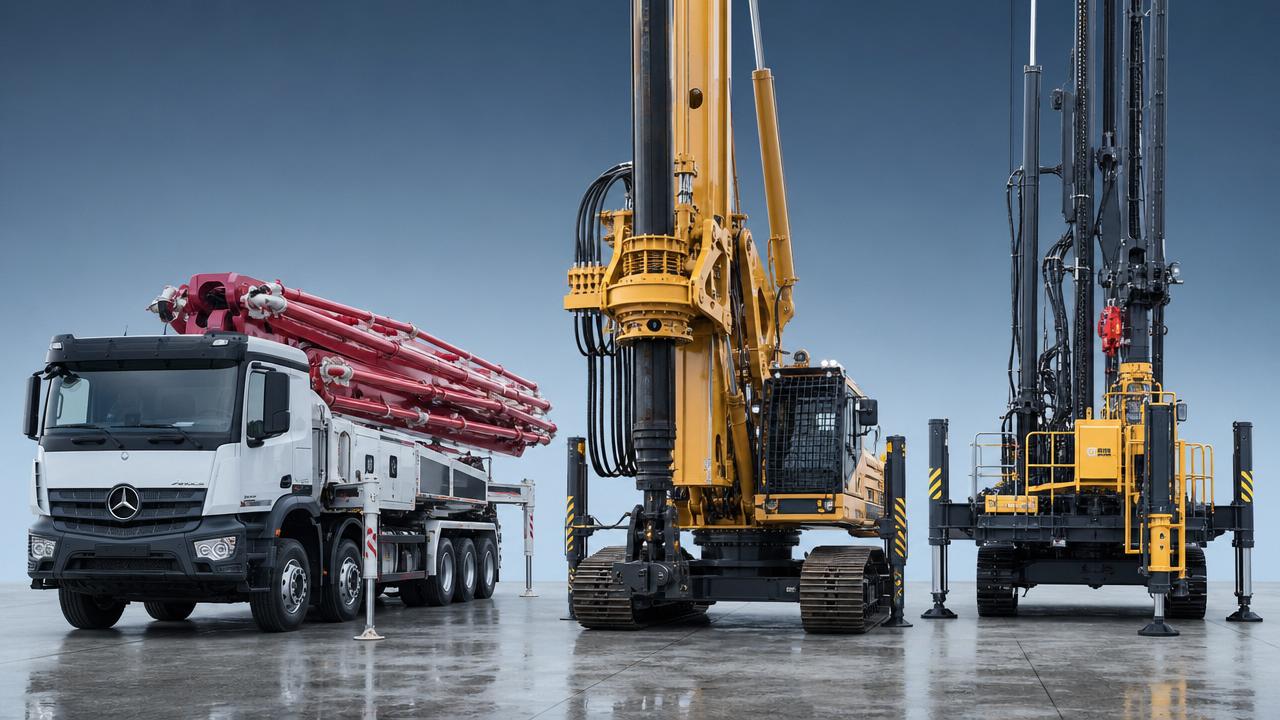
Equipment handover is one of the highest-risk transitions in construction safety, especially when concrete pumping, batching, rotary drilling, and piling equipment moves between suppliers, transport teams, project sites, and operating crews. For safety managers and quality control personnel, the real danger is rarely a single visible defect. It is the combination of incomplete records, unverified machine condition, unclear authority, missing training, and rushed startup pressure. When those gaps align, even a well-maintained machine can become the source of injury, downtime, quality failure, or regulatory exposure.
The core judgment is straightforward: most handover incidents are preventable if the handover is treated as a control point rather than an administrative formality. The most effective approach is to build a handover process that verifies five things before operation begins: machine status, safety devices, documentation, operator readiness, and responsibility boundaries. If one of these is weak, construction safety is already compromised before the first pour, lift, drill, or pile drive starts.
Why Equipment Handover Creates Hidden Construction Safety Risks
Equipment handover sits in a blind spot between delivery and operation. At this moment, accountability can become blurred. The supplier may assume the site team will inspect the machine. The site may assume the machine arrived compliant. Operators may assume maintenance was completed. Safety staff may receive paperwork that looks complete but does not confirm field readiness. This is why handover is often where construction safety gaps first appear.
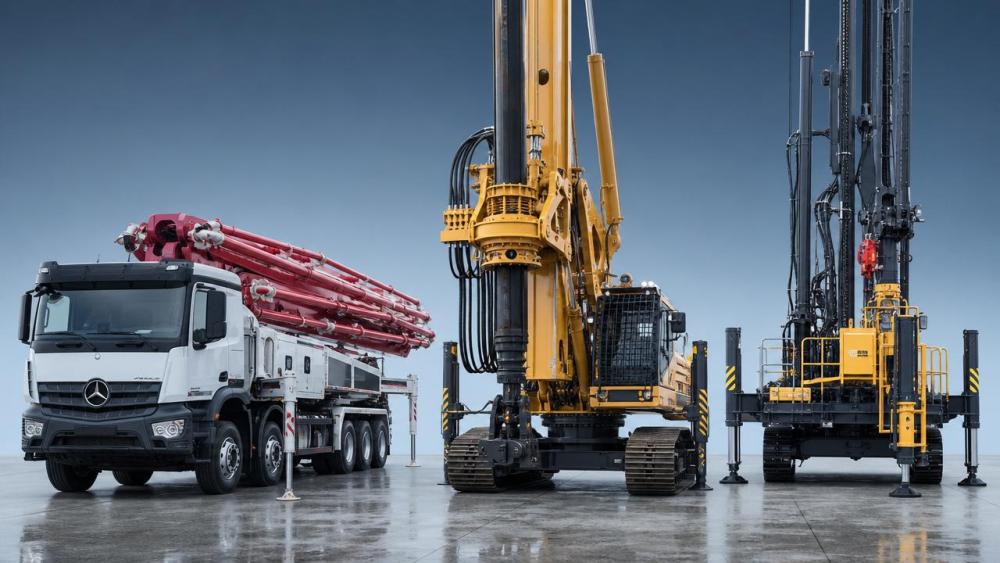
In heavy civil and foundation work, the risk is amplified by equipment complexity. A concrete pump truck may arrive with a valid service history but still have boom wear, outrigger sensor faults, or pipeline hazards. A rotary drilling rig may have acceptable mechanical condition on paper but require different controls, tooling, and ground-risk review for the local geology. A piling machine may be structurally sound yet unsafe to use if load charts, emergency stops, interlocks, or operator familiarization are missing.
For quality control and safety managers, the handover point also affects production quality, not only injury prevention. Incorrect batching calibration, unverified hydraulic pressure, worn delivery lines, or misaligned drilling tools can create structural and process defects long before a formal quality issue is detected. In that sense, handover is where construction safety, equipment reliability, and work quality converge.
What Safety Managers and QC Teams Actually Need to Confirm Before Acceptance
Most target readers are not looking for general safety theory. They need a practical acceptance framework that helps them answer one question: can this equipment be released into operation without creating uncontrolled safety or quality risk? To answer that well, handover should be divided into verifiable checkpoints rather than a single signoff.
First, confirm the equipment identity and scope. Verify serial number, model, attachments, configuration, rated capacity, software or control version where relevant, and site-specific accessories. A surprising number of incidents start because the delivered configuration is not the one expected in planning documents, lift studies, pumping plans, or foundation method statements.
Second, verify the machine’s physical condition. This includes structural members, guards, hoses, couplings, electrical cables, hydraulic lines, fluid leaks, tire or track condition, access ladders, anti-slip surfaces, and all visible signs of fatigue or repair. For concrete and deep foundation equipment, wear parts matter greatly. Delivery pipes, elbows, seals, Kelly bars, drilling tools, leader systems, wire ropes, and vibration components should never be accepted based on appearance alone if measured wear limits are required.
Third, check critical safety functions under controlled test conditions. Emergency stops, limit switches, interlocks, overload protections, boom or mast angle indicators, outrigger systems, alarms, cameras, lighting, braking systems, and lockout points should be tested and recorded. A machine that “mostly works” is not ready for operation. Safety-critical functions must be fully proven, not assumed.
Fourth, review the documentation package. This should include inspection certificates, maintenance history, commissioning records, operator manuals, load charts, calibration records, pre-delivery inspection forms, training evidence, and any statutory certifications required by local regulation. In batching and pumping systems, calibration and pressure-related records are especially important because process deviations can become both safety and quality failures.
Fifth, verify operator and supervisor readiness. Even compliant equipment can be dangerous if the assigned crew does not understand its controls, limits, abnormal responses, emergency shutdown procedure, or daily inspection routine. Handover is incomplete until the receiving team can demonstrate competence, not just receive keys and paperwork.
The Most Common Gaps Found During Handover
One of the most frequent gaps is incomplete transfer of maintenance information. The receiving site may get a service summary but not the unresolved defect list, temporary repair status, or pending replacement items. This creates a false sense of readiness. Safety managers should insist on a clear distinction between completed maintenance, deferred maintenance, and operation-limiting defects.
Another common issue is unclear ownership of inspection tasks. If the dealer, fleet department, subcontractor, and site team each believe someone else checked the same item, some high-risk checks may not happen at all. Construction safety depends on defined responsibility. Every handover should specify who inspected what, when, by which standard, and who has authority to reject the equipment.
A third gap involves undocumented modifications. On construction machinery, field modifications are common: additional lighting, hose routing changes, welded brackets, guarding changes, aftermarket controls, telemetry devices, or revised attachments. These modifications may improve usability, but if they are not assessed for structural, electrical, hydraulic, or operational impact, they can create new hazards and void compliance assumptions.
Training mismatch is another recurring problem. Operators may be experienced on similar equipment but not on the exact model or control logic being handed over. This is especially risky with high-reach concrete pump trucks, automated batching systems, rotary drilling rigs with different crowd systems, or piling equipment using new noise-control or electrified functions. Similar equipment familiarity is not the same as verified competence.
Site-condition mismatch also causes many failures. A machine may be safe in general but unsafe in the actual working environment. Soft ground, confined urban access, overhead lines, slurry areas, restricted swing radius, poor night lighting, or proximity to live traffic can invalidate assumptions made before delivery. Handover should therefore include site fit verification, not only machine inspection.
How These Gaps Show Up in Concrete, Pumping, and Foundation Equipment
For concrete pump trucks, handover risks often center on boom integrity, outrigger deployment, pipeline wear, hydraulic response, and cleaning hazards. A machine can pass a casual visual check while still carrying fatigue risk in boom sections, excessive wear in bends, or unstable deployment behavior on marginal ground. If the handover team does not verify deployment envelope, ground-bearing assumptions, and line condition, the risk of tip-over, hose whip, blockage rupture, or struck-by events rises sharply.
For concrete mixer trucks, the handover process should pay attention to drum rotation function, discharge chute condition, washout systems, reversing controls, braking performance, camera visibility, and access safety for cleaning. These may seem routine, but slips during washdown, vehicle movement incidents, and entanglement during drum-related work remain serious construction safety concerns.
For batching plants, the safety gaps are often less dramatic but equally consequential. QC personnel should verify weighing calibration, interlocks, dust-control systems, conveyor guards, emergency isolation points, sensor functionality, and software parameter control. If calibration status is unclear or lockout procedures are weak, the result may be both personnel exposure and inconsistent concrete output that affects strength, durability, and downstream liability.
For rotary drilling rigs, handover should focus on mast condition, wire ropes, crowd and winch systems, tool locking, cabin controls, slew function, tracking performance, and geotechnical suitability. It is not enough that the rig starts and moves. The receiving team needs to understand how it behaves under the actual bore plan, casing method, spoil handling arrangement, and ground variability expected on site.
For piling machinery, the checklist should extend to leader alignment, hammer or vibrator condition, hydraulic system stability, noise and vibration controls, pile handling interfaces, and exclusion-zone management. Because piling work often takes place in constrained urban environments, any handover gap involving emergency response, communication protocol, or proximity hazard control can escalate rapidly into a serious event.
A Practical Handover Checklist That Supports Real Decision-Making
To strengthen construction safety, safety managers should use a layered checklist instead of a generic one-page acceptance form. The first layer is document review. Confirm compliance certificates, statutory inspections, service records, repair logs, calibration data, and model-specific manuals. Mark any missing item as a release blocker unless a formally approved temporary control exists.
The second layer is technical inspection. Conduct a structured walkaround with maintenance, operations, and safety representation present. Record structural condition, consumable wear, fluid status, guarding, electrical integrity, hydraulic condition, warning labels, and access systems. Use photos and measured values where appropriate rather than relying on broad pass-fail judgments.
The third layer is functional testing. Operate the machine in a controlled area to test normal motion, emergency stop, alarms, interlocks, control responsiveness, and shutdown behavior. If automated or semi-automated systems are involved, verify sensor logic and fail-safe response. For batching and pumping systems, process testing should confirm that operating parameters remain stable within acceptable tolerance.
The fourth layer is operational readiness. Confirm operator assignment, training completion, daily inspection briefing, PPE requirements, emergency response procedure, and communication protocol. Ensure the site method statement and risk assessment reflect the actual machine configuration delivered. This step is essential because even accurate documentation becomes unsafe if it does not match field reality.
The fifth layer is authority and escalation. Every handover should end with a clear release decision: accepted, accepted with restrictions, or rejected pending correction. Restrictions should be specific, time-bound, and visible to everyone involved. A vague note such as “monitor condition” is not a control. If a defect affects safe operation, the machine should not enter service.
How to Reduce Disputes and Strengthen Accountability
A strong handover process does more than prevent incidents. It also reduces disputes between contractor, subcontractor, rental provider, maintenance team, and operator. When documentation, inspection evidence, and acceptance limits are clear, it becomes much easier to determine whether a defect was pre-existing, site-induced, or related to misuse. That clarity protects both safety performance and commercial relationships.
One effective practice is to assign a handover owner for each equipment category. This person does not perform every check personally, but they control completeness. Another useful practice is a standard rejection protocol. Many unsafe releases happen because site teams feel schedule pressure and lack a formal mechanism to reject equipment without conflict. A documented escalation path gives safety managers the backing they need.
Digital tools can help, but only if the process behind them is disciplined. QR-coded records, inspection apps, telematics, and photo-based reporting improve traceability, yet they should support field verification rather than replace it. A digital checklist that auto-closes without true testing can give a dangerous illusion of control. Construction safety still depends on informed observation and decision-making at the point of handover.
Warning Signs That Your Current Handover Process Is Too Weak
If equipment regularly arrives on site and starts work the same day with limited inspection, your process is likely too weak. If the receiving team cannot easily locate the last maintenance record, operator manual, or calibration certificate, your process is too weak. If operators discover defects during first use rather than during handover, your process is definitely too weak.
Other warning signs include repeated disagreements about whether a defect existed before delivery, frequent temporary fixes with no closeout date, acceptance forms signed by people not technically qualified to assess the machine, or handover documents that do not reflect model-specific risks. These are not minor administrative flaws. They are indicators that construction safety controls are being applied after exposure has already begun.
Conclusion: Treat Handover as a Safety Gate, Not a Paper Exercise
The biggest construction safety gaps during equipment handover are usually not dramatic or obvious. They appear as missing details, assumptions, and blurred responsibilities. Yet those small gaps are exactly what allow major incidents, equipment damage, quality failures, and compliance problems to develop. For safety managers and quality control teams, the answer is not more paperwork for its own sake. It is a better release decision built on verified machine condition, complete records, trained operators, tested safety functions, and clear accountability.
In concrete, pumping, batching, drilling, and piling operations, equipment handover should be treated as a formal safety gate. If the machine, the documents, the people, or the site conditions are not ready, the work is not ready. Organizations that understand this do more than avoid incidents. They improve uptime, protect quality, strengthen contractor control, and create a safer operating culture from the first hour of equipment use.


Industry Briefing
Get the top 5 industry headlines delivered to your inbox every morning.