
Modern Construction Techniques Training Gaps Seen on Site

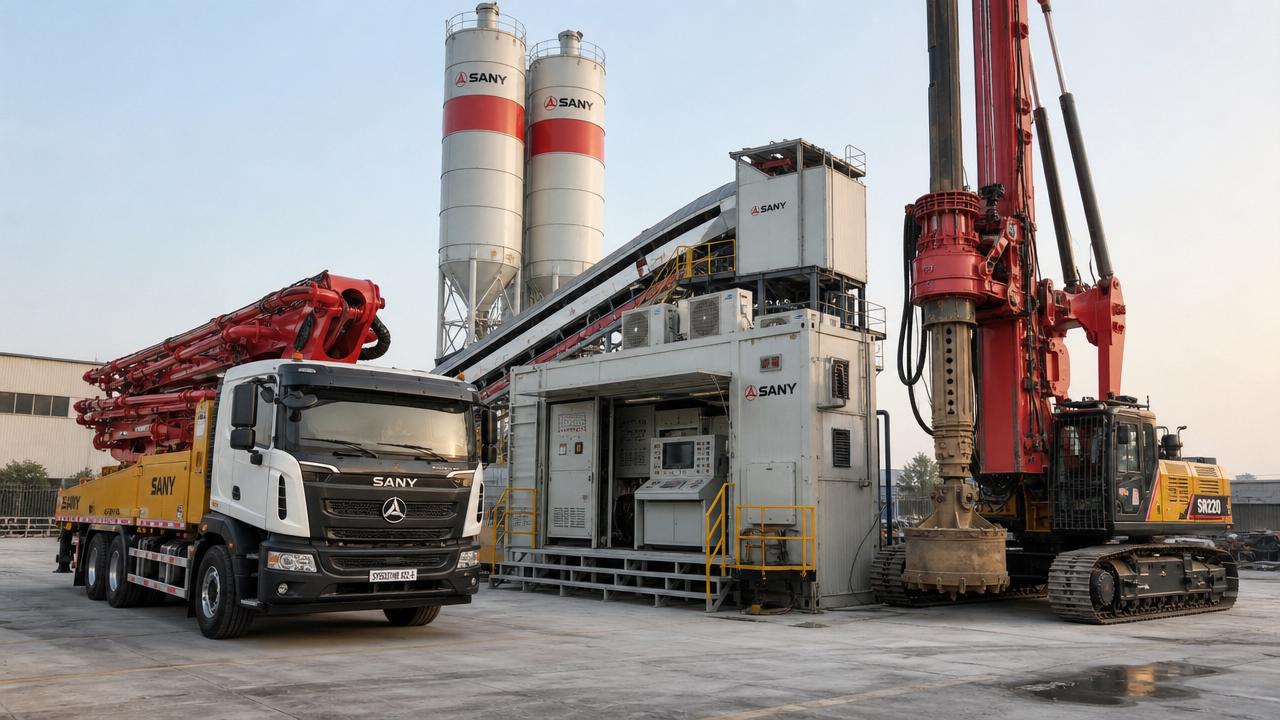
As equipment grows smarter and projects grow more demanding, many sites still face a critical challenge: modern construction techniques training gaps that affect safety, efficiency, and equipment performance. For after-sales maintenance teams, understanding these gaps is essential to reducing downtime, improving service quality, and supporting reliable operation across concrete pumping, batching, and deep foundation machinery.
In practical terms, the issue is no longer limited to operator error. It now includes weak understanding of sensor logic, poor calibration habits, incomplete commissioning records, and delayed troubleshooting on electrically driven, hydraulic, and digitally monitored systems. For service teams working on concrete pump trucks, mixer fleets, batching plants, rotary drilling rigs, and piling machinery, the training gap directly affects site uptime, spare parts planning, and customer trust.
DFCS tracks these changes across the concrete and deep foundation equipment chain. From boom pressure stability to batching accuracy and underground drilling reliability, the biggest field risk often appears where equipment modernization moves faster than workforce preparation. That is why modern construction techniques training should be treated as a service priority, not just an HR topic.
Why Training Gaps Are Expanding on Modern Construction Sites
Training gaps have widened over the last 3 to 5 years because machines have become more integrated while project schedules have become less forgiving. A batching plant that once depended mainly on mechanical adjustment may now include PLC controls, IoT weighing, moisture compensation, dust collection interlocks, and remote diagnostics. A pump truck may combine hydraulic control, boom vibration suppression, and fault-code monitoring in one service workflow.
For after-sales maintenance personnel, this creates a layered challenge. Teams must understand not only component replacement, but also software settings, calibration thresholds, operating conditions, and customer misuse patterns. In many regions, site crews receive only 1 to 2 days of handover instruction, while real mastery may require 4 to 6 weeks of guided application and troubleshooting exposure.
The Most Common Sources of Skill Mismatch
The training deficit usually comes from a mismatch between machine complexity and field learning methods. Many sites still rely on verbal guidance, fragmented manuals, or trainer availability. That approach is weak when the equipment includes pressure sensors, torque monitoring, automated lubrication, or electric drive subsystems that need repeatable service routines.
- Short onboarding cycles of 1 to 3 shifts before full machine use
- Limited cross-training between operator teams and maintenance teams
- Inconsistent documentation of faults, settings, and wear conditions
- High labor turnover during peak infrastructure periods
- Low familiarity with digital diagnostics and parameter interpretation
Equipment Categories with Higher Exposure
Not all equipment faces the same risk. In DFCS-observed field environments, higher exposure usually appears in machines where hydraulic, electrical, and material variables interact continuously. A concrete pump can lose output due to wear, poor mix consistency, or control misreading. A drilling rig can show efficiency loss due to geology, tooling wear, or operator drilling sequence. Without modern construction techniques training, maintenance teams may replace parts too early or too late.
The table below shows where training gaps commonly appear and how they affect service response across major equipment groups.
The key lesson is that modern construction techniques training is not abstract. It directly shapes how quickly service teams identify root causes, how accurately they perform maintenance, and whether the customer sees a fix in 30 minutes or 2 full shifts.
What After-Sales Maintenance Teams Need to Learn First
For maintenance departments, training should be prioritized by fault impact rather than by manual chapter order. In most field conditions, the first 4 knowledge areas should be control logic, wear pattern recognition, calibration methods, and safe shutdown or restart procedure. These topics solve a large share of repeat service calls.
1. Digital and Sensor-Based Diagnostics
Modern machines generate fault codes, live values, and warning trends. Teams should know how to compare setpoint values against real values, how to isolate false alarms caused by wiring or contamination, and how to distinguish software lockout from mechanical failure. Even a basic diagnostic workflow of 5 steps can cut unnecessary component replacement significantly.
- Read active fault and historical fault records
- Verify sensor power supply and signal continuity
- Check hydraulic, electrical, or material-side conditions
- Confirm parameter settings against commissioning baseline
- Test under controlled load before closing the job ticket
2. Material-Equipment Interaction
One major blind spot in modern construction techniques training is the belief that a machine problem is always a machine problem. In reality, concrete slump variation, aggregate moisture, poor washout practices, or inconsistent pile entry conditions can trigger symptoms that look mechanical. Maintenance teams need enough process knowledge to ask the right site questions before changing parts.
3. Predictive Wear Awareness
Wear does not progress evenly. Delivery pipes, cutting edges, drilling tools, seals, and vibrating elements each fail with different patterns. Service staff should be trained to use inspection intervals such as every 250, 500, or 1,000 operating hours depending on duty intensity. This is especially important in hard rock drilling, abrasive aggregate handling, and high-pressure pumping environments.
The matrix below can help after-sales leaders assign training modules based on equipment behavior and service risk.
A structured training map also improves customer communication. When technicians can explain why a pressure fluctuation of 8% matters, or why a weighing error beyond a practical tolerance band should be corrected immediately, service conversations become more technical and more credible.
How to Close Modern Construction Techniques Training Gaps in Real Service Operations
Closing the gap requires more than classroom sessions. Effective programs combine jobsite observation, guided fault analysis, digital records, and periodic competency checks. For after-sales teams supporting multiple machine categories, a 3-stage model is often the most practical: baseline assessment, targeted coaching, and measurable follow-up.
Stage One: Baseline Assessment
Start with a 2-week review of recent breakdowns, repeat service cases, and delayed repairs. Look for patterns such as repeated hose failures, persistent batching deviation, frequent sensor replacement, or drilling efficiency loss in the same geological range. The goal is to identify whether the root issue is technical design, application misuse, or training weakness.
Stage Two: Role-Based Coaching
Training should be separated by responsibility. Field mechanics need inspection and diagnosis depth. Commissioning engineers need parameter and logic depth. Customer-side maintenance contacts need daily routine depth. A single broad lecture rarely works. In most industrial service environments, module-based training of 45 to 90 minutes per topic is easier to retain than full-day theory blocks.
Stage Three: Verification and Documentation
Knowledge that is not verified usually disappears under schedule pressure. After each training cycle, teams should complete a live troubleshooting drill, a calibration checklist, and a shutdown-restart test. Competency should be documented by machine family, not only by employee name. This matters when a service company supports 10 or more regional projects with different equipment configurations.
- Create fault libraries with photos, causes, and corrective actions
- Track mean time to diagnose and mean time to repair monthly
- Set refresh intervals for critical procedures every 90 to 180 days
- Link spare parts consumption to training outcomes and wear patterns
The strongest programs also connect training with machine lifecycle service. For example, a batching plant nearing a major overhaul may need additional instruction on weighing recalibration and dust system maintenance. A pump truck running long boom cycles may need focused coaching on boom stress behavior, lubrication intervals, and pipeline wear inspection. This is where DFCS-style intelligence becomes useful: technical learning should follow actual equipment evolution, not static service manuals.
Selection Criteria for Contractors and Equipment Owners
Contractors and fleet owners increasingly evaluate after-sales partners not only on response speed, but also on whether they can reduce skill-related failures at the site level. When choosing a supplier, training support should be reviewed as carefully as spare parts availability or commissioning lead time.
What Buyers Should Ask
A strong service provider should be able to explain how it handles operator handover, periodic retraining, fault reporting discipline, and update support when equipment becomes more digital or more electrified. Buyers should request evidence of process maturity, such as standard checklists, response windows, and technical escalation paths within 24 to 72 hours for critical failures.
- Is training provided by equipment category and job role?
- Are maintenance routines linked to operating hours and working conditions?
- Can the team support both mechanical and control-system faults?
- Is there a documented process for recurring failure analysis?
- Are updates available for low-carbon, electric, or automated equipment transitions?
Why This Matters for Long-Term Cost
Training gaps raise hidden costs in at least 4 ways: longer downtime, more spare parts waste, lower production consistency, and higher safety exposure. A team that replaces sensors without checking calibration or wiring may solve nothing. A drilling crew that ignores wear progression may consume tools 20% to 30% faster in difficult strata. Over a 12-month period, these patterns can have more financial impact than the original service contract price.
For B2B decision-makers, the most practical view is this: modern construction techniques training is part of asset protection. It protects machine availability, project schedule reliability, and service reputation at the same time.
As concrete systems, pump equipment, and deep foundation machinery continue to adopt automation, electrification, and smarter controls, the field skill gap will remain a decisive issue. After-sales maintenance teams that build structured training around diagnostics, calibration, wear monitoring, and safe procedures are better positioned to cut downtime, improve repair accuracy, and support demanding project environments.
DFCS follows these equipment and service trends with a focus on what matters in real operations: reliable pumping, accurate batching, stable drilling, and durable foundations. If you are evaluating service improvement priorities, planning a training roadmap, or reviewing support requirements for concrete and deep foundation equipment, contact us to get a tailored solution, discuss product-service details, or learn more about practical industry intelligence.


Industry Briefing
Get the top 5 industry headlines delivered to your inbox every morning.