
What is driving heavy equipment electrification in Europe?

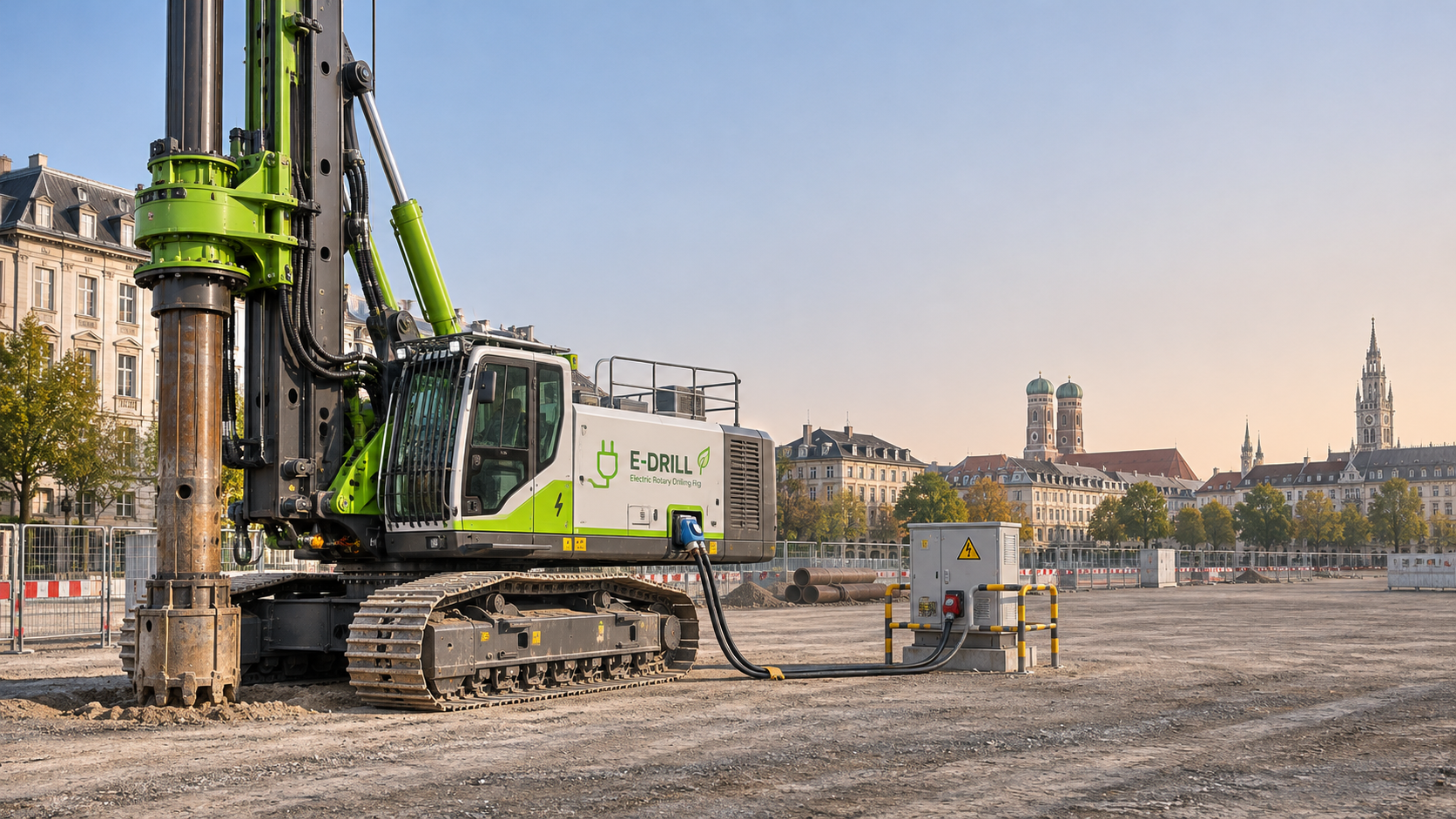
Heavy equipment electrification in Europe is being driven less by a single regulation than by the combined demands of public procurement, urban air quality, noise management and corporate emissions targets. At the same time, battery systems and charging options are making more construction applications commercially viable. The pace of adoption, however, depends on the machine, the project and the power available on site.
For concrete and foundation equipment, the investment decision is not simply whether an electric machine can replace a diesel one. It is whether the complete operating system can deliver the required output: enough power at the right time, suitable charging or grid access, dependable support and a contract that rewards lower-emission operation.
Project requirements are turning emissions into a purchasing decision
Construction equipment operates within a mix of European, national and local policy frameworks. Engine emissions rules have pushed manufacturers to reduce pollutants from diesel machinery, while climate policies and public procurement practices can create separate incentives for lower-carbon construction. These pressures do not amount to a single Europe-wide requirement to electrify every machine.
Instead, demand often appears at project level. A tender may award credit for lower-emission equipment, set site-specific requirements or ask contractors to report the energy and emissions associated with construction activities. The effect on an equipment purchase depends on how much those provisions influence the award and whether suitable machines can meet the work specification.
For a contractor competing regularly for public infrastructure or urban redevelopment work, an electric fleet can therefore support access to opportunities as well as emissions reporting. For a company working mainly on remote sites without such requirements, the same purchase may be harder to justify until charging and utilization improve.
Decision-makers should distinguish between low-emission and zero-emission requirements. A modern diesel engine may reduce certain exhaust pollutants compared with an older machine, but it still produces exhaust on site. An electric machine operating on battery or grid power has no exhaust at the point of use, although electricity generation and equipment manufacturing still contribute to its wider emissions footprint.
Urban sites place a premium on cleaner, quieter operation
Air quality and noise restrictions are especially relevant where construction takes place near homes, offices, hospitals or transport infrastructure. Removing the diesel engine from a machine can reduce local exhaust exposure and eliminate engine noise during electric operation. That can make an electrified option attractive even where fuel savings alone would not justify the investment.
Noise benefits need careful interpretation. An electric piling rig can still produce substantial noise from the piling process itself. Drilling, material handling, truck movements, hydraulic components and concrete discharge can also remain audible. Equipment selection must therefore consider the whole operation, not just the power source.
For indoor, underground or partially enclosed work, the absence of engine exhaust at the machine can also improve working conditions and reduce reliance on measures used to manage diesel fumes. Ventilation and other controls may still be necessary for dust, fumes from other equipment and site safety.
Customer carbon targets are changing what buyers ask for
Developers, infrastructure owners and main contractors increasingly want a clearer account of emissions across their projects. Equipment energy use sits within a wider picture that also includes concrete production, materials transport, temporary works and the operation of completed assets.
This creates demand for information as well as machines. A contractor may need to provide electricity consumption, fuel use, operating hours and evidence of how equipment was powered. A manufacturer’s claim that a machine is electric is not, by itself, a project emissions calculation.
The carbon benefit depends partly on the electricity used. Grid electricity, renewable supply arrangements and temporary generation can lead to different results. A battery machine charged from a diesel generator may still offer local noise or exhaust benefits while operating, but the generator’s fuel use and emissions must be included when assessing the overall system.
For concrete operations, the distinction matters across equipment boundaries. An electric mixer truck, an electric pump and a grid-connected batching plant address different parts of the supply chain. Electrifying one does not automatically make the concrete delivered to a site low carbon.
Technology has widened the options, but duty cycle still decides
Improved batteries, power electronics and electric drivetrains have made electric operation practical for more types of construction equipment. Manufacturers can use battery power, a direct grid connection or hybrid configurations to match different operating patterns. The right architecture depends on energy demand, peak power, mobility and access to electricity.
A machine that works at a fixed location can benefit from a cable connection because it may avoid carrying enough battery capacity for an entire shift. A mobile machine needs more flexibility, but its usable working time depends on the battery, the load and the opportunity to recharge. Hybrids can reduce engine operation in suitable conditions without eliminating fuel use or exhaust altogether.
For a rotary drilling rig, average energy consumption alone can conceal the challenge. Drilling through changing ground conditions may create sustained high loads, while positioning and handling consume energy in a different pattern. A machine specified for an average day may need a different charging plan when hard ground, longer shifts or an unexpected change in the drilling sequence increases demand.
Concrete pumping presents a different problem: energy must be available when concrete arrives, and interruptions can disrupt the pour. Buyers should examine continuous pumping demand, peak loads, boom and hydraulic functions, and what happens if the planned power supply is unavailable. The best solution may be a battery-electric, grid-connected or hybrid configuration depending on the project and the equipment available.
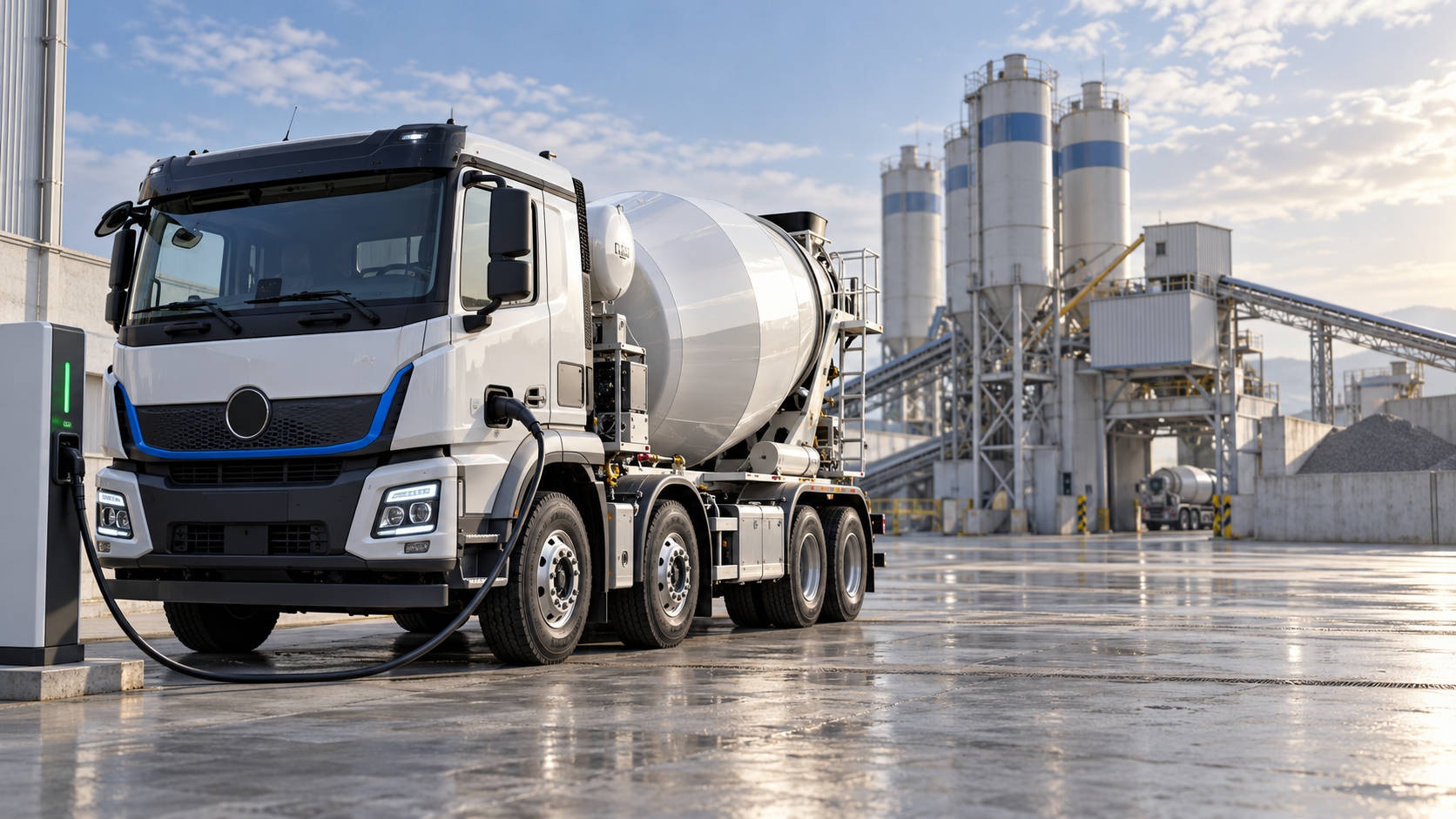
For mixer trucks, the road drivetrain and the mixer drum are separate energy users. An electrified drum on a diesel truck does not have the same operating or emissions profile as a battery-electric truck with an electric drum. Payload, delivery distance, waiting time and access to charging at the batching plant all affect suitability.
Site power is becoming part of the equipment specification
A machine can meet its technical requirements and still fail commercially if the site cannot power it reliably. Construction sites are temporary, power demand changes as work progresses, and the permanent grid connection may not be available when foundation work begins.
The first question is not simply how much electricity a machine uses in a day. It is how much power is required at the same time as other loads, including cranes, site offices, lighting, pumps and other charging equipment. The available connection, distribution equipment, cable routes and charging schedule all affect whether the planned fleet can operate.
A battery can shift charging away from peak work periods, but it does not remove the need for sufficient energy over the operating cycle. Temporary storage can help manage peaks where an appropriate supply exists; it also adds cost, space and another asset to maintain. Temporary generation may provide flexibility, but its fuel consumption, local emissions and noise can undermine the reason for choosing electric equipment.
Early coordination between the equipment supplier, electrical contractor, site management and power provider can expose these constraints before a fleet is committed. This is particularly important for foundation contractors mobilizing before the rest of the site infrastructure is complete.
Where electrification fits across concrete and foundation work
Batching plants are a natural place to assess grid-connected equipment because much of the operation is stationary. The commercial case depends on the existing electrical supply, production schedule and the loads created by mixing, conveying and associated systems. Electrifying plant equipment should be considered alongside dust control, material handling and concrete formulation rather than treated as a complete low-carbon solution.
Concrete mixer trucks are more dependent on route length, payload and depot infrastructure. A predictable cycle between a plant and nearby projects can make charging easier to schedule. Long or variable journeys, multiple deliveries and limited time at the depot make energy planning more difficult. Additional vehicle weight can also affect legal payload and the number of trips required, depending on vehicle configuration and applicable rules.
Concrete pumps combine transport and demanding site operation. Buyers need to establish which functions are electrified and whether the equipment can sustain the specified pumping work. A machine that performs well on a short, accessible pour may face a different duty on a high-rise project or a long pipeline.
Rotary drilling and piling equipment can benefit from reduced engine exhaust and noise in constrained urban locations, but the ground and construction method remain decisive. Grid access, cable management, mobility around the site and peak demand must be considered alongside drilling depth, tooling and the expected ground profile. In some applications, changing the piling method may have a larger effect on noise than changing the machine’s power source.
The commercial case extends beyond purchase price
Electric equipment often requires a larger initial commitment once the machine, chargers, electrical work and operator training are considered. Potential savings can come from energy use and maintenance, but neither is automatic. Electricity tariffs, demand charges, utilization, service arrangements and the cost of charging infrastructure can materially change the outcome.
Compare alternatives over the expected ownership or contract period using the same duty cycle. Include downtime, mobilization, charging time, insurance, financing, maintenance and a realistic assumption for residual value. For hired equipment, check which party supplies power, pays for charging infrastructure and carries the risk of an interrupted connection.
Utilization is particularly influential. An expensive specialist rig used intensively on projects that value low-emission operation has a different business case from one that sits idle between short contracts. Conversely, a cheaper diesel machine may become the more costly choice if it cannot qualify for the projects the contractor intends to pursue.
Battery condition and support also matter to lifecycle value. Buyers should understand warranty coverage, service access, replacement arrangements and the information available on battery health. These considerations affect both operational continuity and the confidence of a future buyer.
What should happen before committing to a fleet?
Start with the projects most likely to create demand for electric operation, then work backward from their constraints. A useful assessment should establish:
- Commercial demand: Which upcoming tenders reward or require lower-emission equipment, and for which activities?
- Actual duty: How long must the machine work, under what load, and how much interruption can the operation tolerate?
- Power availability: What connection and charging capacity will exist at each stage of the project, including early foundation works?
- Operational fallback: How will the job continue during a power interruption, charging failure or unusually demanding shift?
- Lifecycle responsibility: Who pays for infrastructure, energy, maintenance and removal or relocation of charging equipment?
A staged fleet transition can preserve flexibility while building the operating data needed for larger commitments. Fixed or predictable applications may be suitable early candidates; highly mobile, power-intensive or remote work may justify a hybrid or conventional machine for longer. The investment becomes more defensible when the equipment, site power and project contract are evaluated together.
 How infrastructure spending affects deep foundation contractor demandTime : Nov 10, 2026
- What is driving heavy equipment electrification in Europe?Time : Nov 06, 2026
- How electrification is shaping construction equipment trends in EuropeTime : Oct 29, 2026

Industry Briefing
Get the top 5 industry headlines delivered to your inbox every morning.