
How infrastructure spending affects deep foundation contractor demand

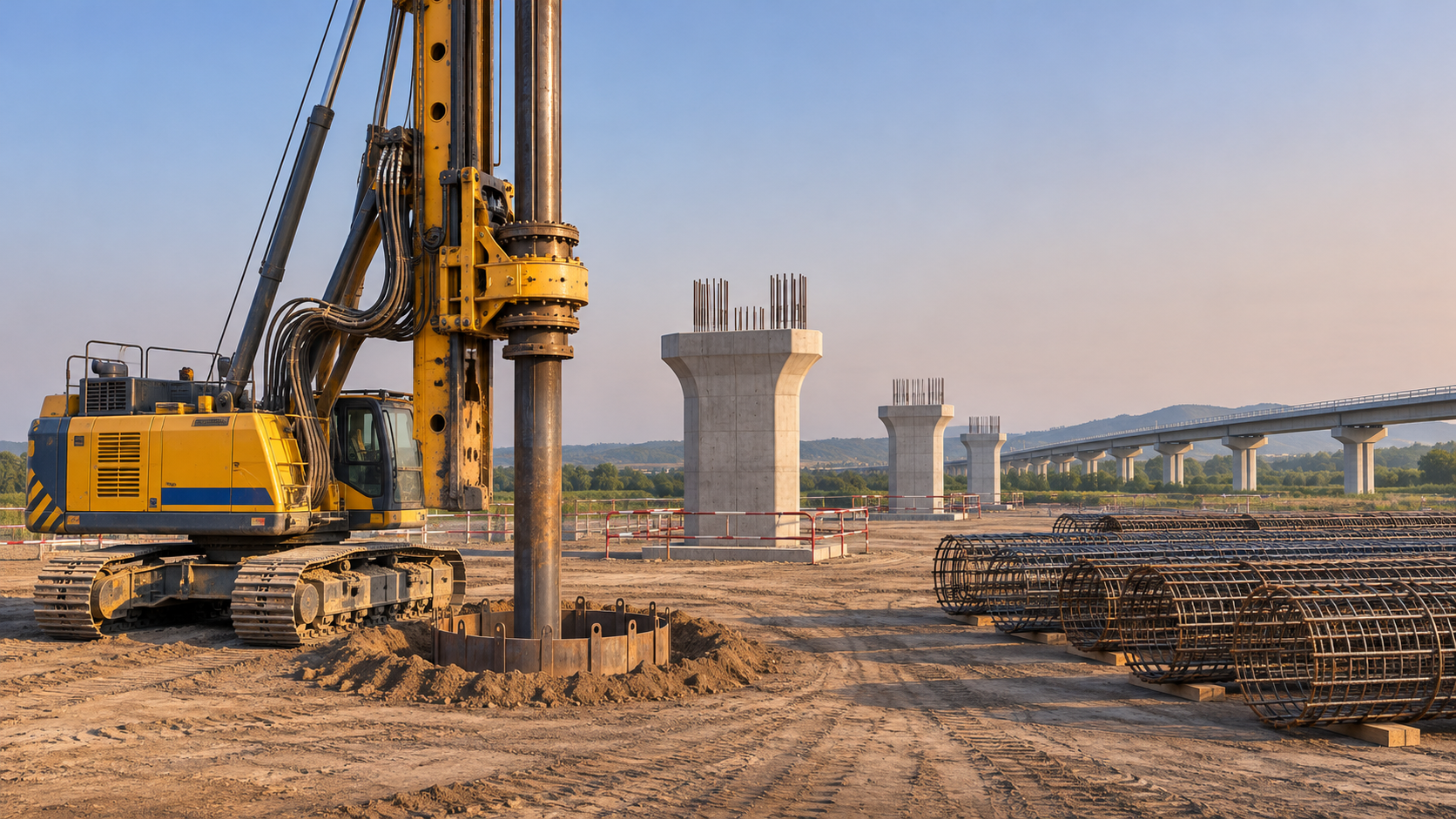
Infrastructure spending can reshape deep foundation contractor demand, but funding announcements alone do not guarantee a steady flow of piling contracts. Project approvals, procurement schedules, ground conditions, and equipment availability all influence when and where opportunities emerge. For business evaluators, understanding these links is essential to assessing contractor backlogs, capacity needs, and potential returns. This article examines how public and private infrastructure investment translates into demand for deep foundation services and the factors that can accelerate or constrain market growth.
The distance between a funding announcement and a piling contract
A new infrastructure budget is a signal of potential activity, not a direct measure of work available to foundation contractors. Funding may cover design, land acquisition, utility relocation, maintenance, or equipment that requires little piling. Even when a project ultimately needs deep foundations, its scope may change as engineers investigate the site and refine the design.
The commercial sequence usually moves from funding approval to project authorization, design, permitting, procurement, and construction. Foundation packages can be tendered by the owner, included in a main contractor’s scope, or procured separately under an early works arrangement. The route matters: a project that appears active in public announcements may still be far from a subcontract award.
Evaluators should distinguish among announced investment, committed funding, contracts awarded, and work released for construction. Each step reduces a different uncertainty. An award, for example, may establish a contractor’s role without confirming when the site will be accessible or how much of the design will remain unchanged.
Public and private spending also respond to different pressures. Public projects can depend on budget cycles, approvals, and procurement challenges. Private developments are often sensitive to financing costs, customer commitments, and expected returns. Both can be delayed by permitting or ground investigation, so neither funding source should be treated as a guaranteed stream of foundation work.
Which infrastructure projects create the most foundation work?
The type and location of spending matter more than the headline budget. A large resurfacing program may generate substantial construction activity with limited deep foundation work. A smaller bridge replacement on weak ground could require a demanding piling package, temporary access, and extensive testing.
Transport projects often produce foundation opportunities at bridge piers, elevated structures, stations, and retaining works. Ports and waterfront facilities may require piles or retaining systems suited to marine exposure and restricted access. Energy, water, and industrial projects can create demand for foundations beneath heavy structures, equipment, or tanks, although the final solution depends on loads and site conditions.
Geography changes the economics. Soft soils, variable ground, groundwater, seismic design requirements, or deep bearing strata may favor deep foundations over shallow alternatives. Urban projects add another layer of constraints: existing utilities, adjacent structures, headroom, working hours, noise, and vibration can narrow the methods available.
For market sizing, classify projects by likely foundation intensity rather than applying a single percentage of total infrastructure spending. A pipeline weighted toward bridges and complex waterfront structures has a different demand profile from one dominated by routine road maintenance, even if the total budgets are similar.
Ground conditions determine who can compete
A rising project count does not necessarily benefit every contractor. The work may call for driven precast piles, bored piles, micropiles, diaphragm walls, or other ground engineering methods. The choice depends on structural requirements, the ground profile, access, environmental limits, and the project team’s design decisions.
Consider two otherwise similar bridge packages. One site may allow driven piles with straightforward access; another may have nearby structures sensitive to vibration and require a bored solution. The second package could favor a contractor with rotary drilling capability, suitable tooling, spoil management arrangements, and experience working under tighter site controls. Neither method is inherently preferable without the project details.
The quality of geotechnical information is therefore a commercial issue, not just an engineering detail. Ask whether bidders have access to borehole records, groundwater observations, obstructions data, and a clear allocation of differing site condition risk. Limited investigation can leave a contractor exposed to unexpected rock, buried obstructions, unstable boreholes, or changes in pile length. It can also make competing bids difficult to compare.
Technical capacity should be assessed against the expected mix of work. A fleet of rigs is useful only if the machines, attachments, crews, and maintenance support match the geology and construction method. Tool wear in hard rock, for example, affects both consumable costs and production rates; a rig’s nominal capability alone does not establish its practical performance on a particular site.
Backlog is useful, but its quality matters more than its size
Infrastructure investment can build a contractor’s backlog before it produces revenue or cash. A strong order book is encouraging, but a headline figure can conceal delayed starts, provisional quantities, low-margin work, or concentration in a small number of projects.
A more useful review separates signed and funded work from preferred-bidder positions and prospects. It also tests expected start dates against site access, design completion, permits, and the main contractor’s schedule. Where possible, compare backlog with the resources needed to deliver it: rig types, trained crews, subcontractors, bonding capacity, and working capital.
Contract terms can alter the value of the same physical work. Unit-rate arrangements may provide a clearer mechanism for changes in measured quantities, while lump-sum work can transfer more quantity or productivity risk to the contractor. The actual exposure depends on the wording, including treatment of ground conditions, standby time, variations, escalation, and payment. A large backlog with unfavorable risk allocation is not automatically a sign of attractive future earnings.
Watch customer and project concentration as well. Several awards linked to one major program may look diverse on a project list but still depend on the same funding source or construction schedule. Conversely, a contractor serving multiple project types may have a more resilient pipeline, provided it has the technical capability to deliver each one.
Capacity constraints can turn demand into higher costs
When several projects reach construction together, competition for experienced operators, engineers, rig mechanics, and specialist subcontractors can intensify. A contractor may win more work but struggle to staff it, particularly if projects are geographically dispersed or require different methods. Mobilization time and the availability of spare parts matter as much as the number of machines on a fleet list.
Concrete supply is another potential bottleneck for cast-in-place foundations. A bored pile operation depends on coordinated drilling, reinforcement placement, and concrete delivery. Restrictions on site access, an unreliable supply schedule, or limited pumping capacity can interrupt the sequence. Evaluators should examine the local batching and mixer-truck network, contingency arrangements, and the suitability of pumping equipment where required.
The Global Deep Foundation & Concrete Systems (DFCS) brings these equipment and supply-chain topics into the same frame: rotary drilling rigs and piling machinery determine part of the foundation contractor’s capacity, while batching plants, mixer trucks, and concrete pumps influence delivery of concrete-intensive work. Following equipment availability alongside project awards can reveal constraints that a spending forecast alone misses.
Low-carbon requirements are changing bid preparation
Some project owners now ask bidders to address emissions, material use, noise, or construction impacts in greater detail. The effect on contractor demand is not simply a shift toward one machine type. Requirements vary by project and jurisdiction, and technical suitability remains essential.
A lower-emission concrete mix may require coordination among the designer, concrete supplier, and contractor to confirm strength development, workability, placement requirements, and acceptance criteria. Electrified equipment may reduce on-site exhaust where suitable, but charging access, power availability, duty cycle, and mobilization arrangements need checking. In dense areas, a quieter or lower-vibration piling method may be valuable, provided it can meet the design and ground conditions.
These requirements can affect bid costs and lead times before construction starts. Contractors able to document their proposed methods and coordinate suppliers may be better prepared for a tender; evaluators should still test whether the specified approach is practical at the site and included in the price.
Building a more useful demand forecast
Start with a project-by-project pipeline rather than a single infrastructure spending total. Identify the owner, funding status, expected procurement route, likely foundation scope, and current stage of design. Then map the projects against local ground conditions and the capabilities of contractors likely to bid. Public procurement notices, owner capital plans, tender documents, and contractor disclosures can help, but their dates and scope should be checked against later updates.
Use a range of scenarios for timing and conversion. A base case might include projects with credible funding and defined procurement milestones; a more cautious case can delay those still awaiting permits or detailed design. Avoid counting the full value of a project as foundation revenue, and avoid counting the same package twice when it appears in both owner announcements and a main contractor’s pipeline.
The strongest signal of deep foundation contractor demand is not a large budget by itself. It is a set of funded projects moving toward procurement, with identifiable foundation needs and schedules that contractors can realistically staff and equip. Before drawing a conclusion, check what has changed since the last forecast: a revised design, a delayed permit, a newly awarded package, or a shortage of suitable rigs may matter more than another headline spending announcement.
 How infrastructure spending affects deep foundation contractor demandTime : Nov 10, 2026
- What is driving heavy equipment electrification in Europe?Time : Nov 06, 2026
- How electrification is shaping construction equipment trends in EuropeTime : Oct 29, 2026



Industry Briefing
Get the top 5 industry headlines delivered to your inbox every morning.