
Mega-Infrastructure Projects: Equipment Trends Shaping 2026

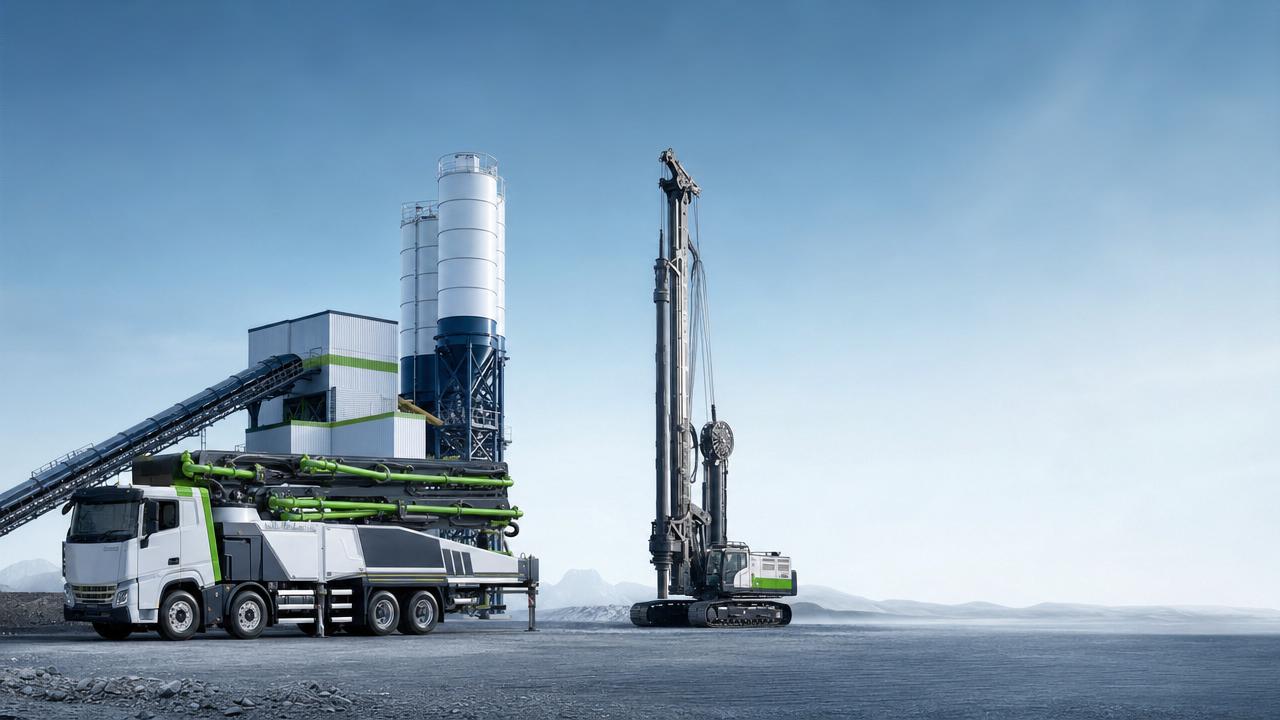
As mega-infrastructure projects accelerate toward 2026, equipment selection is becoming a decisive factor in project efficiency, safety, and sustainability. From concrete pump trucks and batching plants to rotary drilling rigs and piling machinery, new trends in electrification, automation, and performance under complex ground conditions are reshaping how major civil works are planned and executed.
Why a Checklist Matters for Mega-Infrastructure Projects in 2026
Mega-infrastructure projects now face tighter emission rules, harder geotechnical conditions, and stricter delivery schedules. Equipment decisions made early can lock in cost, productivity, and compliance outcomes for years.
A checklist approach reduces selection bias. It helps compare concrete systems, pumping assets, drilling rigs, and piling machinery against real project constraints instead of brochure claims.
For complex civil works, the best equipment is rarely the biggest unit. It is the machine set that matches geology, logistics, carbon targets, maintenance access, and digital coordination demands.
Core Equipment Checklist for Mega-Infrastructure Projects
Use the following checklist to evaluate equipment trends shaping 2026 and to align machine fleets with project execution realities.
- Prioritize electrification readiness by checking battery range, charging windows, hybrid backup logic, and grid compatibility for mixer trucks, batching plants, and auxiliary systems.
- Verify pumping performance under high-rise or long-distance delivery conditions, including boom stability, hydraulic pressure consistency, pipe wear rates, and anti-segregation control.
- Match batching plant accuracy to specification risk by reviewing IoT weighing precision, moisture correction, dust control, enclosed handling, and recipe traceability.
- Assess drilling capability against local strata, especially cobbles, quicksand, fractured rock, and hard formations that can sharply increase bit wear and hole instability.
- Select piling machinery by installation method, noise limits, and bearing layer depth, comparing vibratory, static press-in, and hydraulic impact options.
- Check automation depth instead of surface-level smart features, focusing on remote diagnostics, predictive maintenance alerts, machine positioning, and digital production records.
- Review transport and assembly constraints, including oversize permits, crane support needs, site entrance geometry, and teardown time between work fronts.
- Measure lifecycle efficiency through fuel or power consumption, wear-part replacement cycles, service interval length, and uptime support from regional service networks.
- Confirm safety performance through anti-collision systems, boom motion control, overload protection, mast stability monitoring, and emergency shutdown access.
- Compare carbon compliance data, including embodied operational emissions, dust suppression performance, noise output, and readiness for zero-emission urban work zones.
Key Equipment Trends Reshaping Mega-Infrastructure Projects
Electrification Moves Beyond Pilot Use
In 2026, mega-infrastructure projects will not treat electrification as a branding exercise. Electric mixer trucks, hybrid pump systems, and low-emission batching plants are becoming bid-sensitive assets.
The practical question is energy continuity. Equipment must work through peak pours, restricted charging windows, and unstable site power conditions without slowing the critical path.
Automation Becomes a Productivity Tool
Automation in mega-infrastructure projects is shifting from isolated machine intelligence to connected workflow control. Batching, pumping, drilling, and piling systems increasingly share production and condition data.
That matters because downtime often starts outside the machine itself. Poor dispatch timing, inconsistent concrete quality, and unplanned tool wear can now be detected earlier.
Ground Complexity Drives Specialized Rig Selection
Many mega-infrastructure projects are expanding into coastal zones, dense urban corridors, and transport hubs with difficult subsurface conditions. Standard rig configurations are often no longer sufficient.
Rotary drilling rigs need stronger torque management, smarter crowd control, and more resilient tooling packages. Piling machinery also needs better vibration control where settlement risk is sensitive.
Application Notes by Project Scenario
High-Rise Urban Construction
Urban mega-infrastructure projects typically face tight staging areas, strict noise limits, and high pumping demands. Compact yet high-pressure concrete pump trucks and enclosed batching systems perform best here.
Static press-in piling equipment gains importance in dense districts. It reduces noise and vibration while helping foundation work continue near active transport lines or occupied buildings.
Transport Corridors and Bridges
Bridge and corridor mega-infrastructure projects demand mobility and rapid setup. Equipment must relocate fast, maintain stable output, and handle varying access conditions across long alignments.
Rotary drilling rigs for deep foundations should be chosen with attention to casing needs, hole cleaning efficiency, and performance consistency in alternating soft and hard layers.
Ports, Energy, and Coastal Works
Coastal mega-infrastructure projects often combine corrosive exposure, unstable soils, and demanding logistics. Equipment durability and maintenance accessibility become as important as rated output.
Concrete systems should support precise mix control for marine-grade specifications. Piling machinery must also tolerate long duty cycles and difficult pile driving resistance patterns.
Commonly Overlooked Risks
Ignore wear-part economics, and a low-priced rig can become a cost amplifier. Tool consumption in abrasive rock or long pumping lines can quickly erase any upfront savings.
Overestimate smart features, and integration gaps will appear during execution. Many mega-infrastructure projects buy connected machines that still cannot exchange useful operational data.
Undercheck service reach, and downtime stretches longer than expected. Regional parts support, field technicians, and remote troubleshooting capacity should be validated before fleet commitment.
Treat emission compliance as secondary, and later redesign costs may rise. Urban projects especially can face operational restrictions if equipment falls short of local low-carbon requirements.
Practical Execution Recommendations
- Build a geotechnical-equipment matrix before final machine selection. Link soil profiles, depth targets, and production rates to rig, tooling, and piling method choices.
- Run a full pour-and-delivery simulation. Test batching capacity, truck rotation, pumping distance, and standby planning under peak output assumptions.
- Request measurable digital functions. Ask for data fields, reporting intervals, alarm logic, and integration pathways rather than generic smart equipment claims.
- Compare total operating cost over project duration. Include energy use, labor intensity, maintenance cycles, wear parts, and expected idle loss.
- Stage compliance reviews early. Check emissions, dust, wastewater, and noise controls before mobilization plans are fixed.
Conclusion and Next Action
The equipment trends shaping 2026 show that mega-infrastructure projects will be won through precision, not excess. Electrified fleets, automated concrete systems, smarter drilling rigs, and low-disturbance piling machinery are setting the new baseline.
The strongest next step is to audit planned equipment against actual site constraints using a checklist. Focus on geology, productivity, carbon compliance, serviceability, and digital coordination in one review.
For mega-infrastructure projects, better equipment decisions now will shape safer foundations, steadier concrete delivery, and more resilient project outcomes through 2026 and beyond.
 How to Evaluate Delivery Reliability from Overseas Construction Machinery SuppliersTime : Sep 01, 2026
- Which concrete equipment industry trends are reshaping plant investment decisionsTime : Aug 19, 2026
- How construction machinery sustainability trends affect fleet upgrade decisionsTime : Aug 14, 2026
Industry Briefing
Get the top 5 industry headlines delivered to your inbox every morning.