
Heavy Equipment Electrification Cost vs Diesel


Heavy Equipment Electrification Cost vs Diesel: what is the real cost question?
Heavy equipment electrification is now a financial decision, not a distant technology story.
In concrete pumping, batching, mixer transport, drilling, and piling, the cost debate rarely ends with purchase price.
A diesel unit may look cheaper on day one, yet lifetime economics can move in the opposite direction.
That shift becomes clearer when fuel volatility, maintenance downtime, emissions rules, charging layout, and resale paths are reviewed together.
DFCS follows this transition closely across the equipment that shapes modern foundations and concrete delivery systems worldwide.
The practical question is simple: when does heavy equipment electrification outperform diesel in total economic value?
Is electric heavy equipment really cheaper, or only cheaper on paper?
It depends on how the comparison is framed.
If the review stops at acquisition cost, diesel often appears safer.
If the review includes operating years, heavy equipment electrification can become financially stronger in the right duty cycle.
Electric drivetrains usually reduce routine service because there are fewer moving parts, fewer fluid changes, and less engine-related wear.
That matters for mixer trucks, pump support equipment, and urban piling fleets where stop-start operation is common.
The weak point is upfront capital, especially when charging infrastructure or grid reinforcement is required.
So the cheaper option is not universal. It is conditional.
A good comparison looks at total cost of ownership across five years, sometimes seven for larger assets.
What should be included in that ownership model?
- Acquisition price, financing cost, and expected delivery time
- Fuel or electricity cost per operating hour
- Scheduled maintenance and unscheduled downtime risk
- Battery replacement assumptions where relevant
- Residual value under future emissions regulations
- Site productivity impact from charging, noise limits, or restricted access zones
More often than not, the error comes from modeling energy cost carefully but leaving downtime cost too vague.
Where does heavy equipment electrification make financial sense first?
Not every machine reaches payback at the same speed.
The strongest early cases are usually predictable, high-utilization, and regulation-sensitive applications.
Urban concrete logistics is a good example.
Electric mixer trucks working short, repeated routes can benefit from stable charging windows and lower idle losses.
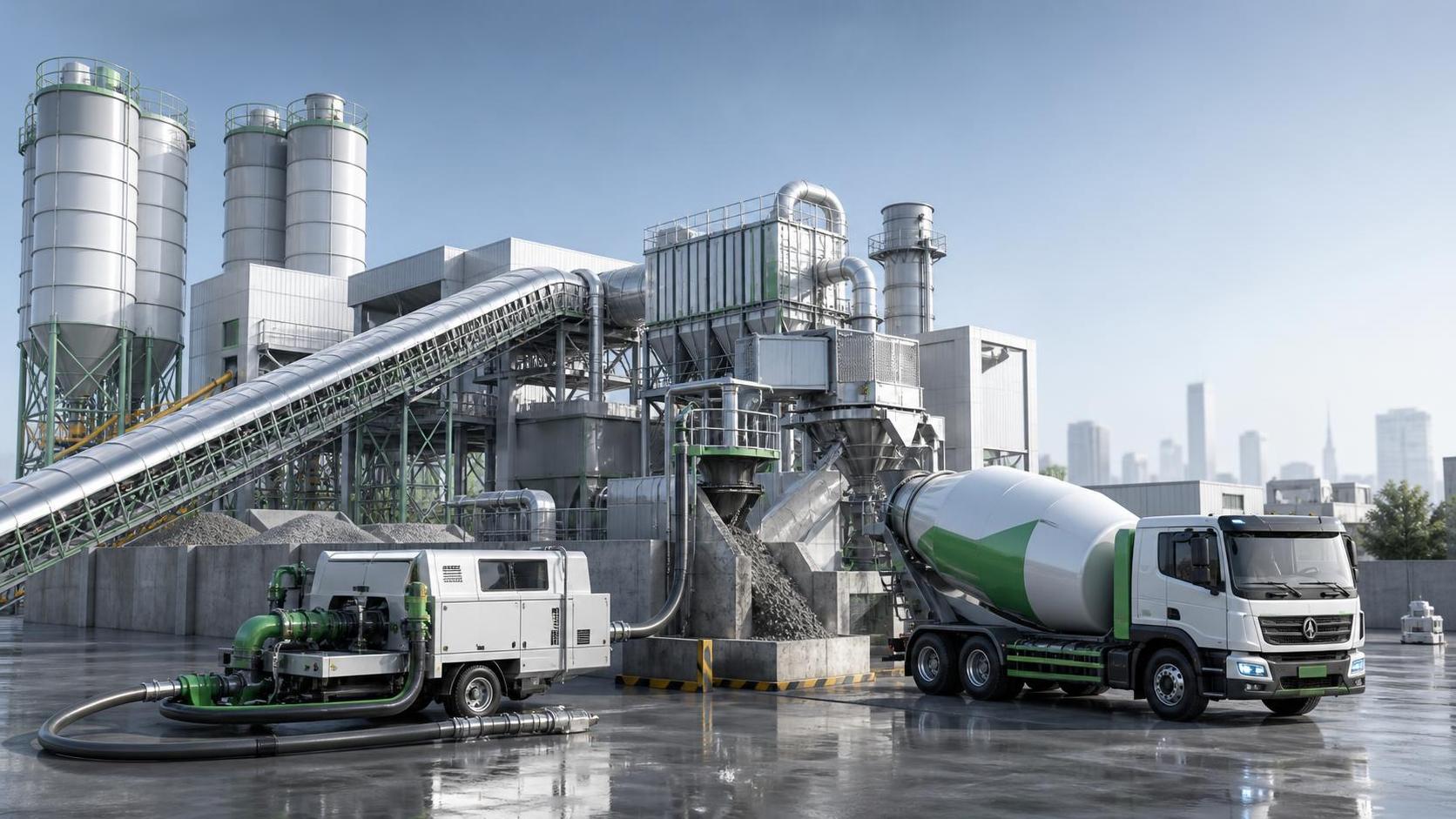
Concrete batching plants also gain when electrified support systems align with enclosed dust control and smart power monitoring.
For underground foundation work, the picture is more mixed.
Rotary drilling rigs and piling machinery face high peak loads, difficult terrain, and long shifts.
In those cases, hybrid layouts, cable-fed systems, or phased electrification may outperform full battery-only adoption.
DFCS analysis often shows that application discipline matters more than technology enthusiasm.
This kind of table prevents one costly mistake: assuming the same payback logic applies across the entire fleet.
What usually gets overlooked when comparing electric and diesel fleets?
The biggest blind spot is utilization realism.
Heavy equipment electrification performs best when operating hours are consistent enough to spread the capital premium.
Low-use assets can take much longer to justify.
Another overlooked issue is site power architecture.
A machine may be efficient, yet the project may still need transformers, chargers, cable protection, or off-peak power agreements.
Those costs belong in the same approval file.
Residual value is also changing faster than many models assume.
Diesel resale can weaken in regions tightening low-emission zones, carbon reporting, or public tender criteria.
On the other side, electric residuals remain sensitive to battery health data and secondary market maturity.
Common comparison mistakes
- Using fuel prices from one short period only
- Ignoring diesel aftertreatment maintenance and compliance delays
- Assuming chargers are a one-time minor expense
- Treating all projects as if they have equal daily utilization
- Skipping emissions-driven bid eligibility and access restrictions
In practice, these omissions can swing the business case more than the equipment list price itself.
How should payback be judged for concrete and foundation equipment?
Payback should not be measured by fuel savings alone.
A stronger method is to build a layered model: direct operating savings, downtime reduction, compliance value, and future bidding advantage.
For example, an electric mixer truck may save on fuel and maintenance.
But if it also gains access to low-emission urban sites with tighter delivery windows, the value increases beyond operating cost.
The same logic can apply to piling machinery in noise-restricted districts.
Quieter, lower-emission operation may reduce permit friction and schedule disruption.
That scheduling reliability has financial value, even though it rarely appears in a basic equipment spreadsheet.
A practical review sequence
- Separate assets by duty cycle, not by brand or fleet age alone.
- Model electricity and diesel under conservative and stressed price scenarios.
- Add charging, grid, and site adaptation costs.
- Score each asset for emissions-sensitive project access.
- Test residual value under likely regulation changes.
This approach usually reveals where heavy equipment electrification should start and where diesel should remain for now.
Does diesel still make sense in some procurement decisions?
Yes, and pretending otherwise weakens the analysis.
Diesel can remain practical for remote projects, highly mobile foundation rigs, and machines with extreme energy peaks.
It can also remain useful where grid reliability is uncertain or project duration is too short to absorb charging investment.
The better question is not electric or diesel in absolute terms.
It is where each powertrain creates the best risk-adjusted return.
DFCS coverage of pump trucks, batching plants, rotary drilling rigs, and piling systems shows that mixed fleets are often the most rational bridge strategy.
That allows electrification where utilization, regulations, and power access support it, while diesel continues in harsh or remote duty.
What is the smartest next step before approving a shift?
Start with equipment mapping, not a technology headline.
List which assets run predictable routes, which work inside emissions-sensitive zones, and which face high idle time.
Then compare heavy equipment electrification against diesel using the same assumptions for utilization, downtime, energy inflation, and residual value.
Where the numbers are close, include project access, compliance resilience, and operational flexibility before making a final call.
The most reliable decisions usually come from phased adoption, pilot data, and equipment-specific thresholds rather than fleet-wide declarations.
In short, heavy equipment electrification beats diesel only when the full cost picture is honestly measured.
That is where a durable capital decision begins.
 How to Evaluate Delivery Reliability from Overseas Construction Machinery SuppliersTime : Sep 01, 2026
- Which concrete equipment industry trends are reshaping plant investment decisionsTime : Aug 19, 2026
- How construction machinery sustainability trends affect fleet upgrade decisionsTime : Aug 14, 2026
Industry Briefing
Get the top 5 industry headlines delivered to your inbox every morning.