
Piling Rig Innovations Shaping 2026 Jobsite Performance

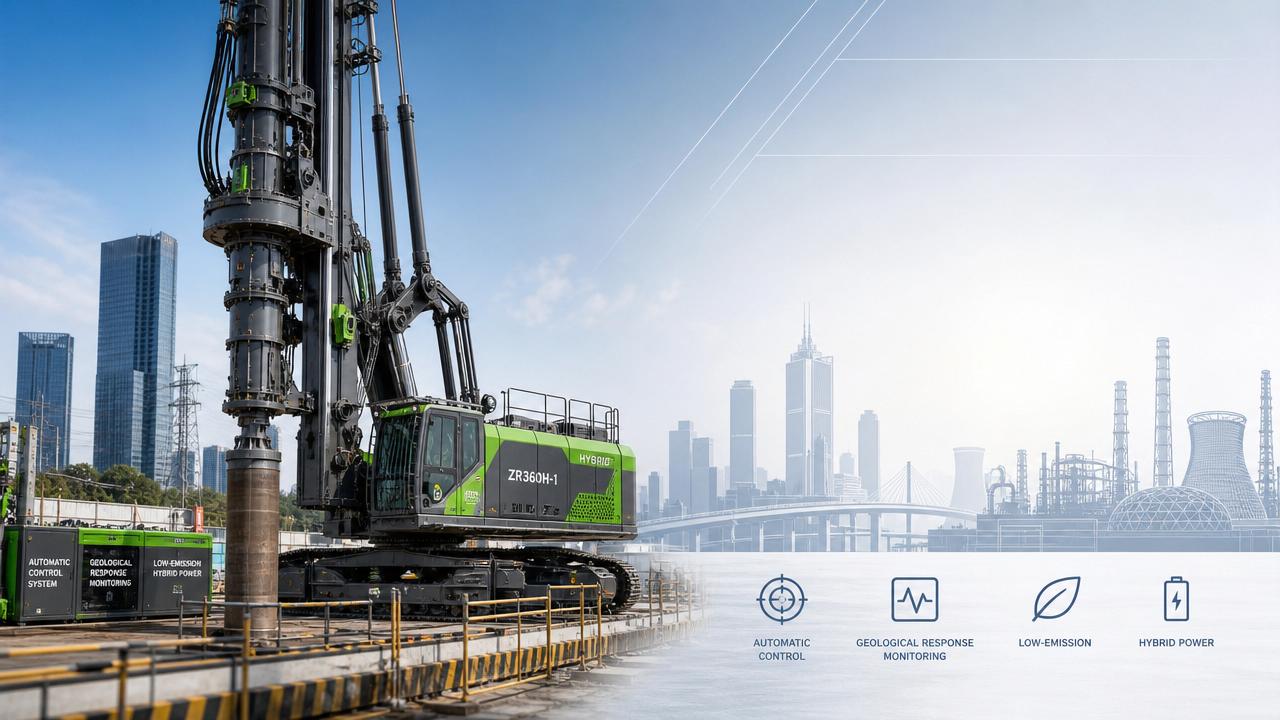
For 2026 planning cycles, piling rig innovations are no longer a niche equipment topic. They are becoming a practical lever for schedule certainty, carbon compliance, and foundation risk control across urban, industrial, and infrastructure projects.
The shift matters because piling performance now influences far more than pile installation speed. It affects noise limits, fuel exposure, data visibility, subcontractor competitiveness, and the reliability of downstream concrete and structural work.
Within the broader DFCS view of concrete systems and underground machinery, piling rigs sit at a critical junction. They connect geotechnical uncertainty, equipment intelligence, and the low-emission transition that is reshaping major civil engineering programs worldwide.
Why piling rig innovations are moving to the center of project strategy
A piling rig used to be judged mainly by torque, crowd force, depth capacity, and operating reliability. Those fundamentals still matter, but the decision frame is now wider and more demanding.
Projects are moving into denser cities, tougher environmental regimes, and more geologically mixed sites. That raises the value of piling rig innovations that reduce surprises during drilling, driving, or static pressing.
At the same time, procurement standards are changing. Large clients increasingly compare digital traceability, energy profile, maintenance predictability, and operator assistance features alongside mechanical performance.
This is why the topic belongs in boardroom-level equipment planning. A more advanced rig can protect margin not only through output, but through lower claims exposure and stronger bid positioning.
What counts as innovation in a 2026 piling rig
Not every upgrade deserves to be called an innovation. In practical terms, the market is rewarding changes that improve controllability, visibility, or lifecycle efficiency under real site pressure.
Automation that supports the operator
Modern control systems are moving beyond simple monitoring. They assist with mast alignment, drilling parameter adjustment, pile positioning, and repeatable execution under variable ground conditions.
That matters on congested sites, where small setup errors can trigger rework, concrete wastage, or tolerance disputes. Better automation reduces variability before it becomes a cost event.
Real-time ground response intelligence
One of the most valuable piling rig innovations is the ability to interpret what the ground is doing while work is underway. Sensors can track torque, penetration rate, vibration, energy transfer, and refusal behavior.
This does not eliminate geotechnical uncertainty, but it narrows it. When field data is captured in context, teams can react earlier to boulders, cavities, weak layers, or unexpected groundwater effects.
Low-emission and hybrid power systems
Electrification is advancing unevenly across heavy foundation equipment, yet the direction is clear. Hybrid drives, battery-assisted functions, and more efficient hydraulics are moving from demonstration to operational relevance.
In urban projects, these piling rig innovations can support permit approval, lower noise complaints, and improve work continuity near sensitive buildings, hospitals, transit corridors, or residential zones.
The operational value behind the headlines
Innovation claims often sound abstract until they are tied to a jobsite outcome. The most useful way to assess them is through specific business effects.
The lesson is straightforward. The strongest piling rig innovations are not isolated technical features. They reshape planning reliability, reporting quality, and the economics of foundation production.
Where these innovations matter most
Different project types reward different capabilities. A rig optimized for hard rock rotary drilling may not create the same value on an urban static pressing program.
Dense urban development
Noise, vibration, spoil control, and restricted working envelopes dominate the decision. Here, piling rig innovations that improve precision and reduce disturbance tend to create the best return.
Digital piling records also help when neighborhood sensitivity or regulatory scrutiny is high. They provide evidence, not assumptions, when site conditions are questioned later.
Transport and energy infrastructure
Linear projects and remote locations place more emphasis on uptime, service access, and data transfer. Fleet-level visibility becomes as important as peak machine output.
In these conditions, remote diagnostics and predictive maintenance features help avoid cascading delays across sequential work fronts.
High-rise and mega civil foundations
These projects demand integration across the full foundation chain. Rotary drilling rigs, piling equipment, batching plants, mixer logistics, and concrete pumping systems must work as one production system.
That systems view is where DFCS adds useful context. Piling performance should be read alongside concrete flow planning, bore stability, reinforcement timing, and downstream placement windows.
Signals that deserve closer attention in 2026
Several trends are shaping how piling rig innovations will be evaluated during upcoming procurement cycles.
- Tender documents are asking for verifiable emissions data, not only engine ratings.
- Owners increasingly expect digital construction records that can be shared across project platforms.
- Urban jobs are favoring low-vibration and low-noise methods where community impact is commercially significant.
- Mixed-ground sites are rewarding rigs with better adaptive controls and clearer real-time feedback.
- Lifecycle support, software updates, and telemetry compatibility are becoming part of equipment due diligence.
More importantly, these signals are converging. A machine that performs well technically but cannot satisfy data, compliance, or support expectations may lose ground in otherwise competitive bids.
How to evaluate piling rig innovations without chasing hype
The market is full of feature language. A disciplined evaluation process separates high-value innovation from expensive complexity.
Start with the ground and the method
Match the rig to the actual pile type, geology, spoil profile, and tolerance requirements. The right innovation depends on whether the core challenge is rock penetration, urban vibration control, or repetitive production speed.
Look at system compatibility
A piling rig does not operate alone. Ask whether its data outputs can integrate with project reporting, maintenance platforms, and concrete delivery coordination where relevant.
Measure the support model
Some piling rig innovations only create value if software, training, and diagnostics are consistently available. Uptime depends on service architecture as much as machine design.
Test commercial resilience
Consider residual value, energy exposure, consumable wear, and operator onboarding time. The most advanced rig is not always the most profitable one over five years.
A practical framework for the next equipment decision
For many organizations, the right next move is not a fleet-wide replacement. It is a sharper decision framework built around project mix, compliance risk, and digital readiness.
Begin by mapping where foundation delays or ground surprises have hurt margin in recent projects. Then compare those weak points against the latest piling rig innovations now entering mainstream specification lists.
It also helps to review piling equipment together with adjacent systems. Foundation execution is closely linked to batching precision, concrete logistics, and placement timing, especially on large integrated jobs.
The companies that gain most in 2026 will be those that treat piling rig innovations as part of an operational architecture, not as isolated machine upgrades. That approach supports clearer shortlists, stronger bids, and more dependable delivery under real-world site pressure.
A useful next step is to build an internal scorecard covering ground adaptability, emissions profile, telemetry value, service support, and compatibility with broader deep foundation workflows. That turns market noise into an actionable investment view.
 How to Evaluate Delivery Reliability from Overseas Construction Machinery SuppliersTime : Sep 01, 2026
- Which concrete equipment industry trends are reshaping plant investment decisionsTime : Aug 19, 2026
- How construction machinery sustainability trends affect fleet upgrade decisionsTime : Aug 14, 2026
Industry Briefing
Get the top 5 industry headlines delivered to your inbox every morning.