
Construction Machinery Intelligence Trends Shaping Equipment ROI in 2026

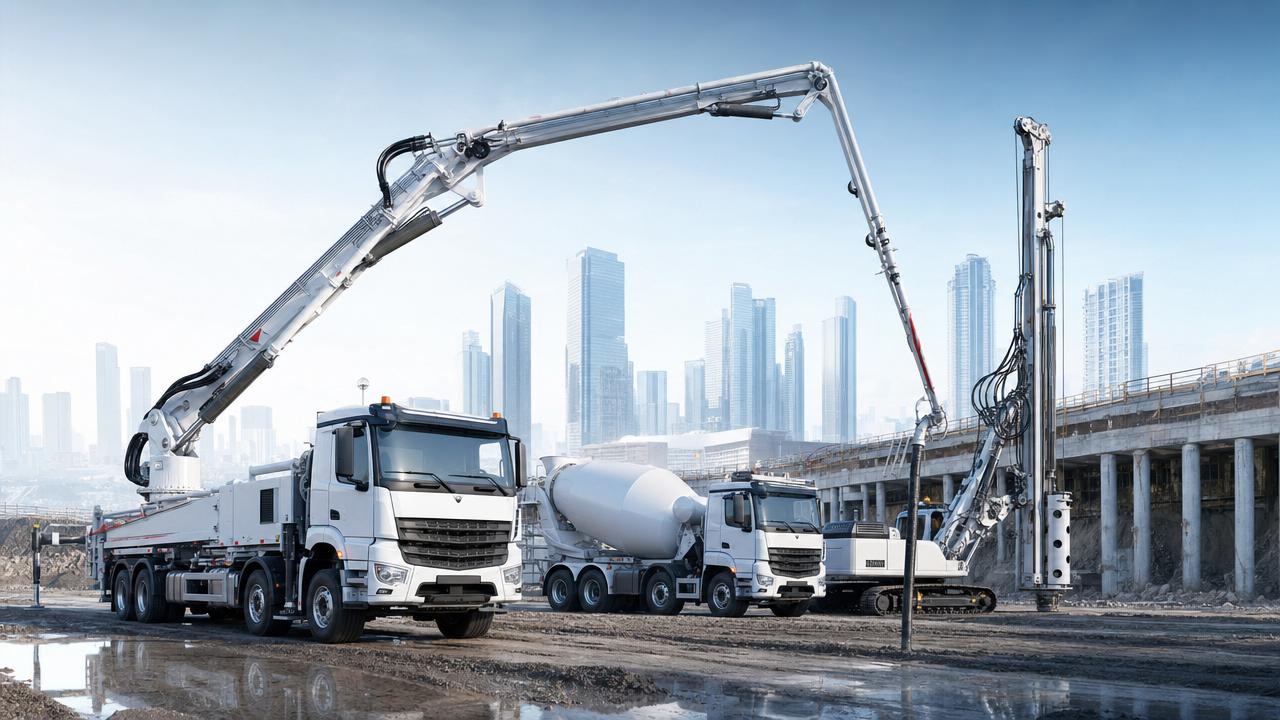
Construction machinery intelligence is moving from optional upgrade to ROI discipline
In 2026, construction machinery intelligence sits closer to finance than to experimentation.
That shift is especially visible in concrete pumping, batching, transport, drilling, and piling operations.
Asset owners are no longer asking whether machines can be connected.
They are asking whether connected equipment can defend margins under tighter schedules, emissions rules, and uptime pressure.
This is why construction machinery intelligence now matters as a board-level operating variable.
The strongest signal is not software adoption alone.
It is the convergence of automation, electrification, IoT sensing, and lifecycle analytics into daily machine decisions.
For sectors tracked closely by DFCS, that convergence changes how equipment value is created.
Concrete pump trucks, mixer fleets, batching plants, rotary drilling rigs, and piling systems now generate data as actively as they move material.
The result is a new ROI equation.
Machine productivity still matters, but predictability, compliance, and lifecycle resilience matter just as much.
Why this change is becoming more visible in 2026
Several forces are pushing construction machinery intelligence from technical feature to operational requirement.
Some come from regulation, while others come from project complexity and capital discipline.
What makes 2026 different is the maturity of the response.
The market is not merely buying smarter components.
It is reorganizing around smarter operating systems for heavy equipment.
That is a deeper shift than digital dashboards or isolated telematics.
The real value is being created between machines, sites, and data loops
A connected machine alone does not guarantee stronger returns.
The gains appear when machine data influences dispatch, maintenance, mix quality, energy use, and jobsite sequencing.
This is where construction machinery intelligence becomes practical rather than promotional.
Concrete pumping is shifting toward precision under pressure
Pump trucks are being judged on stability, consistency, and remote diagnostics, not only on boom reach.
Advanced hydraulic monitoring now helps detect pressure irregularities before hose blockages or wear failures escalate.
Vibration-damping algorithms also matter more on ultra-long booms and constrained urban pours.
That reduces material waste and protects pour quality when schedules leave little room for rework.
Batching intelligence is becoming a quality and compliance engine
Smart batching plants are moving beyond automation of throughput.
They now support traceable weighing accuracy, moisture correction, enclosed dust handling, and energy visibility.
For low-carbon concrete programs, those controls are no longer marginal.
They shape whether a plant can meet project qualification thresholds and retain pricing power.
Deep foundation equipment is learning from the ground in real time
Rotary drilling rigs and piling systems face the highest penalty from uncertainty.
Unexpected cobbles, hard rock transitions, and groundwater shifts can disrupt productivity within hours.
Construction machinery intelligence reduces that uncertainty through torque monitoring, bit wear modeling, penetration feedback, and process logging.
In dense cities, intelligent static pressing and vibration control also help align operations with stricter noise expectations.
The impact is spreading across the entire asset lifecycle
One reason construction machinery intelligence is gaining traction is that value does not come from a single department.
It affects acquisition, deployment, maintenance, utilization, and resale at the same time.
- Before purchase, equipment intelligence improves technical comparison beyond rated capacity and list price.
- During operation, sensor data exposes idle patterns, overload events, inefficient routing, and unstable process conditions.
- In maintenance, predictive alerts lower catastrophic downtime and support parts planning across mixed fleets.
- At replacement stage, digital service history supports stronger residual value and more defensible reinvestment timing.
This is particularly relevant in heavy concrete and foundation work.
These assets operate in punishing conditions where failures are expensive, visible, and difficult to recover from.
DFCS has tracked this pattern closely across pumping pressures, batching precision, and rock-mechanics-driven drilling performance.
The common lesson is clear.
Machines with stronger feedback loops create more stable economics over time.
What deserves closer attention before the market fully prices it in
Some intelligence features already feel familiar.
The more important question is which capabilities will materially separate high-performing fleets from average ones.
Electrification will reward systems thinking, not isolated machine replacement
Electric mixer trucks and hybrid support equipment are advancing, but fleet economics remain uneven.
Returns improve when charging, routing, payload planning, and batching schedules are coordinated through shared data.
Without that integration, electrification can increase complexity before it improves ROI.
Data quality is becoming as important as machine quality
Poorly structured telematics often produce noise rather than insight.
The better operators are narrowing attention to a few high-value indicators.
- Pressure stability during concrete delivery
- Energy consumption per productive hour
- Drilling penetration change by soil layer
- Batching deviation against target mix design
- Downtime causes linked to operator behavior or component wear
That narrower focus makes construction machinery intelligence more actionable and easier to scale.
Bidding standards are beginning to favor proof, not promises
In major infrastructure and urban development, machine specifications alone no longer tell the whole story.
Buyers increasingly want evidence of low-emission capability, process traceability, safety performance, and controlled variability.
That is why intelligence records are becoming part of commercial credibility.
A practical way to respond without overbuilding complexity
The smart move in 2026 is not to chase every digital function at once.
It is to align construction machinery intelligence with the biggest operational frictions.
This approach keeps investment disciplined.
It also prevents digital initiatives from drifting away from measurable equipment ROI.
What the next phase of construction machinery intelligence is likely to favor
The next winners will probably not be defined by the largest amount of data collected.
They will be defined by how well data is translated into narrower downtime windows, cleaner compliance records, and steadier output.
For concrete systems and deep foundation equipment, that means tighter links between sensing, control, and jobsite decision-making.
It also means more attention to cross-machine coordination rather than standalone optimization.
Construction machinery intelligence is no longer only about smarter equipment.
It is about building an operating environment where each pump, rig, plant, and transport unit reinforces the others.
A sensible next step is to review where the strongest operational variance still exists.
Then compare which intelligence signals already exist, which are missing, and which decisions still rely too heavily on guesswork.
That is usually where the clearest ROI opportunity begins.
 How to Evaluate Delivery Reliability from Overseas Construction Machinery SuppliersTime : Sep 01, 2026
- Which concrete equipment industry trends are reshaping plant investment decisionsTime : Aug 19, 2026
- How construction machinery sustainability trends affect fleet upgrade decisionsTime : Aug 14, 2026
Industry Briefing
Get the top 5 industry headlines delivered to your inbox every morning.