As global infrastructure moves toward lower emissions, higher automation, and more complex underground engineering, construction machinery advancements in 2026 will reshape how decision makers evaluate equipment, suppliers, and project risk.
From electric mixer trucks and intelligent batching plants to ultra-deep rotary drilling rigs and precision concrete pump systems, the next wave of innovation is not only about power.
It is about lifecycle efficiency, data-driven reliability, regulatory readiness, and stronger bidding credibility in mega-civil engineering markets where margins are increasingly protected by technology.
What 2026 Machinery Advancements Mean for Business Decisions
For enterprise leaders, the central question is not which machine looks most advanced, but which advancement reduces risk across the entire project lifecycle.
Construction machinery advancements in 2026 will be judged by fuel savings, downtime reduction, labor efficiency, emissions compliance, and measurable contribution to project delivery certainty.
Equipment buyers should expect procurement discussions to shift from purchase price toward total cost of ownership, digital service capability, energy strategy, and operator safety.
This matters because infrastructure owners, municipal regulators, and general contractors are demanding cleaner jobsites, traceable production data, and fewer disruptions in dense urban environments.
The winners will be companies that connect machinery selection with bidding strategy, carbon reporting, fleet utilization, and risk allocation across contractors and suppliers.
Electrification Moves From Pilot Projects to Fleet Strategy
Electric construction machinery will no longer be viewed only as a public relations tool or a niche option for restricted urban jobsites.
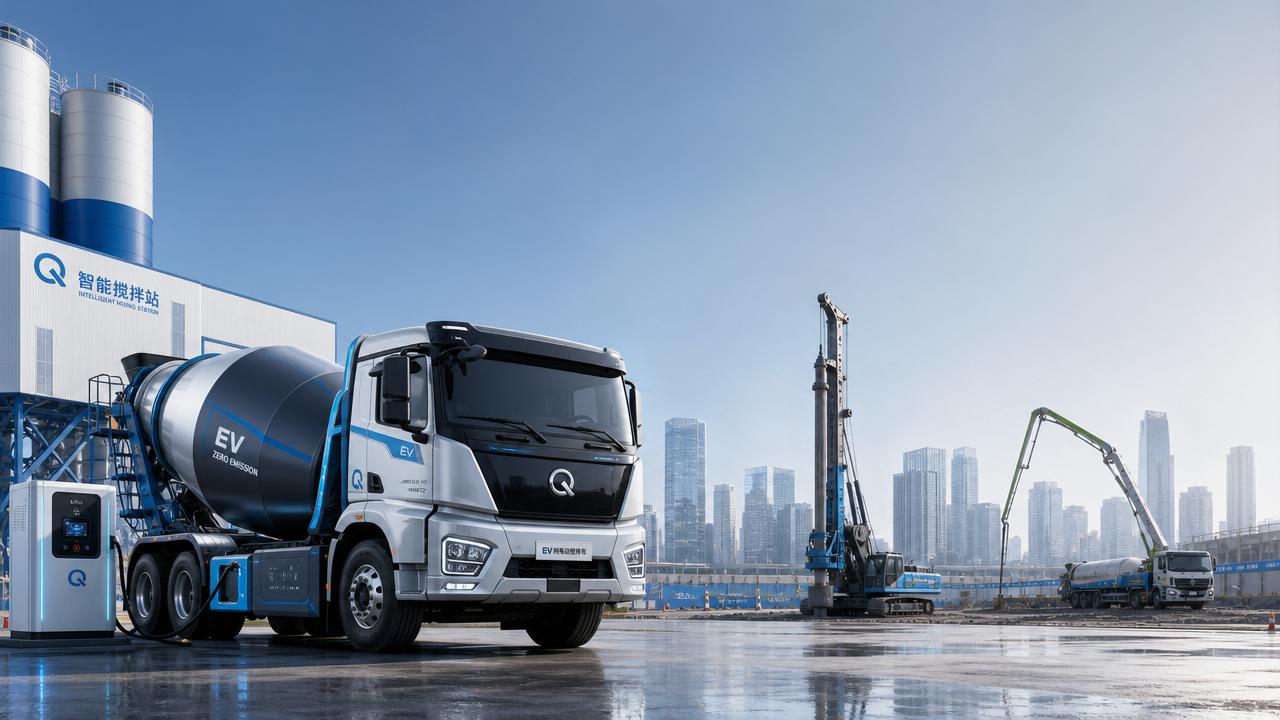
By 2026, electric mixer trucks, compact equipment, and selected foundation machinery will become serious fleet planning assets for companies facing carbon and noise limits.
The business case depends on operating cycle, charging access, local energy cost, battery replacement planning, and whether the machine returns to base regularly.
Concrete mixer trucks are among the most important categories because they operate on predictable routes and often idle heavily during loading and discharge.
Electric drive can reduce fuel consumption, noise, and local emissions, while improving access to low-emission zones and environmentally sensitive construction permits.
However, decision makers must avoid a simple electric-versus-diesel comparison and instead calculate route density, payload impact, charging windows, and depot power upgrades.
The strongest opportunities will appear in ready-mix operators serving cities, tunnel projects, airport upgrades, and government infrastructure programs with strict environmental scoring.
Smart Batching Plants Become Data and Compliance Centers
Concrete batching plants are evolving from production facilities into digital quality control centers with direct influence on structural performance and contractual accountability.
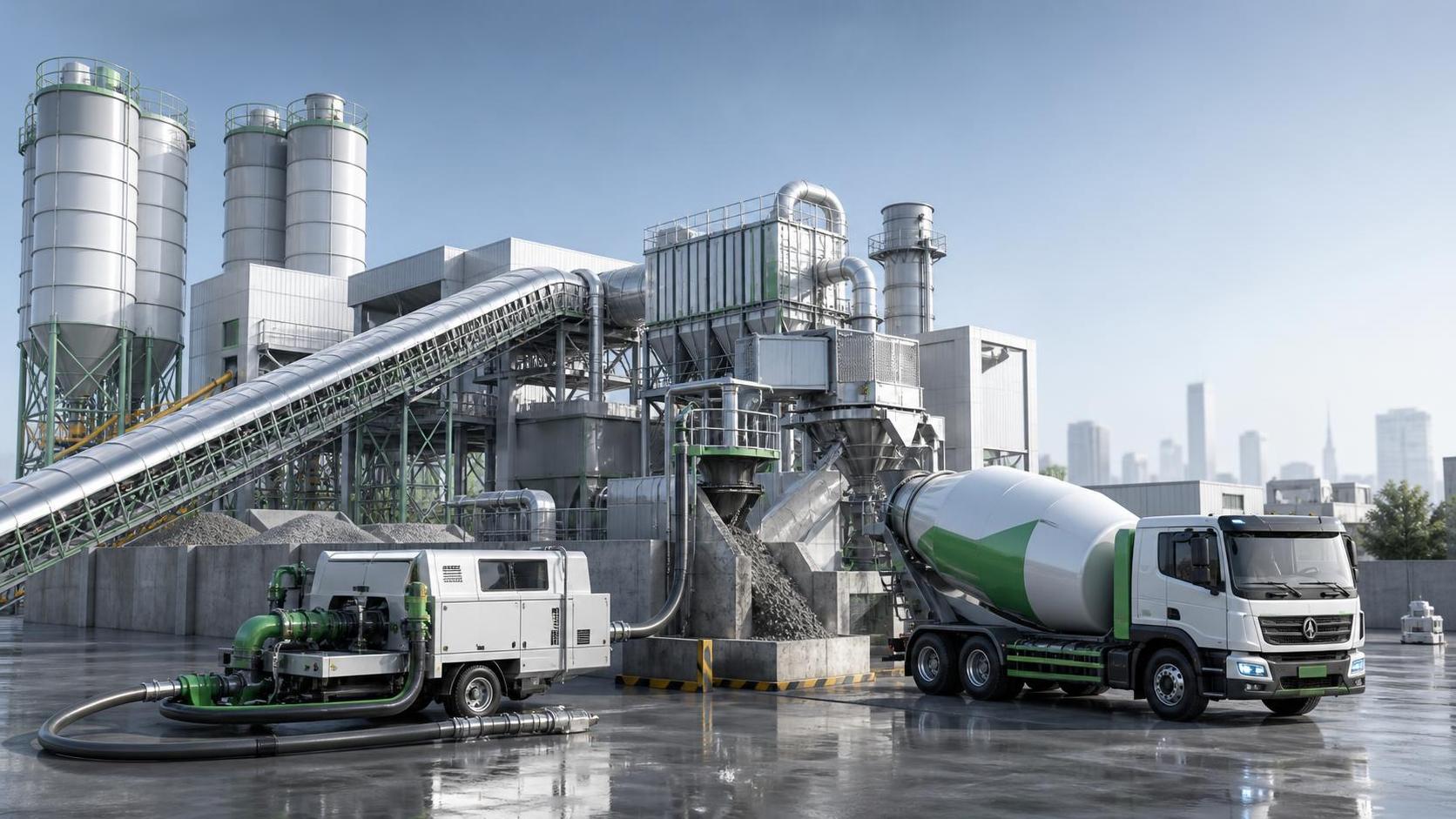
Advanced plants in 2026 will combine IoT weighing, automated moisture correction, enclosed dust control, energy monitoring, and digital batch records for every cubic meter.
For enterprise buyers, this creates value beyond plant productivity because reliable production data supports claims defense, quality traceability, and green concrete certification.
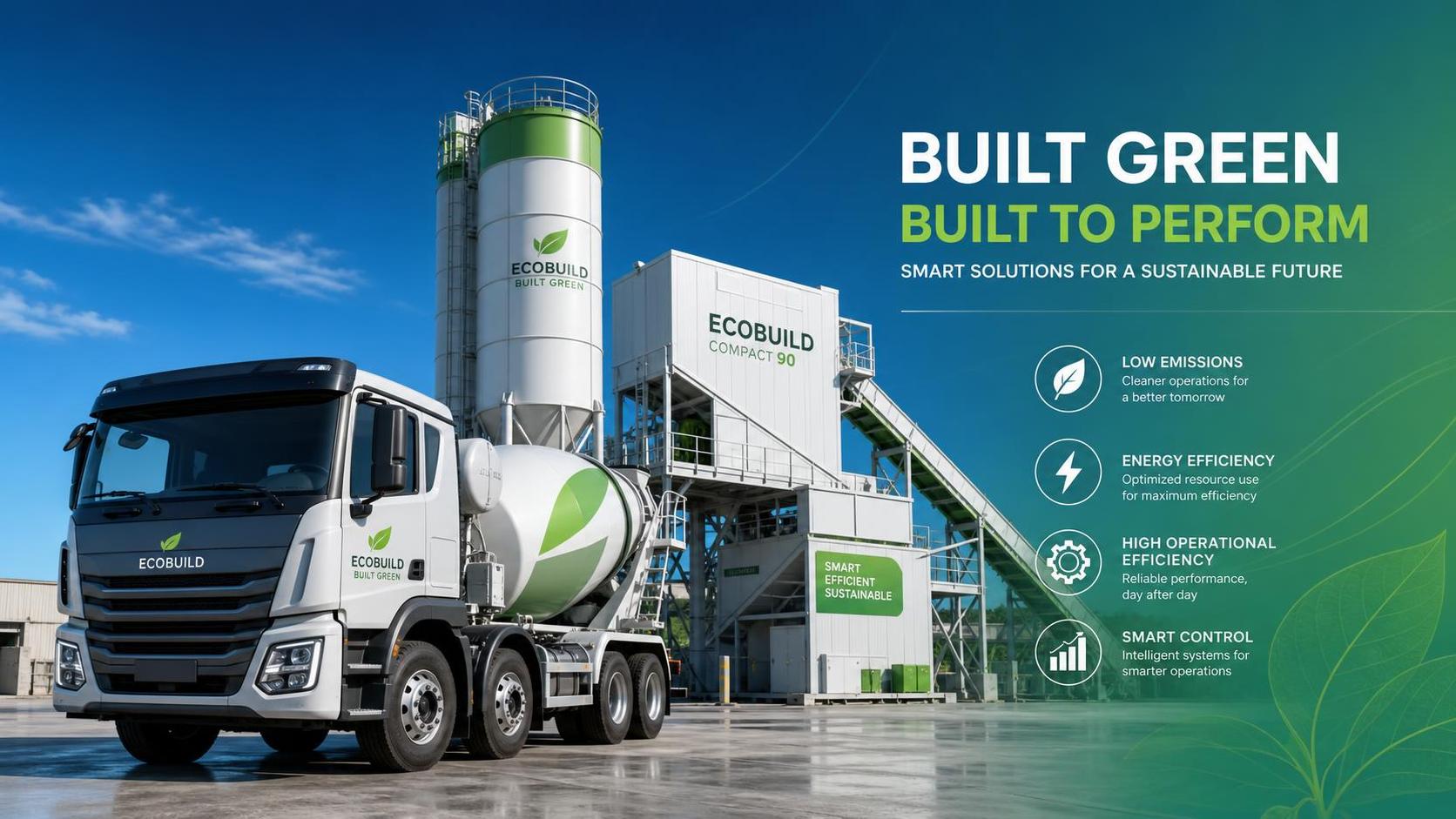
Fully enclosed smart batching plants will be especially important where urban land is scarce and communities pressure operators to control dust, noise, and truck circulation.
The most practical evaluation criterion is whether the plant can consistently maintain mix accuracy under variable aggregate moisture and high production pressure.
Decision makers should also ask whether software integrates with dispatch, laboratory testing, enterprise resource planning, and customer reporting systems without expensive manual reconciliation.
In competitive markets, a smart batching plant can become a bidding advantage because it proves repeatability, environmental discipline, and readiness for low-carbon concrete programs.
Concrete Pumping Advances Focus on Precision, Reach, and Safety
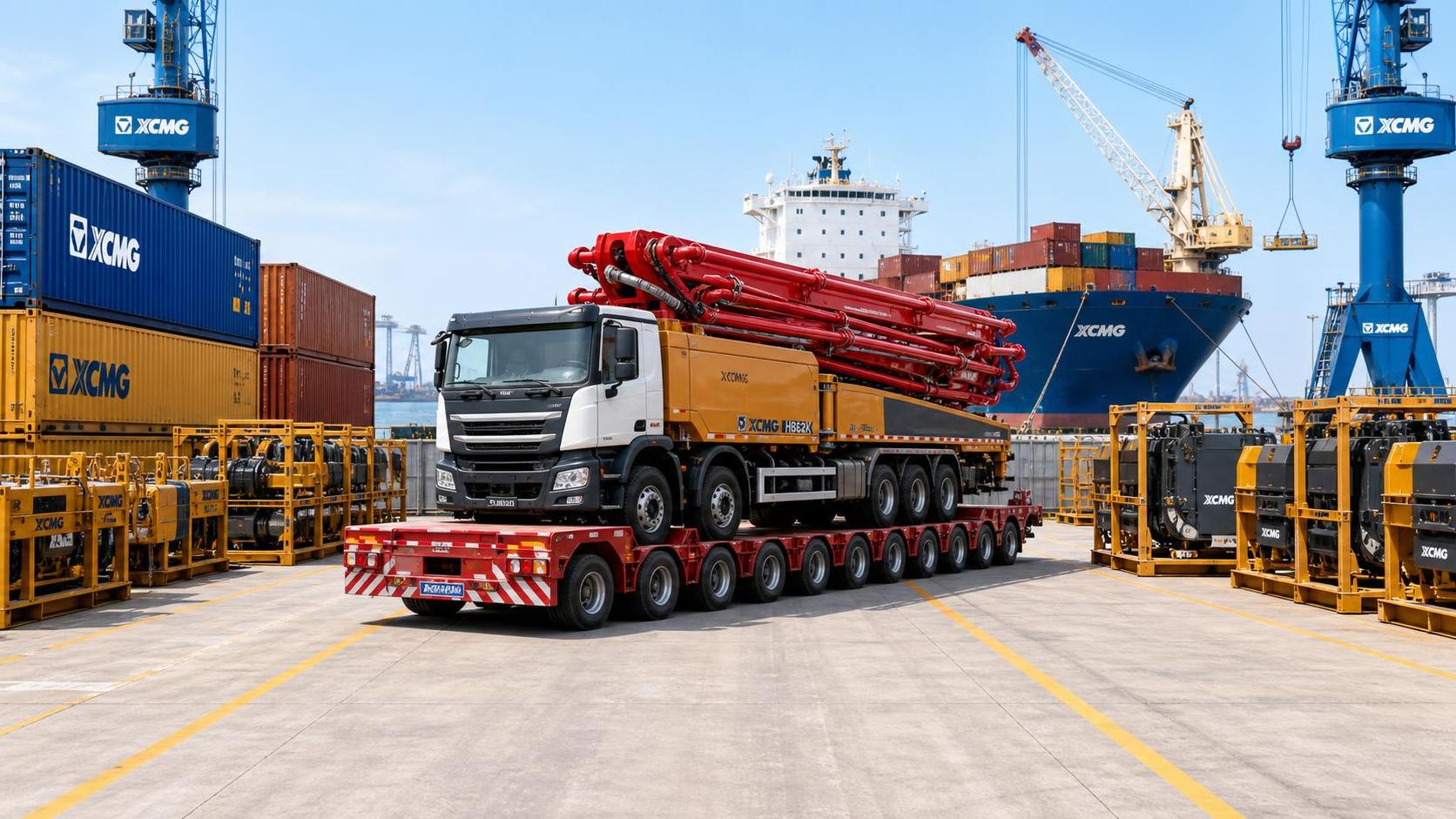
Concrete pump trucks remain among the most visible machines on high-rise and infrastructure projects, but 2026 innovation will be less about boom length alone.
The key improvements will come from intelligent hydraulic control, vibration damping, pressure monitoring, remote diagnostics, and safer operation in confined or elevated work zones.
For contractors, precision pumping reduces rework, improves pour continuity, and lowers the probability of dangerous blockages during complex high-pressure placement.
Ultra-long boom machines will need better stability algorithms because urban projects often operate near traffic, existing structures, temporary utilities, and restricted staging areas.
Decision makers should evaluate pump systems based on delivery pressure, concrete compatibility, hose management, cleaning efficiency, and documented performance in similar projects.
Fleet managers should also pay attention to wear parts, sensor quality, hydraulic maintenance intervals, and the supplier’s ability to support urgent site recovery.
In mega-project bidding, a reliable pumping strategy can protect schedule certainty, especially where continuous pours are tied to structural integrity and liquidated damages.
Rotary Drilling Rigs Become More Intelligent Underground Risk Tools
Deep foundation work carries high uncertainty because geology can change quickly, and underground problems often become expensive before they become visible.
Rotary drilling rig advancements in 2026 will focus on torque management, automated drilling parameters, real-time formation feedback, and improved hard-rock tool durability.
For business leaders, these technologies matter because they reduce unplanned tool consumption, drilling delays, pile defects, and disputes over unforeseen ground conditions.
Modern rigs will increasingly provide operating data that helps engineers compare design assumptions with actual ground response during drilling and piling execution.
This data can support faster decisions on casing depth, slurry strategy, tool selection, and adjustments when cobbles, quicksand, or fractured rock appear.
Decision makers should not simply buy the highest torque rating, because unmatched torque without control can increase wear, fuel use, and operational risk.
The better procurement question is whether the rig delivers stable productivity across the specific strata, pile diameter, depth requirement, and jobsite constraints.
Piling Machinery Prioritizes Urban Control and Foundation Certainty
Piling machinery will face stronger scrutiny in 2026 as cities demand lower noise, reduced vibration, and safer construction near existing buildings.
Hydraulic static pressing, high-frequency vibratory systems, and improved pile-driving monitoring will become central to foundation contractors operating in dense urban environments.
The business value is clear: quieter and more predictable piling methods can reduce complaints, regulatory stoppages, neighbor claims, and monitoring costs.
For high-rise, rail, port, and industrial projects, pile installation records will increasingly become part of the project’s quality and risk documentation.
Decision makers should assess whether piling equipment can provide force curves, penetration data, vibration records, and integration with site monitoring systems.
These records are not only technical outputs; they are commercial evidence when contractors must prove compliance, defend productivity, or verify design execution.
The most advanced piling fleets will combine mechanical capability with digital documentation, allowing contractors to compete on certainty rather than price alone.
Automation and Remote Operations Will Redefine Labor Productivity
Labor shortage is one of the strongest forces behind construction machinery advancements, especially in markets with aging operators and rising safety requirements.
Automation in 2026 will not remove human expertise, but it will reduce repetitive decisions and make skilled operators more productive across complex tasks.
Examples include automated boom control, optimized drilling modes, assisted steering, batching sequence automation, remote diagnostics, and fleet-level maintenance alerts.
For enterprise leaders, the important question is whether automation produces repeatable outcomes across different operators, shifts, climates, and project conditions.
Training costs should be included in any investment decision because advanced machinery only creates value when crews trust and correctly use the systems.
Remote operation will be particularly valuable in hazardous excavation zones, high-dust batching environments, and foundation works near unstable ground or traffic corridors.
The near-term advantage is not full autonomy, but safer supervision, fewer operational mistakes, better maintenance timing, and more consistent productivity records.
Connected Fleets Turn Maintenance Into a Strategic Function
In 2026, connected machinery will make maintenance planning more predictive, shifting fleet management away from calendar-based service and emergency repairs.
Sensors on pumps, mixers, rigs, and batching equipment can track pressure, vibration, temperature, fuel use, motor load, and abnormal operating patterns.
The commercial benefit is reduced downtime, but the broader value is improved asset utilization and better decisions about replacement, resale, and redeployment.
Enterprise decision makers should require clear data ownership, cybersecurity standards, service response commitments, and integration with existing fleet management platforms.
A dashboard alone is not enough if alerts are inaccurate, service teams are slow, or spare parts availability cannot support critical projects.
Connected maintenance works best when manufacturers, dealers, contractors, and site managers share defined responsibilities for diagnostics, escalation, and repair approval.
Companies that master this model will turn machinery data into a source of margin protection rather than a passive technical feature.
Low-Carbon Concrete Will Influence Equipment Selection
The low-carbon transition is not limited to alternative fuels or electric machines; it also changes how concrete is produced, transported, and placed.
Supplementary cementitious materials, optimized mix designs, recycled aggregates, and admixture strategies can affect pumpability, setting behavior, batching accuracy, and mixer performance.
As green concrete programs expand, equipment must handle more variable materials without sacrificing structural quality or project productivity.
Batching plants will need precise weighing and moisture control, while pump systems must maintain stable delivery when mixes are more sensitive.
Mixer trucks may require improved drum design, energy management, and monitoring to protect consistency during longer delivery windows or demanding urban routes.
Decision makers should involve technical teams early when adopting low-carbon materials, because machinery capability can determine whether sustainability targets remain buildable.
The best suppliers will provide application knowledge, not just equipment specifications, helping customers connect material innovation with practical construction performance.
How Decision Makers Should Evaluate 2026 Equipment Investments
Procurement teams should begin with project risk, not product brochures, because the right machine depends on where business exposure is highest.
If downtime threatens liquidated damages, service network and predictive maintenance may matter more than peak output or the lowest acquisition cost.
If emissions limits determine project eligibility, electrification readiness, fuel efficiency, and carbon reporting capability should carry measurable weight in evaluation.
If underground uncertainty dominates risk, drilling data, tool durability, and geological adaptability become more important than general brand reputation.
A practical framework should compare total cost of ownership, utilization rate, regulatory access, operator availability, maintenance support, and resale value.
Decision makers should also test supplier claims against real reference projects with similar geology, climate, production intensity, and contractual requirements.
The most resilient companies will build mixed fleets that match equipment capability to project type instead of chasing a single universal solution.
Risks to Manage Before Adopting Advanced Machinery
Advanced machinery can create competitive advantage, but poor implementation can increase complexity, training burden, and dependence on specialized service support.
Common risks include immature charging infrastructure, weak digital integration, unavailable spare parts, unclear warranty terms, and operators bypassing automation features.
There is also a financial risk when companies buy advanced assets without sufficient project pipeline or utilization discipline to justify investment.
Leaders should create pilot programs with defined metrics, including uptime, energy cost, production quality, operator acceptance, and maintenance response time.
Contracts should clarify data access, software updates, cybersecurity obligations, battery warranties, remote support, and penalties for critical service failures.
Companies should avoid treating digital systems as optional add-ons, because incomplete adoption often prevents the equipment from delivering its intended return.
A disciplined rollout converts innovation into measurable value, while an unplanned rollout turns sophisticated machinery into expensive underused capacity.
Where the Strongest Competitive Advantage Will Appear
The biggest advantage in 2026 will belong to companies that combine advanced machines with strong execution systems and credible technical documentation.
Foundation contractors can differentiate through drilling intelligence, piling records, vibration control, and proof of performance in difficult urban geology.
Concrete producers can differentiate through smart batching, low-carbon mix capability, transparent quality data, and reliable dispatch for demanding construction schedules.
Pumping specialists can differentiate through safety, high-pressure reliability, difficult-access placement, and fast response during continuous pour operations.
Equipment manufacturers can strengthen customer loyalty by offering application engineering, lifecycle service, financing support, and data platforms that reduce ownership risk.
In all cases, advancement is valuable only when it improves customer confidence, protects schedule, reduces disputes, or helps win higher-quality projects.
This is why construction machinery advancements should be treated as strategic infrastructure, not simply as capital equipment upgrades.
Conclusion: 2026 Rewards Machinery Strategies Built on Evidence
Construction machinery advancements in 2026 will be defined by electrification, automation, connectivity, smarter concrete production, and more intelligent underground execution.
For enterprise decision makers, the priority is not adopting every new technology, but selecting the advancements that improve business resilience.
The right machinery strategy should reduce lifecycle cost, strengthen regulatory access, improve project certainty, and create credible differentiation in competitive tenders.
Companies that evaluate equipment through data, field conditions, service capability, and long-term project demand will make stronger investment decisions.
As infrastructure becomes greener, deeper, taller, and more complex, machinery intelligence will increasingly determine who controls risk and who absorbs it.