
2026 Construction Machinery Trends to Watch

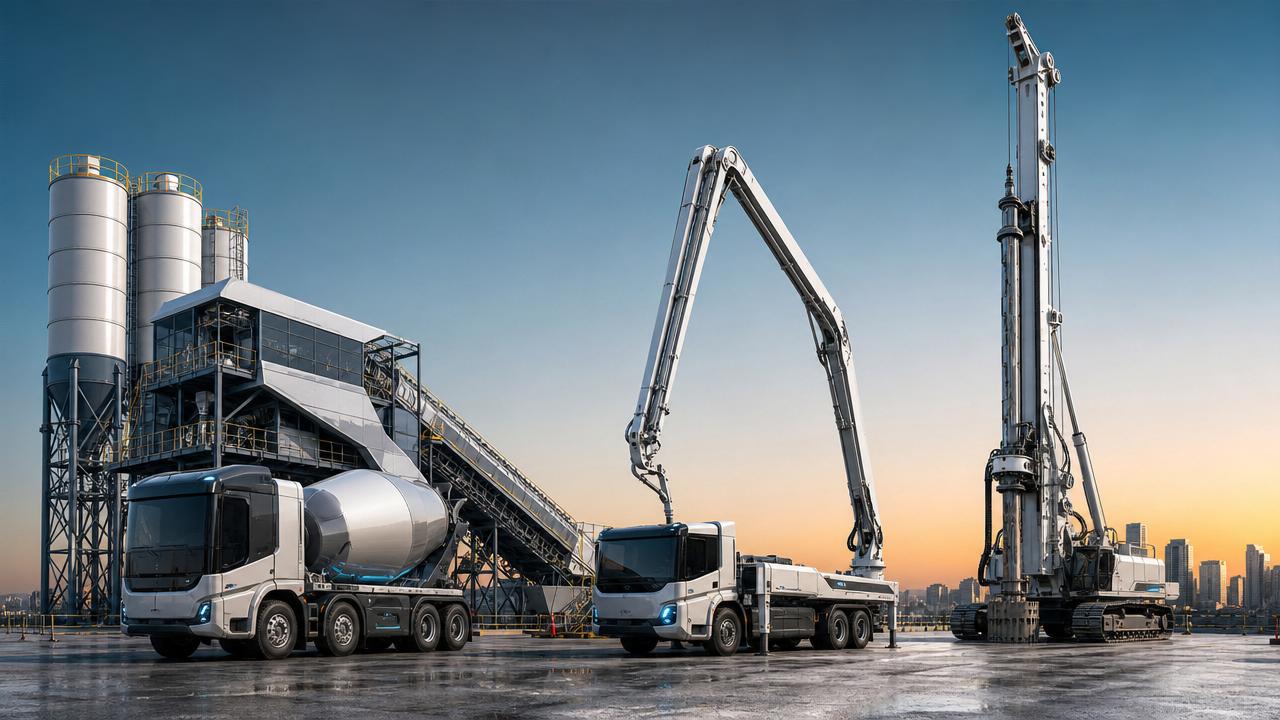
As global infrastructure enters a new cycle of low-carbon, digital, and high-efficiency transformation, construction machinery trends are becoming a critical signal for enterprise decision-makers. From electric mixer trucks and smart batching plants to advanced rotary drilling rigs and precision pumping systems, the next wave of equipment innovation will directly shape project competitiveness, compliance, and long-term returns.
For business leaders, the practical question is not simply which machines are new in 2026. The real issue is which technology shifts will improve bidding strength, reduce lifecycle cost, protect compliance, and raise operational resilience across concrete and deep foundation projects.
The strongest signal for 2026 is clear: construction equipment is moving from isolated hardware competition to system-level competition. Electrification, automation, remote diagnostics, intelligent batching, and data-linked jobsite coordination are no longer experimental features. They are becoming procurement filters and investment priorities.
What decision-makers are really searching for in 2026 construction machinery trends
When executives search for construction machinery trends, they usually want a market reading they can act on. They need to know which changes are temporary marketing narratives and which ones will affect fleet planning, project delivery, margins, and capital allocation.
For companies involved in concrete production, pumping, transport, piling, and rotary drilling, the highest-value insight is understanding where regulation, customer expectations, and machine capability are converging. That convergence will determine which assets stay competitive and which begin losing relevance.
In 2026, the most important trends are not just about speed or lifting capacity. They are about emissions compliance, precision control, digital visibility, operator efficiency, urban jobsite adaptability, and the ability to prove performance to owners, contractors, and regulators.
The biggest construction machinery trends shaping investment decisions
Several trends are now influencing machinery strategy across global construction markets. Not all will matter equally to every business, but together they define the near-term direction of the industry and should be part of any serious equipment review.
1. Electrification is moving from pilot programs to selective commercial adoption
Electric mixer trucks, electric auxiliary systems, and hybrid jobsite equipment are gaining traction because emissions restrictions are tightening in urban zones and infrastructure buyers increasingly include sustainability criteria in procurement scoring.
For decision-makers, the key is not whether electrification is coming. It is where it delivers real value first. Short-haul concrete logistics, urban fleet operations, and enclosed or noise-sensitive sites are among the strongest early-use cases.
However, fleet transition should be evaluated through total operating economics, not headline branding. Charging infrastructure, payload impact, route predictability, battery durability, maintenance capability, and residual value all influence whether the business case is strong enough today.
2. Smart batching plants are becoming control centers, not just production assets
Concrete batching plants are evolving into digital production hubs. High-precision weighing, moisture correction, enclosed environmental systems, and cloud-linked control software are helping producers improve consistency, reduce waste, and document compliance more effectively.
This matters because concrete quality is no longer only a technical issue. It is a commercial issue. Better batching intelligence improves material efficiency, lowers rejection risk, supports low-carbon mix strategies, and strengthens confidence among project owners and main contractors.
For enterprise buyers, the most valuable plants in 2026 will be those that integrate production data, maintenance alerts, and environmental controls into one visible management framework. That combination directly supports scale, repeatability, and audit readiness.
3. Concrete pumping systems are being judged by precision, stability, and uptime
Concrete pump trucks remain central to high-rise, infrastructure, and constrained-site construction. But purchasing decisions are shifting beyond boom length and output alone. Buyers increasingly evaluate vibration control, pumping precision, wear resistance, remote diagnostics, and maintenance predictability.
In practical terms, contractors want machines that can maintain stable delivery under difficult site conditions, reduce blockages, improve safety, and keep downtime under control. That is especially important on complex pours where delays can damage project schedules and material quality.
For suppliers and owners, the winning advantage is system reliability. In 2026, advanced pumping technology will be valued most where it supports fewer stoppages, more accurate placement, and stronger lifecycle performance in demanding applications.
4. Rotary drilling rigs and piling machinery are advancing toward tougher geology and stricter urban constraints
Deep foundation projects are facing two simultaneous pressures: more difficult subsurface conditions and tighter environmental restrictions. As a result, rotary drilling rigs and piling machinery are being redesigned for higher adaptability, lower noise, stronger control, and better drilling intelligence.
Large-diameter capability and hard-rock performance remain essential, but urban projects now also reward machines that can work with lower vibration, better energy efficiency, and more precise execution near existing infrastructure and dense populations.
For executives, this means equipment value should be judged not just by theoretical power, but by application fit. The best-performing assets are those that match local geology, regulatory conditions, and project density without overinvesting in underused capacity.
5. Digital service and fleet intelligence are becoming part of the product itself
One of the most important construction machinery trends for 2026 is the rise of connected equipment. Remote monitoring, predictive maintenance, fuel or energy tracking, component health alerts, and operator behavior analysis are now major differentiators.
This changes how leaders should think about procurement. A machine is no longer only a piece of iron. It is also a data-generating asset that can influence dispatching, service planning, warranty recovery, spare parts readiness, and cross-site productivity management.
For companies running multiple plants, pump trucks, or foundation rigs, fleet intelligence creates measurable value through reduced unplanned downtime, more disciplined maintenance, and better asset utilization across regions or project portfolios.
Which trends matter most by equipment category
Not every trend has the same weight across every machine class. Decision-makers should separate broad industry narratives from category-specific investment triggers to avoid generic planning and focus on where returns are most likely.
Concrete mixer trucks
The major themes are electrification, lightweight design, route optimization, and drum system efficiency. Buyers should examine payload preservation, battery or drivetrain service support, charging practicality, and whether the operating profile truly suits electric deployment.
Concrete batching plants
Priority areas include automated proportioning, dust and noise control, energy management, low-carbon mix adaptability, and digital traceability. The strategic value lies in quality consistency, environmental compliance, and stronger production governance.
Concrete pump trucks
Focus on boom stability, pumping efficiency, anti-sway performance, wear-part life, safety systems, and remote service capabilities. These factors influence uptime and execution quality more than marketing claims about maximum output alone.
Rotary drilling rigs
Key evaluation points include torque performance, hard-rock adaptability, control precision, tool wear behavior, spoil handling, and telematics. Businesses serving variable geology should prioritize rigs with flexible application range rather than narrowly optimized models.
Piling machinery
The strongest trends are low-noise operation, static pressing advancement, urban suitability, energy efficiency, and better process control. In regulated city environments, these attributes increasingly affect project eligibility as much as raw force capability.
How enterprise buyers should evaluate machinery in 2026
Many capital decisions fail because companies compare machines feature by feature instead of comparing them by business outcomes. For enterprise decision-makers, equipment evaluation should begin with operating model fit, not catalog specifications.
A useful framework is to assess five dimensions: revenue opportunity, compliance readiness, utilization potential, service support, and lifecycle cost. This keeps the review focused on how the machine performs financially and strategically after delivery.
Revenue opportunity
Ask whether the equipment helps win projects that current assets cannot support. This could mean access to low-emission zones, deeper piling requirements, higher precision concrete supply, or premium urban work where noise and environmental control matter.
Compliance readiness
Construction machinery trends are strongly influenced by policy. Leaders should evaluate whether new equipment aligns with likely emissions, noise, safety, and traceability requirements over the next five to eight years, not just current compliance thresholds.
Utilization potential
Higher technology does not automatically produce higher return. The critical question is whether the machine will be deployed often enough in suitable projects to justify its acquisition, training, support, and operational complexity.
Service and parts ecosystem
Advanced machinery creates little value if service response is weak. Buyers should examine dealer coverage, diagnostic capability, spare parts availability, software support, and field technician competence before assuming premium technology will deliver premium results.
Lifecycle cost
Purchase price is only the starting point. Fuel or electricity consumption, wear parts, downtime exposure, operator training, residual value, and software-related support expenses must all be included to understand true cost per productive hour.
Where the risks are for companies that wait too long
Not every firm needs to be a first mover, but delaying too long carries growing risk. Customers, regulators, and project owners are steadily changing the baseline of what is considered acceptable, especially in large infrastructure and urban development markets.
Companies that postpone modernization may face weaker prequalification performance, higher operating cost, lower credibility in sustainability-linked tenders, and reduced flexibility in difficult or tightly regulated projects. These risks often appear gradually, then suddenly impact market position.
There is also an internal risk. Older fleets with low digital visibility are harder to manage, harder to maintain proactively, and harder to optimize at scale. That makes it more difficult for leadership teams to improve margins when labor, energy, and financing costs remain volatile.
What a practical 2026 machinery strategy looks like
For most enterprise leaders, the answer is not full fleet replacement. A better strategy is targeted modernization based on business segment, geography, and project profile. The goal is to invest where technology closes a real commercial or operational gap.
Start by identifying which asset classes face the strongest pressure from emissions rules, customer qualification standards, or reliability bottlenecks. Then prioritize the equipment categories where technology upgrades can most clearly improve win rate, cost control, or execution certainty.
For some firms, that may mean deploying smart batching systems first. For others, the highest return may come from connected pump trucks, electrified mixer fleets for urban supply, or rotary drilling rigs tailored for more complex ground conditions.
It is also wise to treat data capability as part of capital planning. In 2026, the most resilient businesses will not only own capable machines. They will also own better visibility into machine health, output quality, energy use, and jobsite performance.
Conclusion: the 2026 winners will align machinery investment with business reality
The most important 2026 construction machinery trends are clear: selective electrification, intelligent batching, precision pumping, more adaptable foundation equipment, and data-driven service models. Together, they are reshaping how value is created across the construction equipment chain.
For enterprise decision-makers, the takeaway is straightforward. Do not chase every innovation, but do not ignore structural change. Focus on technologies that improve compliance, uptime, project access, and lifecycle economics in the segments where your business competes.
In the coming year, the strongest companies will be those that treat machinery strategy as a commercial strategy. When equipment choices are aligned with regulation, geology, concrete quality demands, and digital operations, investment becomes more than replacement. It becomes a competitive advantage.
 How to Evaluate Delivery Reliability from Overseas Construction Machinery SuppliersTime : Sep 01, 2026
- Which concrete equipment industry trends are reshaping plant investment decisionsTime : Aug 19, 2026
- How construction machinery sustainability trends affect fleet upgrade decisionsTime : Aug 14, 2026
Industry Briefing
Get the top 5 industry headlines delivered to your inbox every morning.