
2026 Concrete Technology Trends Reshaping Mixing and Pumping

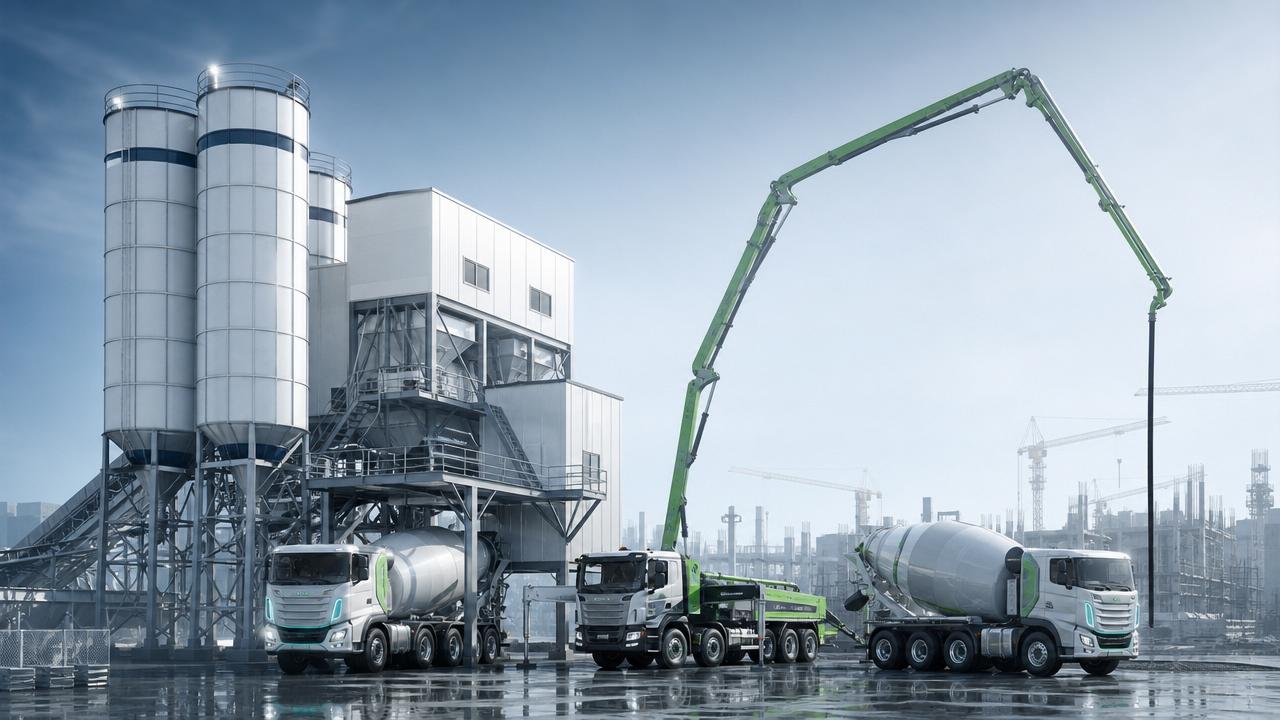
2026 concrete technology trends are moving from equipment upgrades to system-wide transformation
From AI-driven batching plants to low-carbon mixes and smarter pumping systems, concrete technology trends are redefining project delivery in 2026.
These shifts matter because cost pressure, carbon rules, labor shortages, and project complexity now converge across global construction and infrastructure activity.
For concrete, pumping, batching, and piling ecosystems, the real change is no longer isolated innovation. It is coordinated intelligence across machines, materials, and site execution.
In this environment, concrete technology trends influence equipment selection, maintenance planning, jobsite productivity, quality consistency, and long-term asset performance.
DFCS tracks this transition closely through the linked fields of concrete batching, pump trucks, mixer fleets, rotary drilling, and deep foundation systems.
The market signals behind concrete technology trends are becoming hard to ignore
Several signals show that 2026 will be a decisive year for concrete technology trends across integrated construction machinery markets.
First, projects demand tighter quality tolerance. Concrete strength, workability, and delivery timing must now align with digital records and traceable production data.
Second, environmental compliance is moving from optional branding to contractual necessity. Dust control, emissions reduction, noise limits, and recycled material integration are expanding.
Third, pumping and foundation work face more difficult sites. Urban density, high-rise complexity, and mixed geology increase the need for precision control.
Fourth, data is becoming operational infrastructure. Real-time monitoring now supports decision-making for batching accuracy, pump pressure stability, wear prediction, and fleet scheduling.
As a result, concrete technology trends are increasingly evaluated through whole-project efficiency rather than through standalone machine specifications.
What is driving concrete technology trends in 2026
The strongest drivers can be summarized across regulation, economics, digitalization, materials science, and construction risk control.
Six concrete technology trends that will reshape mixing and pumping
1. AI-assisted batching is improving consistency under variable conditions
Modern batching plants are moving beyond fixed recipes. AI models adjust water, admixtures, and sequencing based on moisture, temperature, and target performance.
This is one of the most visible concrete technology trends because quality variation directly affects waste, delays, pumpability, and structural reliability.
2. Low-carbon concrete is becoming a mainstream specification
Blended binders, supplementary cementitious materials, and carbon-aware mix design are expanding from flagship projects into broader commercial use.
However, lower-carbon mixes often change rheology and early strength behavior. That makes pumping strategy, curing control, and testing discipline more important.
3. Smarter pumping systems are reducing pressure spikes and wear
Advanced hydraulic control, boom stability algorithms, and sensor-based feedback now help maintain smoother delivery under difficult site geometries.
Among concrete technology trends, this one has immediate operational value because unstable flow increases blockage risk, component damage, and safety concerns.
4. Electric and lightweight mixer trucks are changing transport economics
New energy mixer fleets support lower emissions and quieter urban operation. Lightweight structures also improve payload efficiency and route flexibility.
The challenge is not only energy transition. It also involves charging logistics, drum performance, thermal management, and uptime planning.
5. Predictive maintenance is replacing reactive service models
Wear monitoring for pump pipes, drill tools, hydraulic systems, and mixing components is increasingly linked to real operating data.
This shift turns concrete technology trends into measurable business outcomes through fewer stoppages, better spare parts timing, and safer equipment availability.
6. Foundation and concrete data streams are becoming interconnected
Piling depth, ground response, drilling conditions, and concrete placement records are increasingly analyzed together rather than in separate silos.
For deep urban projects, this integration improves schedule coordination and supports better decisions across excavation, reinforcement, pouring, and load transfer stages.
How concrete technology trends affect major business and site functions
These changes are not limited to machinery engineering. Concrete technology trends alter planning logic across supply, execution, compliance, and asset management.
- Mix design teams must balance carbon reduction with pumpability, strength development, and weather sensitivity.
- Batching operations need stronger digital traceability and closed-loop quality correction.
- Fleet coordination requires smarter dispatch between plants, mixer trucks, and pump trucks.
- Foundation works need tighter alignment between geological risk and concrete placement timing.
- Maintenance planning becomes more data-based and less dependent on fixed service intervals.
The broad implication is clear. Competitive advantage increasingly comes from linking process intelligence across the entire concrete and deep foundation chain.
The priority areas worth watching most closely
Not every trend carries equal urgency. The following issues deserve continuous attention when evaluating concrete technology trends for 2026 and beyond.
- Whether low-carbon mixes can maintain stable pumping performance at scale.
- Whether batching platforms can convert sensor data into actionable quality control.
- Whether electric mixer deployment fits local infrastructure and duty cycles.
- Whether long-boom pump control systems can reduce vibration without productivity loss.
- Whether foundation and concrete records can be unified for risk review and compliance evidence.
- Whether wear prediction models are accurate enough to support inventory and uptime decisions.
A practical response framework for 2026
Why the next advantage will come from intelligence stitching
The most important lesson from current concrete technology trends is that isolated optimization is no longer enough.
Value now comes from connecting batching precision, pumping stability, transport efficiency, geological insight, and maintenance intelligence into one operating model.
That is exactly where DFCS adds perspective. It connects concrete machinery evolution with deep foundation realities and infrastructure-grade decision intelligence.
As 2026 approaches, the winners will be those who treat concrete technology trends not as headlines, but as signals for coordinated operational redesign.
Next steps to turn trend awareness into action
Start by reviewing where performance data already exists across batching, pumping, transport, and foundation activities.
Then identify one or two high-impact pilots, such as AI mix adjustment, pump wear monitoring, or low-carbon pumping validation.
Use those pilots to define measurable benchmarks for quality, emissions, uptime, and total delivery efficiency.
Following concrete technology trends is useful. Converting them into integrated execution capability is what creates durable advantage.
 How to Evaluate Delivery Reliability from Overseas Construction Machinery SuppliersTime : Sep 01, 2026
- Which concrete equipment industry trends are reshaping plant investment decisionsTime : Aug 19, 2026
- How construction machinery sustainability trends affect fleet upgrade decisionsTime : Aug 14, 2026
Industry Briefing
Get the top 5 industry headlines delivered to your inbox every morning.