
Concrete Pumping Machinery: Choosing Line or Boom Pumps

Selecting the right concrete pumping machinery is a technical decision that directly affects placement accuracy, cycle time, site safety, and total project cost.
For technical evaluators, the choice between line pumps and boom pumps depends on more than reach or volume.
It requires assessing concrete mix behavior, access constraints, pumping pressure, labor requirements, and equipment utilization across the project lifecycle.
This guide breaks down the engineering and operational factors that determine which pump type performs best under complex construction conditions.
Concrete Pumping Machinery Decisions Start With Site Reality
Concrete pumping machinery should be selected from the placement scenario backward, not from equipment specifications alone.
A pump with impressive output can still underperform when access, hose routing, discharge control, or crew coordination is unsuitable.
Line pumps and boom pumps solve different site constraints. Both can support slabs, columns, foundations, tunnels, and repair works.
However, they differ sharply in setup speed, placement flexibility, pressure behavior, and safety zoning.
DFCS observes that modern projects increasingly require integrated judgments across pumping hydraulics, logistics, carbon targets, and digital scheduling.
That makes concrete pumping machinery selection a strategic productivity decision, especially in dense urban and mega-civil engineering environments.
When Line Pumps Fit Narrow, Distributed, or Low-Volume Scenarios
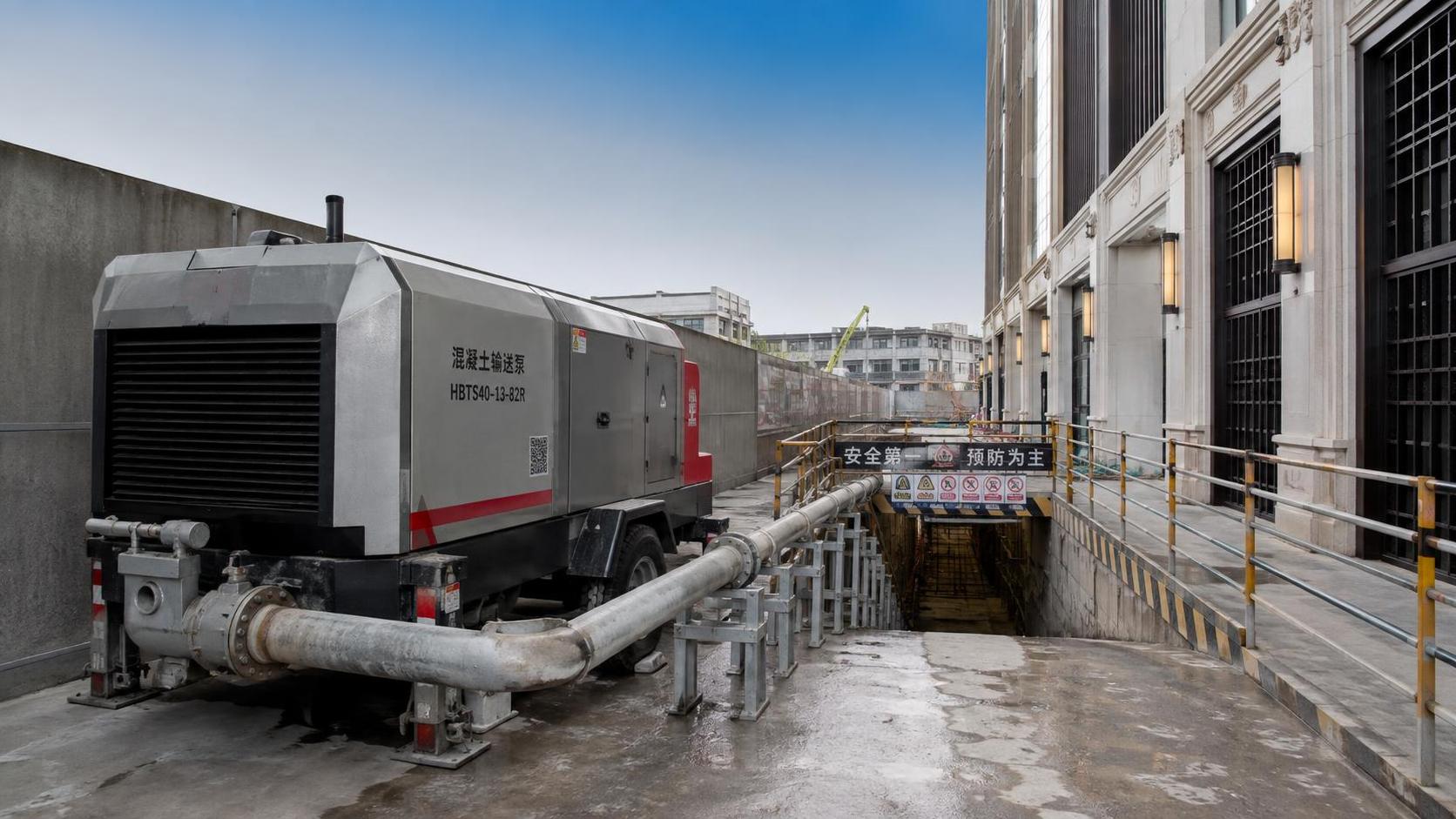
Line pumps are commonly chosen when concrete must travel through flexible or steel pipelines into constrained placement areas.
They are useful for basements, sidewalks, residential slabs, retaining walls, ground beams, and small commercial structures.
This type of concrete pumping machinery can enter scenarios where a large truck-mounted boom cannot safely position outriggers.
Line pumps also support staged pours across separated areas, provided hose handling and pressure losses are planned correctly.
Core judgment points for line pump use
- Access is restricted by gates, traffic, buildings, trees, or temporary structures.
- Placement volume is moderate, intermittent, or split into multiple small zones.
- The concrete mix is pumpable through smaller delivery lines without segregation.
- Labor is available for hose movement, monitoring, communication, and cleanup.
- The project can tolerate longer setup and repositioning compared with boom placement.
Line pumps reward careful planning. Hose diameter, bend count, vertical lift, and slurry priming all influence performance.
When these variables are ignored, concrete pumping machinery may experience blockages, pressure spikes, or irregular discharge.
When Boom Pumps Fit Fast, Elevated, or High-Volume Scenarios
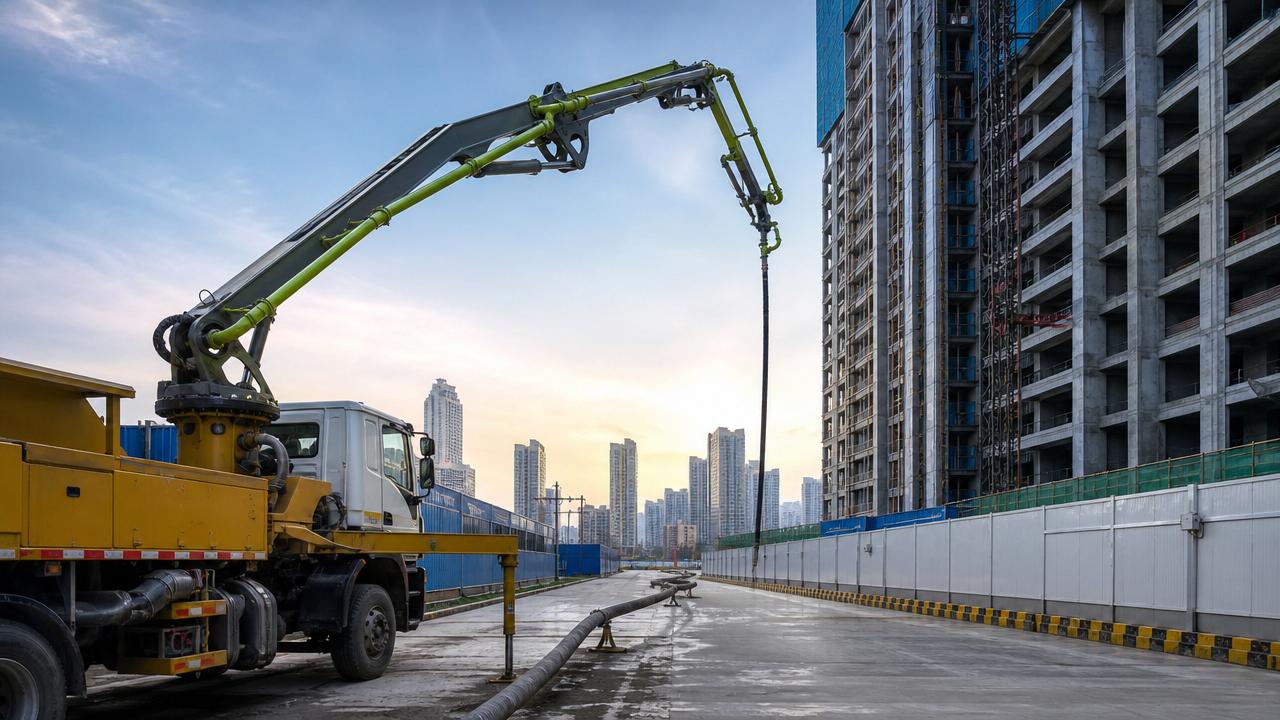
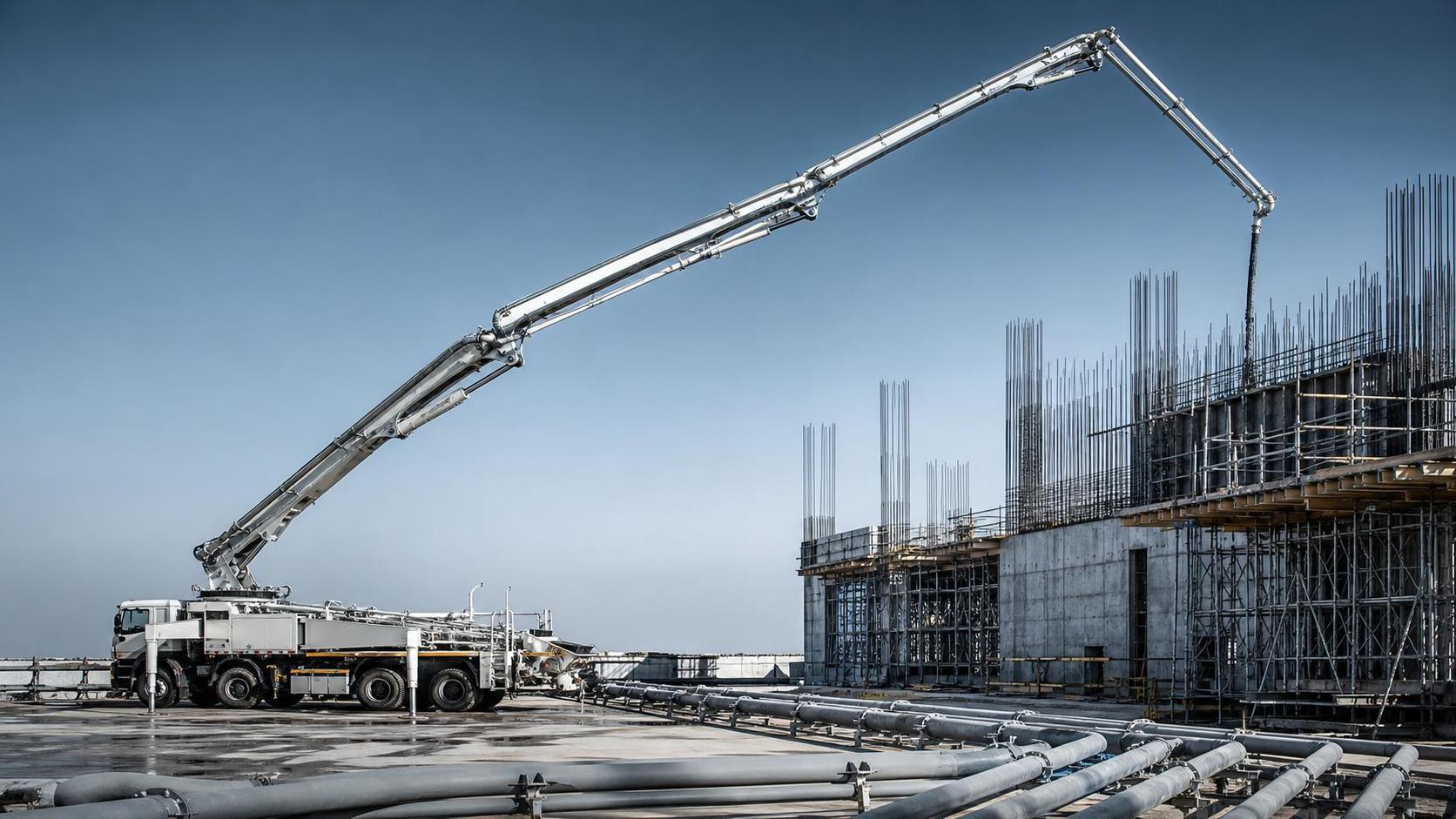
Boom pumps are designed for rapid placement where reach, height, and production rhythm matter.
They are common on high-rise floors, bridge decks, large slabs, industrial yards, podium structures, and infrastructure pours.
This concrete pumping machinery uses a hydraulic placing boom to position the discharge hose with controlled movement.
The result is faster coverage with less manual hose dragging, especially when pour zones are large and continuous.
Core judgment points for boom pump use
- The site has stable ground and enough space for outriggers.
- Continuous placement volume justifies higher mobilization and operating cost.
- The pour requires vertical reach, horizontal reach, or obstacle clearance.
- Cycle time reduction is more valuable than minimal equipment cost.
- Safety zoning can be maintained around the truck, boom, and discharge area.
Boom pumps are not automatically superior. Poor staging can waste reach, create traffic conflicts, or overload unstable ground.
The best outcome occurs when concrete pumping machinery is matched to pour sequencing and site logistics before arrival.
Scenario Breakdown: Matching Pump Type to Construction Conditions
Urban infill and tight-access works
Urban infill projects often involve narrow roads, overhead utilities, limited staging zones, and strict noise windows.
Line pumps usually provide better adaptability because pipelines can be routed through alleys, doors, or temporary openings.
For this scenario, concrete pumping machinery must prioritize controlled access, hose safety, and reliable communication.
High-rise and elevated structural pours
High-rise work demands stable output, vertical delivery capacity, and precise coordination with batching cycles.
Boom pumps can support lower and mid-level pours when reach is sufficient and setup space is available.
For extreme height, stationary pumps with delivery pipelines may replace truck-mounted concrete pumping machinery.
The key judgment is not only height. It includes pressure reserve, concrete temperature, pumpability, and pipeline friction.
Large slabs and industrial floors
Large slabs benefit from high placement speed, consistent discharge, and reduced manual handling.
Boom pumps often perform better because the boom covers wide areas while maintaining continuous delivery.
Concrete pumping machinery in this scenario should align with finishing crews, joint layout, and truck arrival rhythm.
Deep foundations and below-grade structures
Below-grade placements may include pile caps, raft foundations, diaphragm wall capping beams, and basement slabs.
Line pumps work well when pipelines can descend safely and discharge points are difficult for booms to access.
Boom pumps may still win when the excavation edge is stable and reach covers the full work face.
Here, concrete pumping machinery selection should include ground bearing checks and fall protection planning.
Different Scenario Requirements Compared
This comparison shows why concrete pumping machinery must be evaluated through actual placement constraints, not generic capacity claims.
The preferred option can change when access, safety, or concrete rheology becomes the dominant limitation.
Engineering Factors That Separate Good Choices From Costly Ones
Concrete mix behavior
Concrete pumping machinery depends heavily on mix design. Slump, aggregate shape, cementitious content, admixtures, and temperature all matter.
Harsh mixes increase friction and blockage risk. Overly wet mixes may segregate, reducing strength and placement quality.
Pump selection should be coordinated with batching plant controls, transit time, and on-site slump verification.
Pressure, distance, and pipeline geometry
Every bend, hose section, vertical lift, and reducer adds resistance to the pumping system.
Line pumps may require careful pressure calculations when long horizontal runs or multiple bends are present.
Boom pumps reduce some pipeline complexity, but the boom configuration still affects discharge stability and operator control.
Labor, safety, and communication
Line pump work usually requires more personnel near the delivery hose.
Boom pumps reduce hose dragging but introduce boom swing, outrigger, overhead clearance, and exclusion-zone requirements.
Concrete pumping machinery should be paired with clear hand signals, radios, emergency stop awareness, and discharge control procedures.
Scenario Adaptation Recommendations for Reliable Pump Selection
- Map the pour path before selecting concrete pumping machinery.
- Confirm truck access, turning space, outrigger area, and traffic restrictions.
- Calculate delivery distance, elevation change, bend count, and hose diameter.
- Check whether the mix is suitable for the intended pump line and discharge rate.
- Match pump output with batching capacity and finishing crew speed.
- Plan backup actions for blockages, weather delays, and truck scheduling gaps.
- Review safety zones for hose whip, boom movement, ground bearing, and overhead hazards.
These steps turn concrete pumping machinery selection into a controlled engineering process.
They also reduce the risk of choosing equipment that looks efficient on paper but fails on site.
Common Misjudgments in Line Pump and Boom Pump Scenarios
A common error is assuming boom pumps are always faster. They are faster only when setup space and pour sequencing support them.
Another error is underestimating line pump labor. Hose movement can slow placement and increase fatigue on complex routes.
Some teams ignore mix sensitivity. Concrete pumping machinery cannot compensate for a poorly controlled or unsuitable mix.
Others focus only on hourly rental cost. The real cost includes cycle time, waiting time, rework, safety exposure, and cleanup.
Ground conditions are also frequently overlooked. Boom pump outriggers need verified support, especially near excavations or underground utilities.
For line pumps, unsupported hoses, sharp bends, and poor priming can create dangerous pressure events.
Choosing Concrete Pumping Machinery With Lifecycle Value in Mind
The strongest decision considers more than one pour. Utilization across the project lifecycle can change the preferred pump type.
A boom pump may justify its cost when repeated high-volume placements reduce schedule risk.
A line pump may deliver better value when multiple small, difficult-access pours dominate the program.
Low-carbon construction targets also influence concrete pumping machinery decisions.
Efficient pump scheduling reduces idle mixer time, unnecessary repositioning, wasted concrete, and energy consumption.
Digital dispatching, telematics, and maintenance data are increasingly valuable for selecting reliable pumping assets.
In DFCS intelligence terms, pump selection connects fluid pressure, site mechanics, automation, and construction productivity.
Action Guide: Turning the Choice Into a Practical Next Step
Start by creating a placement profile for each pour zone.
Include volume, elevation, distance, access, discharge points, concrete mix, delivery frequency, and safety constraints.
Then compare line pumps and boom pumps against these conditions using measurable criteria, not assumptions.
If flexibility, restricted access, and controlled low-volume placement dominate, line pumps usually fit better.
If speed, reach, elevation, and continuous high-volume placement dominate, boom pumps usually create stronger value.
The most reliable concrete pumping machinery decision comes from aligning equipment capability with site-specific construction logic.
For deeper evaluation, DFCS recommends reviewing pump pressure requirements, batching compatibility, access planning, and safety zoning together.
That integrated approach helps transform concrete pumping machinery from a rental choice into a productivity advantage.
Industry Briefing
Get the top 5 industry headlines delivered to your inbox every morning.