
How to Compare High-Frequency Vibration Piling Solutions

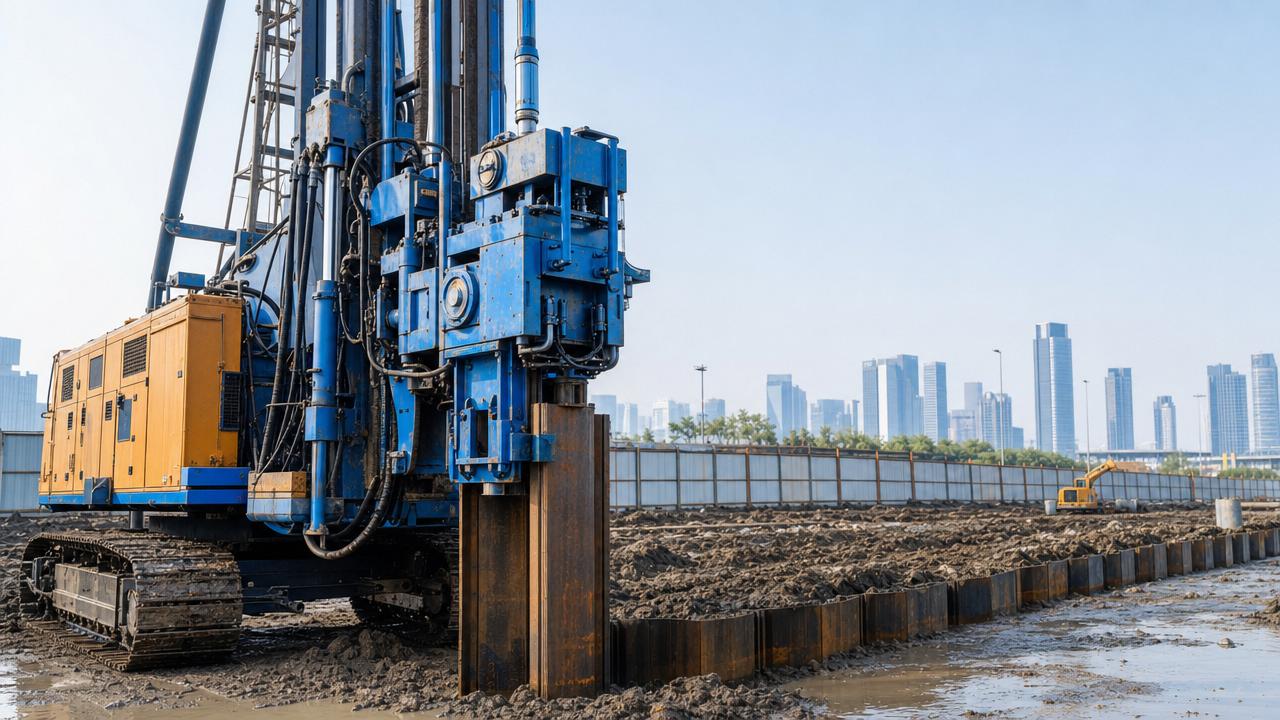
Why Comparing High-Frequency Vibration Piling Solutions Requires a Scenario-Based View
Selecting among high-frequency vibration piling solutions requires more than checking nominal force or speed.
A reliable comparison must connect pile type, soil response, site limits, energy efficiency, and compliance requirements.
That is especially true in modern foundation work, where urban constraints and geotechnical uncertainty often shape equipment performance more than brochure ratings.
For global construction intelligence platforms such as DFCS, this topic matters because piling choices affect productivity, carbon exposure, neighborhood impact, and long-term foundation integrity.
The best high-frequency vibration piling solutions are not universally “stronger.”
They are better matched to real project scenarios, operating windows, and lifecycle expectations.
When Soft Soil and Long Piles Change the Comparison Standard
Soft clay, loose sand, and reclaimed ground often respond well to vibration-based installation.
In these conditions, high-frequency vibration piling solutions are often judged by penetration continuity rather than peak force alone.
The key question is whether the system keeps energy transfer stable as pile depth increases.
Long piles amplify alignment sensitivity.
A machine with strong frequency control and clamp stability can reduce deflection, pile stress concentration, and interruption risk.
Core checks for soft-ground projects
- Frequency stability under variable resistance
- Amplitude suitability for pile geometry
- Clamp reliability during long-cycle operation
- Real penetration rate, not unloaded speed
- Powerpack efficiency during continuous duty
If a solution loses effective vibration transmission at depth, reported capacity becomes less meaningful.
That is why field data matters more than catalog claims in soft-ground foundation evaluation.
How Urban and Noise-Sensitive Sites Redefine Equipment Priorities
City-center projects impose a different comparison framework for high-frequency vibration piling solutions.
Nearby buildings, transit lines, hospitals, and utilities can make vibration control more important than raw output.
Here, the evaluation should focus on transmitted ground vibration, acoustic enclosure quality, and controllability during start-stop operations.
A technically advanced system usually includes variable frequency adjustment, precise hydraulic response, and monitoring interfaces for traceable compliance records.
What to compare in restricted urban environments
- Measured noise levels at defined distances
- Ground vibration reduction technologies
- Compatibility with urban static pressing hybrids
- Digital monitoring for permits and reporting
- Mobility in narrow access or low-headroom zones
In these scenarios, lower disturbance can create higher total productivity.
Fewer complaints, fewer shutdowns, and better permit compliance often outweigh slightly slower pile driving speed.
What Changes When Soil Layers Become Mixed or Unpredictable
Some projects involve alternating clay, silt, cobbles, fill, or weathered rock.
These are the toughest conditions for comparing high-frequency vibration piling solutions.
A system may perform well in uniform soft soils but lose efficiency abruptly in mixed layers.
The best comparison standard becomes adaptability under changing resistance, not single-condition peak performance.
Field teams should examine whether the vibrator can maintain usable penetration without causing pile damage or excessive wear.
Mixed-ground judgment points
Check torque and hydraulic reserve for short resistance spikes.
Review wear protection in clamps, bearings, and eccentric systems.
Confirm if the solution supports fast parameter adjustment between pile sections.
Ask for data from projects with similar geology, not only similar pile sizes.
Comparing Application Scenarios Side by Side
This side-by-side view helps separate marketing language from operational fit.
It also shows why one set of high-frequency vibration piling solutions cannot dominate every foundation scenario.
How to Judge Efficiency Beyond Rated Power and Frequency
Many comparisons focus too heavily on rated power, centrifugal force, or nominal frequency band.
Those values matter, but they do not fully describe pile installation efficiency.
A better method is to compare effective energy transfer per installed meter.
That includes hydraulic efficiency, vibration transmission, clamp fit, setup time, and interruptions.
Useful performance indicators
- Average installed meters per shift
- Energy or fuel consumed per pile
- Time lost to clamp repositioning
- Frequency of pile refusal or restart
- Maintenance downtime per operating month
In repetitive industrial or port projects, these indicators often reveal the most cost-effective high-frequency vibration piling solutions.
They connect machine behavior with real project output, not only laboratory potential.
Scenario-Based Recommendations for Better Equipment Matching
- Choose controllability first when operating near sensitive structures.
- Choose sustained energy transfer first for deep soft-ground installation.
- Choose wear resistance and adjustment flexibility for mixed geology.
- Choose lifecycle serviceability for long-duration infrastructure programs.
- Choose digital monitoring where regulatory evidence is frequently required.
These recommendations support a more realistic selection process for high-frequency vibration piling solutions.
They also align with broader industry shifts toward low-emission construction, data-backed operations, and safer deep foundation execution.
Common Misjudgments That Distort the Comparison
One common error is assuming higher frequency always means better piling performance.
Actual performance depends on matching frequency and amplitude to soil behavior and pile section characteristics.
Another mistake is ignoring clamp design.
Poor clamping can waste energy, damage pile surfaces, and reduce installation consistency.
A third oversight is comparing purchase price without maintenance structure, spare part lead time, or hydraulic system durability.
Low initial cost may produce high project risk if uptime is unstable.
Finally, some evaluations skip site-specific testing.
For high-frequency vibration piling solutions, pilot verification is often the fastest path to reliable selection.
Next Steps for Comparing High-Frequency Vibration Piling Solutions with Confidence
Start with the actual project scenario, not the equipment brochure.
List soil variability, pile type, depth range, access conditions, and environmental restrictions.
Then request matched case histories, performance logs, and measurable compliance data.
Shortlist high-frequency vibration piling solutions using installed-meter efficiency, disturbance control, and service reliability together.
Where uncertainty remains, arrange a field demonstration under representative ground conditions.
That practical step can clarify whether a solution delivers balanced foundation performance, regulatory fit, and operational value across the full project lifecycle.
In a market shaped by deeper foundations, smarter machinery, and tighter urban constraints, informed comparison is the real competitive advantage.
Industry Briefing
Get the top 5 industry headlines delivered to your inbox every morning.