
Hydraulic Systems Failures That Slow Field Repairs

Hydraulic Systems Failures That Slow Field Repairs
When field repairs stall, hydraulic systems are often the hidden cause behind lost hours, unsafe workarounds, and rising jobsite pressure.
On concrete pumps, rotary drilling rigs, and piling equipment, small hydraulic systems faults can trigger long delays.
A hose looks fine, but pressure drops.
A valve responds slowly, but the real issue is contamination.
That is why faster troubleshooting starts with knowing which failures usually hide in plain sight.
This guide breaks down the most common hydraulic systems problems, why they slow repairs, and what actions help restore uptime faster.
Why hydraulic systems failures create long field delays
Hydraulic systems power movement, force, steering, rotation, and positioning across heavy equipment.
When one part fails, the symptom often appears somewhere else.
That mismatch wastes time during field repairs.
For example, slow boom movement may suggest a bad cylinder.
In reality, the root cause may be overheated oil, air ingress, or a worn pump.
In field conditions, dust, heat, vibration, and rushed maintenance make hydraulic systems even harder to diagnose.
The result is repeated testing, part swapping, and extra downtime that could have been avoided with a more structured check.
The hydraulic systems failures that most often slow repairs
1. Contaminated hydraulic oil
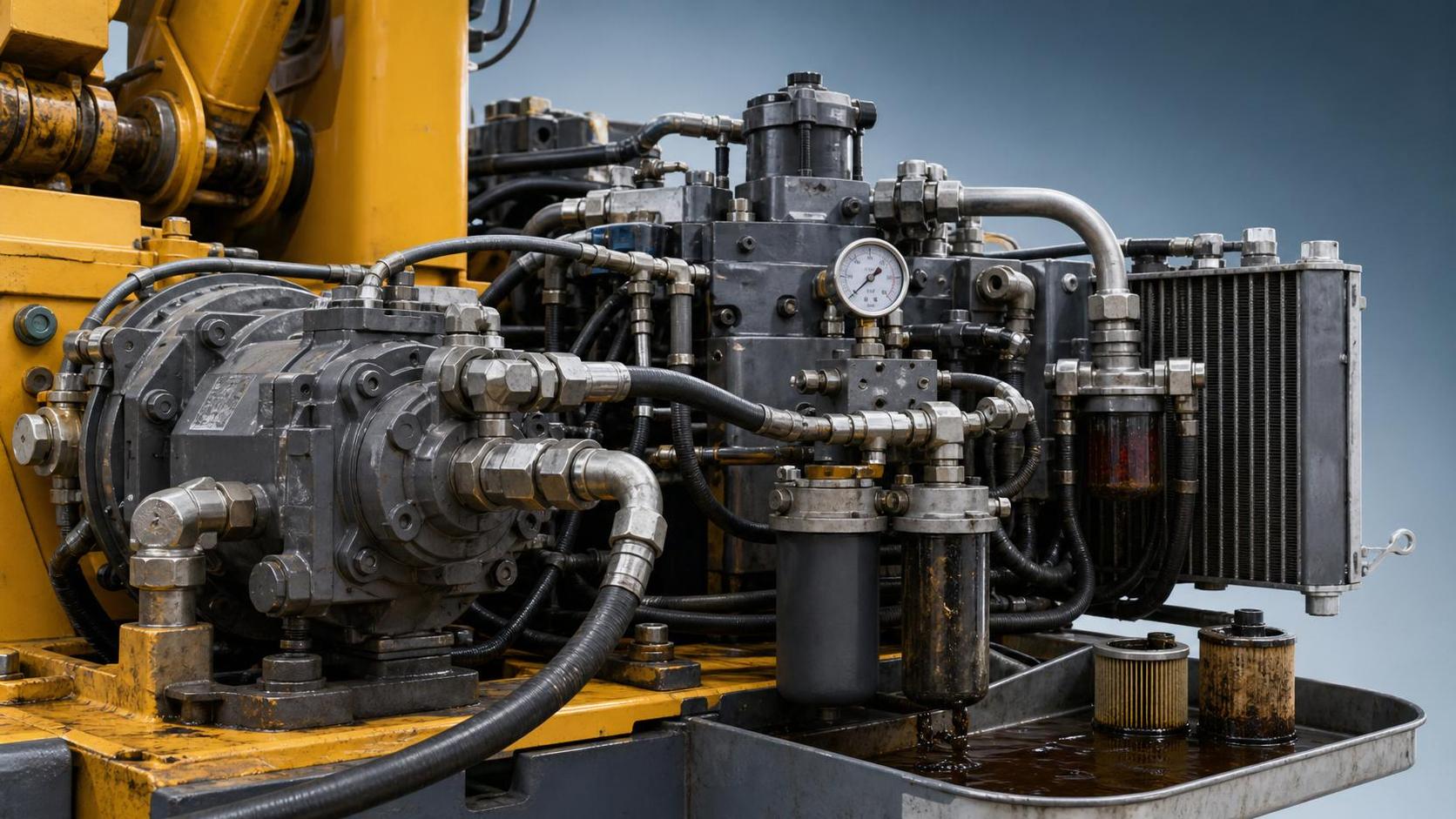
Contamination is one of the most common hydraulic systems issues in heavy equipment.
Dust, water, metal particles, and degraded oil damage pumps, valves, seals, and motors.
The trouble is that contamination rarely announces itself clearly.
Typical signs include:
- Jerky actuator movement
- Slow response after startup
- Noise from pumps or valves
- Frequent filter blockage
- Unstable pressure readings
If contaminated oil is missed, crews may replace healthy components and still keep the same fault.
A cleaner repair path starts with fluid sampling, filter inspection, and checking reservoir breathers before deeper teardown.
2. Air entering hydraulic systems
Air ingress is another failure that slows field repairs because symptoms feel inconsistent.
A machine may work normally for minutes, then lose smooth control.
Foamy oil, cavitation noise, and spongy movement often point to air in hydraulic systems.
Loose suction fittings, cracked inlet hoses, and low oil levels are common causes.
Because the leak may not drip externally, this problem is often overlooked during rushed inspections.
3. Pressure loss from worn pumps or internal leakage
Pressure loss is where many hydraulic systems repairs become expensive.
Worn pumps, relief valves stuck open, and internal cylinder leakage all reduce force.
The machine may still move, but not with normal speed or load capacity.
On a concrete pump, that can affect boom stability or pipeline support functions.
On a drilling rig, it can weaken rotation, feed, or winch control.
Accurate pressure testing at key points helps separate pump wear from downstream leakage.
4. Overheating in hydraulic systems
Heat changes everything inside hydraulic systems.
Oil thins out, seals harden, and component wear accelerates.
Yet overheating is often treated as a side issue instead of the main fault.
Common reasons include:
- Blocked coolers
- Incorrect oil viscosity
- Excessive bypass flow
- Continuous high-load operation
- Fan or thermostat problems
If oil temperature is not checked early, technicians can chase several false causes before finding the real one.
5. Sticking or damaged valves
Valves are central to hydraulic systems control, so even small faults create confusing symptoms.
A sticking spool may cause delayed motion, drift, or sudden movement.
Electrical checks may pass, while the real issue remains mechanical contamination or scoring.
This is especially common on machines exposed to cement dust, mud, and repeated shock loads.
6. Hose, seal, and fitting failures
Not every hydraulic systems failure is dramatic.
Minor leaks around fittings, hose ends, and seals can slowly undermine repair success.
These faults lower efficiency, invite contamination, and create safety hazards near high-pressure lines.
A replaced component may fail again quickly if the original hose routing or fitting stress was never corrected.
A practical troubleshooting sequence for hydraulic systems
In the field, speed matters, but random checks slow everything down.
A simple sequence makes hydraulic systems diagnosis faster and safer.
- Confirm the exact symptom, load condition, and operating temperature.
- Inspect oil level, oil condition, and visible leaks first.
- Listen for cavitation, chatter, or abnormal pump noise.
- Check filters, breathers, and suction-side connections.
- Measure pressure at the pump, valve bank, and actuator circuit.
- Compare hot performance against cold startup behavior.
- Inspect valves and cylinders only after fluid and pressure checks.
This order prevents guesswork and helps narrow hydraulic systems faults before parts are removed unnecessarily.
What slows hydraulic systems repairs even more
Some delays come from the failure itself.
Others come from the repair process around it.
The biggest repair slowdowns usually include:
- Replacing parts before testing hydraulic systems pressure and flow
- Ignoring oil analysis after repeat component failures
- Using the wrong hydraulic oil grade
- Skipping suction-side inspection because no external leak is visible
- Cleaning around components poorly before opening the circuit
- Failing to record pressure, temperature, and fault patterns
In real jobsite conditions, better repair habits often save as much time as better parts.
How to prevent repeat hydraulic systems failures
Prevention is not just about scheduled maintenance.
It is about protecting hydraulic systems from the exact stresses field equipment sees every day.
The most effective steps are straightforward:
- Use clean transfer tools when topping up hydraulic oil.
- Replace filters on condition and interval, not by memory.
- Inspect hoses at clamp points, bends, and heat zones.
- Track operating temperature during heavy-duty cycles.
- Sample oil after major repairs or repeated overheating events.
- Train crews to recognize early hydraulic systems warning signs.
For fleets handling concrete pumping, piling, or drilling, these habits reduce surprise stoppages and improve repair planning.
More importantly, they help keep hydraulic systems reliable under high pressure, dirty environments, and nonstop project schedules.
Final takeaway
Most repair delays do not begin with a catastrophic breakdown.
They begin with missed clues inside hydraulic systems.
Contamination, air ingress, overheating, pressure loss, valve sticking, and minor leakage are the failures that deserve the fastest attention.
When these issues are checked in a logical order, field repairs become more predictable and much less wasteful.
That also means safer decisions, fewer repeat callouts, and stronger machine availability across demanding jobsites.
If hydraulic systems keep slowing repairs, start with the basics, test before replacing, and treat fluid condition as a primary diagnostic signal.
Industry Briefing
Get the top 5 industry headlines delivered to your inbox every morning.