
Modern Construction Techniques Guide for Faster Site Delivery

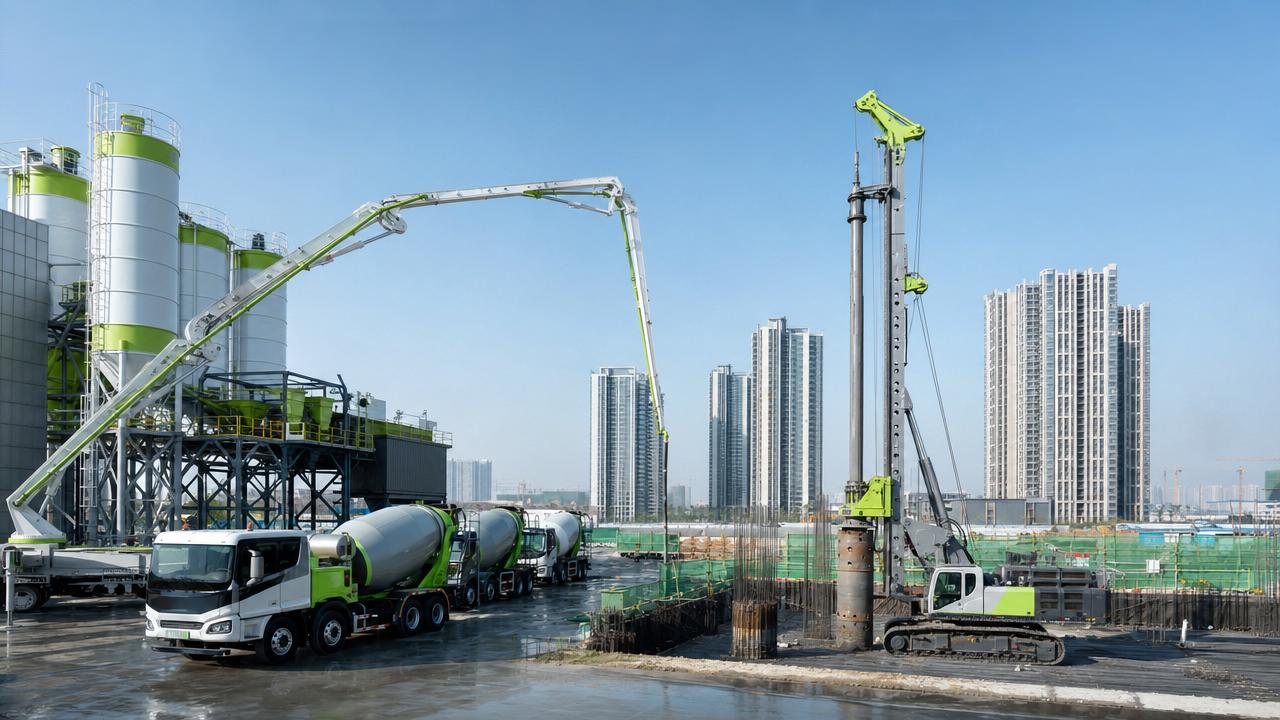
A reliable modern construction techniques guide is no longer just about faster machines. It is about aligning equipment intelligence, workflow planning, low-carbon concrete systems, and deep foundation certainty.
Faster site delivery depends on choosing concrete pumping, batching, drilling, and piling strategies before delays appear. This guide explains how advanced methods compress schedules and control risk.
Modern Construction Techniques Guide: Core Definition
A modern construction techniques guide connects construction methods, equipment selection, digital control, and quality assurance into one coordinated delivery framework.
The focus is not only speed. It also includes predictable production, safer sequencing, better material control, and lower environmental impact.
In concrete and deep foundation works, time loss often begins underground or inside the material supply chain.
A delayed pile, unstable borehole, blocked pump line, or inaccurate batching process can affect the entire construction schedule.
Therefore, a practical modern construction techniques guide should start with foundation reliability and concrete flow continuity.
This approach supports faster site delivery by reducing waiting time, rework, equipment conflict, and late-stage correction.
Industry Signals Shaping Faster Site Delivery
Global projects are becoming taller, denser, and more restricted by space, carbon rules, noise limits, and safety expectations.
A modern construction techniques guide must reflect these pressures, especially in urban infrastructure and high-rise development.
These signals show why faster delivery requires more than adding labor or extending working hours.
A modern construction techniques guide helps convert site uncertainty into controlled production logic.
Concrete Systems as the Speed Backbone
Concrete batching, mixing, transport, and pumping form a continuous production chain.
If one link becomes unstable, placement speed falls and quality risks increase immediately.
Smart batching plants
Smart batching plants improve delivery by controlling aggregate moisture, cement dosage, admixture timing, and production records.
High-precision weighing systems reduce mix variation and support predictable pumpability across long pouring windows.
Enclosed dust removal and automated loading also reduce environmental interruptions around sensitive urban projects.
Mixer truck coordination
Mixer trucks act as mobile buffers between production and placement.
Route planning, drum speed control, discharge timing, and temperature management directly affect site delivery.
Electric mixer trucks add value where emissions, noise, and fuel cost control are important.
Concrete pump trucks
Concrete pump trucks shorten vertical and horizontal delivery paths, especially for high-rise cores and restricted construction faces.
Advanced hydraulic control, boom damping, and pressure monitoring reduce blockage risks and improve placement precision.
A strong modern construction techniques guide treats pump selection as a schedule decision, not only an equipment decision.
Deep Foundation Techniques for Schedule Certainty
Foundations define whether upper-structure work can proceed confidently.
Delays in piling or borehole stabilization often spread across cranes, concrete supply, reinforcement work, and inspection windows.
A modern construction techniques guide should evaluate ground conditions before selecting piling equipment or drilling methods.
- Rotary drilling rigs support large-diameter piles in complex strata.
- Casing systems reduce borehole collapse in sand, gravel, and groundwater conditions.
- High-frequency vibration improves pile installation speed in suitable soils.
- Hydraulic static pressure piling reduces vibration and noise in dense urban zones.
- Digital torque, depth, and verticality data improve installation traceability.
The most effective foundation method is not always the fastest in isolation.
It is the method that reduces total uncertainty across drilling, inspection, concreting, and follow-on works.
Application Value Across Construction Workflows
A modern construction techniques guide creates value by linking engineering decisions with daily production outcomes.
The strongest gains appear when planning, machinery, material control, and site logistics are designed together.
This value is measurable through shorter cycle times, fewer stoppages, better documentation, and lower correction costs.
It also supports more reliable bidding assumptions for complex infrastructure and building programs.
Typical Scenarios and Technique Selection
Technique selection should reflect site constraints, geology, structure type, concrete demand, and environmental restrictions.
A modern construction techniques guide becomes practical when it maps each scenario to the right equipment logic.
Scenario-based planning avoids equipment oversizing and prevents underpowered systems from becoming hidden schedule risks.
Practical Planning Methods for Faster Delivery
The following methods translate a modern construction techniques guide into site-level action.
- Start with ground investigation and convert geological risk into equipment selection criteria.
- Define concrete supply capacity before finalizing pour size and sequence.
- Match pump pressure, pipeline layout, and concrete rheology before high-volume placement.
- Use digital batching records to support strength, consistency, and compliance review.
- Plan standby equipment for critical drilling, pumping, and power supply activities.
- Review lifting, access, delivery, and turning paths before equipment mobilization.
- Track cycle times daily and adjust sequencing before delays accumulate.
These actions appear simple, but they create strong schedule protection when applied consistently.
The most useful modern construction techniques guide is one that supports decisions before the site becomes congested.
Quality, Safety, and Low-Carbon Considerations
Speed without control often creates rework, claims, and safety exposure.
Modern delivery methods should therefore combine productivity with verification, safe operation, and environmental discipline.
- Use enclosed batching plants where dust and material loss affect approvals.
- Monitor pump pressure trends to detect blockage risk early.
- Record pile depth, verticality, torque, and installation energy for traceability.
- Select electric or hybrid machines where fuel emissions restrict working hours.
- Keep maintenance intervals aligned with high-intensity production schedules.
Low-carbon construction is becoming part of schedule reliability.
Projects that fail emissions, dust, or noise requirements may lose more time than they save through aggressive acceleration.
For this reason, a modern construction techniques guide should treat sustainability as a production condition.
Implementation Checklist for Site Delivery
A concise checklist helps convert planning into repeatable execution.
This checklist supports faster decisions because it separates technical constraints from avoidable coordination gaps.
Building a Repeatable Modern Delivery System
A modern construction techniques guide is most powerful when it becomes a repeatable system, not a one-time document.
Each project should generate lessons on pump performance, batching accuracy, drilling productivity, and piling response.
Those lessons can refine future equipment shortlists, method statements, and risk allowances.
The DFCS perspective emphasizes this intelligence loop across concrete systems and deep foundation machinery.
Concrete pump trucks, mixer trucks, batching plants, rotary drilling rigs, and piling machinery should be assessed as one delivery ecosystem.
When this ecosystem is coordinated, faster site delivery becomes more predictable and less dependent on emergency correction.
Next Steps for Applying This Guide
Begin by reviewing the current project sequence against foundation risk, concrete supply stability, and equipment utilization.
Then identify where delays are most likely to occur before mobilization, not after production begins.
Use this modern construction techniques guide to compare drilling, piling, batching, pumping, and low-carbon options with measurable delivery criteria.
The next practical step is to build a site-specific method matrix covering geology, concrete demand, access limits, compliance needs, and backup planning.
With the right intelligence, modern construction techniques guide decisions can reduce uncertainty and help complex projects move faster with stronger control.
 How to Evaluate Delivery Reliability from Overseas Construction Machinery SuppliersTime : Sep 01, 2026
- Which concrete equipment industry trends are reshaping plant investment decisionsTime : Aug 19, 2026
- How construction machinery sustainability trends affect fleet upgrade decisionsTime : Aug 14, 2026

Industry Briefing
Get the top 5 industry headlines delivered to your inbox every morning.