
Foundation Engineering Trends to Watch in 2026

Foundation Engineering Trends to Watch in 2026
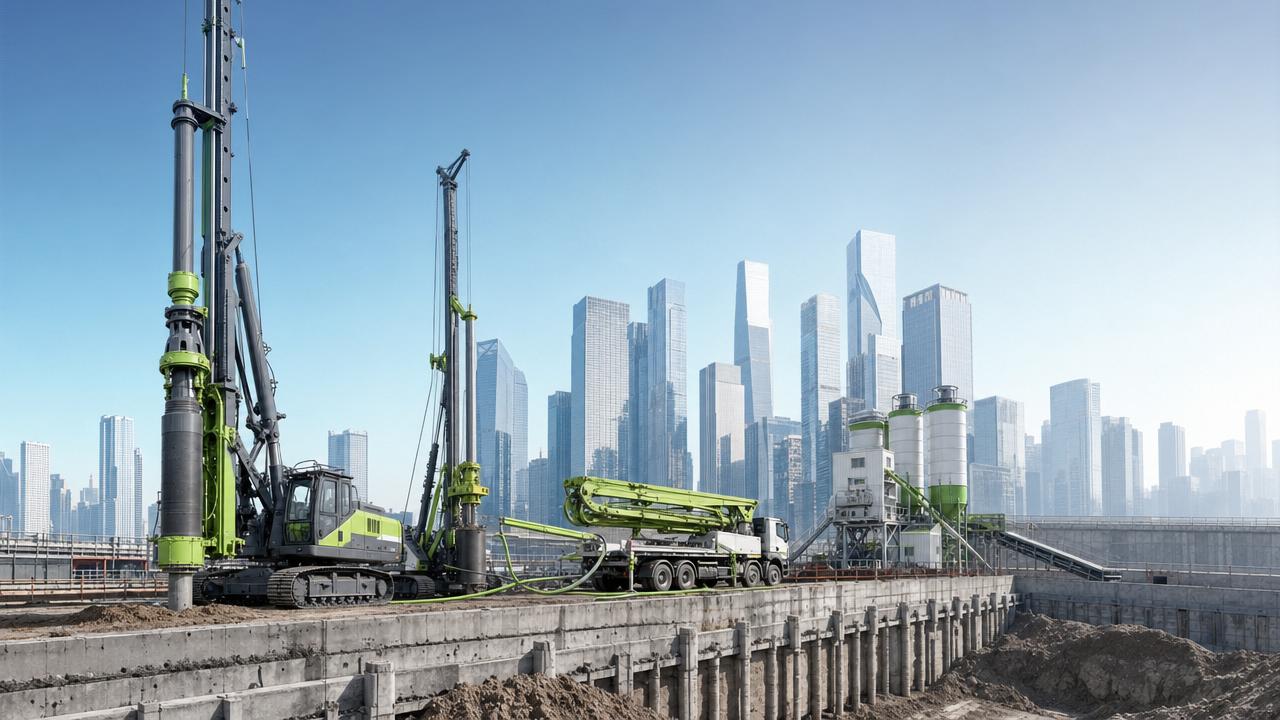
As mega-projects demand faster delivery, lower carbon output, and safer performance in complex ground conditions, foundation engineering trends in 2026 are becoming strategic signals.
From electrified piling machinery to AI-assisted drilling, these shifts will influence bidding power, lifecycle efficiency, and infrastructure resilience worldwide.
For DFCS, foundation engineering trends connect concrete pumping, batching, rotary drilling, and piling into one integrated construction intelligence framework.
Scenario Judgment: Why 2026 Demands a Different Foundation Strategy
Foundation work is no longer judged only by depth, diameter, or pile count.
Urban density, carbon reporting, ground uncertainty, and equipment availability now shape engineering choices from the first feasibility review.
The most important foundation engineering trends are scenario-driven, not technology-driven alone.
A metro station, offshore terminal, supertall tower, and industrial plant each requires different risk control logic.
In 2026, stronger performance will come from matching ground conditions, concrete logistics, energy limits, and noise rules before equipment selection.
That is why foundation engineering trends must be read through application scenarios, not isolated product upgrades.
Scenario One: Dense Urban Sites Need Quieter and Cleaner Piling
Urban foundation projects face stricter limits on vibration, dust, night work, and truck movement.
One of the strongest foundation engineering trends is the rise of low-noise piling methods for city renewal projects.
Hydraulic static pressing, optimized vibratory hammers, and enclosed spoil handling are gaining importance in constrained urban zones.
The core judgment point is not maximum force, but controllable disturbance near utilities, roads, hospitals, and occupied buildings.
Electric piling rigs will become more attractive where emissions are monitored at the site boundary.
This makes electrification one of the foundation engineering trends with immediate value in urban infrastructure delivery.
Key judgment points for urban foundations
- Required vibration threshold near existing structures.
- Available working hours and night noise restrictions.
- Electric power capacity for low-emission equipment.
- Concrete delivery routes and mixer truck waiting space.
Scenario Two: Supertall Buildings Require Deeper Data Visibility
Supertall buildings push rotary drilling rigs, concrete pumps, and batching systems toward higher precision.
Among foundation engineering trends, digital monitoring of borehole quality is becoming a decisive capability.
Torque, penetration rate, slurry condition, verticality, and tool wear must be captured in near real time.
This data helps identify hard rock transitions, unstable strata, or possible collapse before quality loss becomes expensive.
Concrete placement is another critical layer in this scenario.
High-pressure pumping, stable mix design, and reliable batching accuracy determine whether deep piles perform as designed.
In 2026, foundation engineering trends will reward teams that integrate drilling records with concrete delivery records.
What matters most in supertall foundation scenarios
- Real-time verticality control for large-diameter bored piles.
- Wear prediction for drill bits in hard rock layers.
- Concrete pump pressure stability during long-distance placement.
- Batching traceability for every critical structural pour.
Scenario Three: Transport Corridors Need Speed Without Losing Ground Control
Highways, railways, bridges, and logistics corridors require repetitive foundation work across changing geological zones.
Here, foundation engineering trends are shaped by productivity, mobility, fuel cost, and consistent quality across multiple work fronts.
Rotary drilling rigs with faster mobilization and automated parameter adjustment will gain stronger field relevance.
The key is rapid adaptation when shifting from clay to cobbles, weathered rock, or mixed fill.
Concrete batching plants must also become more modular and enclosed.
Mobile or semi-mobile plants with IoT weighing systems can reduce supply disruption across long project alignments.
This makes smart concrete logistics one of the foundation engineering trends with strong corridor-project value.
Scenario Four: Coastal and Energy Projects Need Durability-Led Decisions
Ports, offshore wind bases, petrochemical zones, and coastal industrial parks face corrosive environments and difficult access.
Foundation engineering trends in these scenarios are linked to durability, large-capacity equipment, and lifecycle maintenance reduction.
Pile materials, concrete mix design, curing control, and anti-corrosion protection become strategic decisions.
Equipment must handle heavy loads, variable weather windows, and strict safety controls near marine or energy assets.
In 2026, low-carbon concrete will be evaluated together with chloride resistance and early strength development.
This broadens foundation engineering trends from construction efficiency to full asset service life.
Scenario Five: Mega-Civil Projects Will Use AI as a Risk Filter
Artificial intelligence will not replace foundation expertise, but it will improve early warning and decision consistency.
Among foundation engineering trends, AI-assisted drilling and piling analytics are moving from pilot use to practical deployment.
Algorithms can compare machine behavior against expected ground models and detect abnormal torque, vibration, or settlement patterns.
For concrete systems, AI can support mix adjustment, pumpability prediction, and equipment maintenance scheduling.
The winning scenario is not full automation, but guided intervention before delay, rejection, or structural risk occurs.
This makes predictive intelligence one of the most practical foundation engineering trends for complex project environments.
Different Scenario Demands: What Changes Across Project Types
This comparison shows why foundation engineering trends must be interpreted against constraints, not adopted as generic upgrades.
Scenario Adaptation: Practical Moves for 2026 Planning
The most useful response to foundation engineering trends is a structured adaptation plan.
A plan should connect ground investigation, machinery capability, concrete supply, digital records, and regulatory obligations.
- Classify the site by disturbance sensitivity, not only soil type.
- Check whether electric equipment can meet duty-cycle demands.
- Require drilling and piling data formats before mobilization.
- Link batching accuracy with pile acceptance documentation.
- Model pump pressure needs before finalizing concrete mix design.
- Evaluate carbon performance alongside strength and durability.
These actions turn foundation engineering trends into measurable engineering controls.
They also create stronger technical evidence during tender evaluation and project quality review.
Common Misjudgments When Reading Foundation Engineering Trends
A frequent mistake is treating electrification as only an environmental feature.
In practice, electric machines can also reduce heat, maintenance complexity, and urban operating restrictions.
Another mistake is separating concrete systems from foundation equipment decisions.
Poor pumpability or batching variation can damage the value of excellent drilling performance.
A third misjudgment is collecting data without defining action thresholds.
Foundation engineering trends deliver value only when abnormal signals trigger timely engineering response.
- Do not select piling equipment before confirming disturbance limits.
- Do not assume low-carbon concrete is automatically pumpable.
- Do not deploy sensors without acceptance criteria.
- Do not ignore drill tool wear in hard rock cost models.
What DFCS Will Track Closely in 2026
DFCS will monitor foundation engineering trends through five connected equipment pillars.
Concrete pump trucks will be assessed for pressure stability, boom vibration control, and long-distance placement performance.
Concrete mixer trucks will be tracked for electric drive adoption, lightweight design, and delivery temperature control.
Batching plants will be evaluated for enclosed dust control, IoT weighing precision, and low-carbon mix flexibility.
Rotary drilling rigs will be studied for hard rock penetration, automation, and tool wear prediction.
Piling machinery will be reviewed for vibration control, hydraulic efficiency, and urban static pressing performance.
Together, these areas reveal how foundation engineering trends are reshaping modern city skeletons and underground load paths.
Action Guide: Turning 2026 Trends Into Project Advantage
Start with a scenario map before reviewing machinery options or concrete suppliers.
Identify whether the project is driven by noise control, depth risk, speed, carbon reporting, or durability.
Then match each pressure point with relevant foundation engineering trends and measurable acceptance rules.
For 2026, the strongest projects will not simply use newer machines.
They will combine intelligent drilling, low-carbon concrete, electrified piling, and verifiable quality records into one operating system.
DFCS will continue tracking foundation engineering trends that affect bidding barriers, lifecycle safety, and global infrastructure performance.
The next practical step is to audit upcoming projects against scenario risk, equipment readiness, and concrete system traceability.
That audit will show which foundation engineering trends deserve immediate investment, and which should remain under technical observation.
 How to Evaluate Delivery Reliability from Overseas Construction Machinery SuppliersTime : Sep 01, 2026
- Which concrete equipment industry trends are reshaping plant investment decisionsTime : Aug 19, 2026
- How construction machinery sustainability trends affect fleet upgrade decisionsTime : Aug 14, 2026
Industry Briefing
Get the top 5 industry headlines delivered to your inbox every morning.