
Concrete Pumping Advancements Shaping Jobsite Efficiency

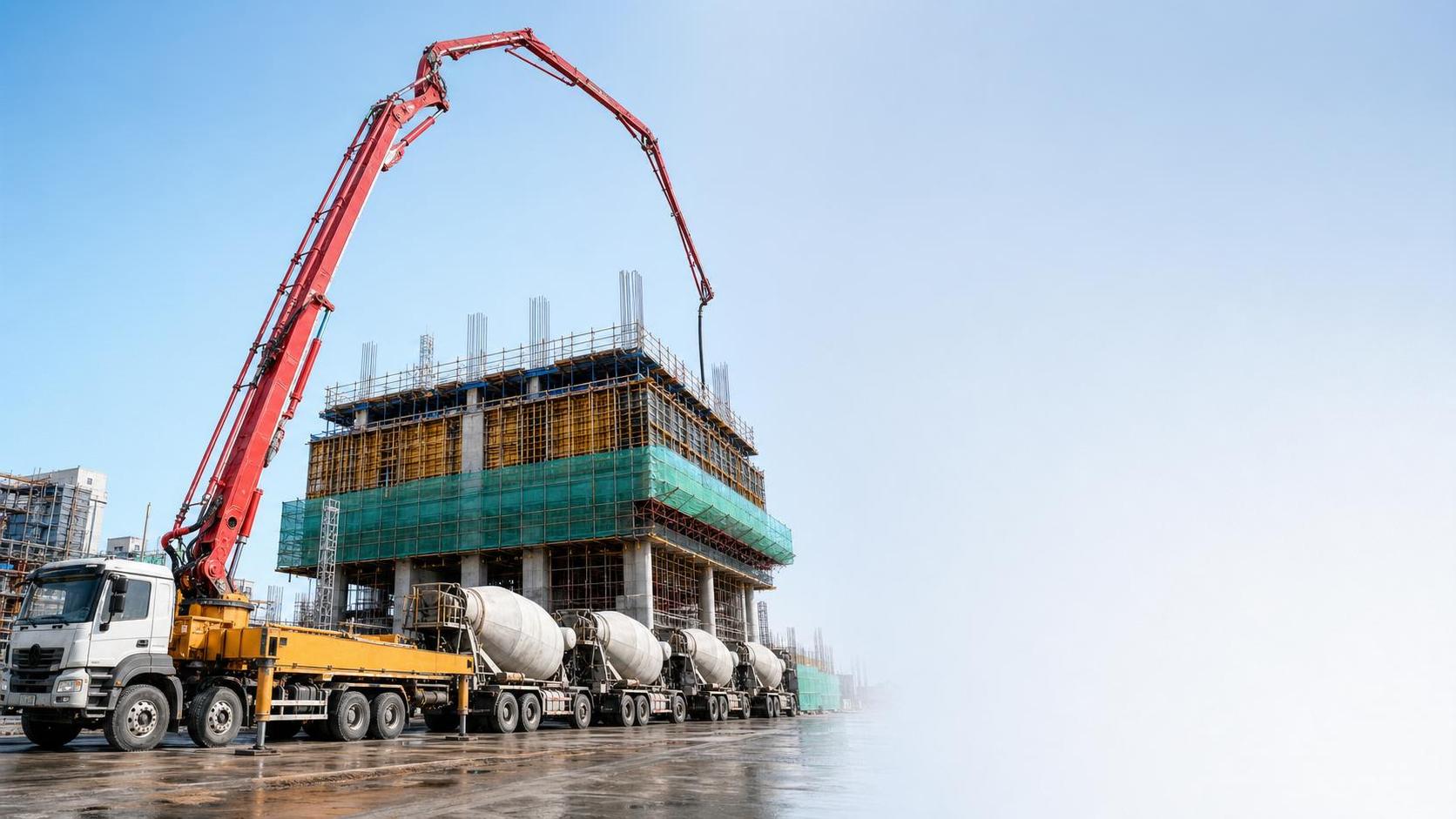
Concrete pumping advancements are moving from equipment upgrades to jobsite strategy
Construction schedules are getting tighter, while tolerance for waste, rework, and idle crews keeps shrinking.
That pressure is making concrete pumping advancements more than a machinery topic.
They are becoming a planning issue, a cost-control issue, and increasingly a sustainability issue.
On many sites, the older view was simple.
If the pump could reach the pour zone and keep material moving, the equipment was considered good enough.
That standard is changing fast.
Today, concrete pumping advancements are judged by placement accuracy, stability under variable mix conditions, fuel or energy efficiency, digital visibility, and maintenance predictability.
This shift is especially visible across high-rise work, transport infrastructure, industrial slabs, and deep foundation operations.
In these environments, a pump is no longer an isolated machine.
It sits inside a wider production chain that includes batching precision, mixer timing, boom control, line wear, ground conditions, and safety constraints.
That broader systems view is where DFCS has become relevant.
Its intelligence framework connects concrete pumping, batching, transport, and deep foundation realities rather than treating each machine category separately.
Why the shift is becoming more visible now
The recent acceleration is not coming from one force alone.
It is the result of several jobsite pressures converging at the same time.
- Projects are taller, denser, and more constrained, which raises the value of long-reach and stable boom performance.
- Concrete mixes are becoming more specialized, including low-carbon blends that can behave differently during pumping.
- Urban work faces tougher noise, emissions, and traffic restrictions, pushing cleaner and more controlled operations.
- Labor availability remains uneven, so automation and easier diagnostics now matter more than before.
- Downtime is more expensive because sequential trades depend on shorter handoff windows.
More importantly, these changes reinforce one another.
A tighter pour window makes boom stability more valuable.
A greener mix can increase the importance of pressure control and line management.
An emissions target can shift attention toward electrified support equipment and idle-time reduction.
That is why concrete pumping advancements are appearing less as isolated features and more as operational responses.
The strongest signal is better control, not just bigger machines
For years, machine scale dominated attention.
Now the more meaningful improvements are often hidden in control systems.
Hydraulic refinement, anti-vibration logic, remote diagnostics, and pressure monitoring are changing how consistently pumps perform under stress.
This matters because poor consistency creates silent losses.
Even when a pour finishes, unstable delivery can increase finishing labor, formwork risk, segregation concerns, and cleanup time.
Where concrete pumping advancements are improving efficiency in practice
The gains are not limited to pumping speed.
In practice, the biggest efficiency gains often come from fewer interruptions and tighter process coordination.
This pattern is especially relevant where concrete pumping advancements intersect with batching plant intelligence.
If mix consistency improves at the plant, pumping becomes more predictable downstream.
If dispatch timing improves, the pump spends less time waiting between trucks.
Efficiency, in other words, is increasingly networked.
The impact does not stop at the pump line
One reason concrete pumping advancements matter more now is their spillover effect.
A more capable pumping setup changes the performance of several connected activities.
Placement quality becomes easier to protect
Steadier output supports more uniform placement across forms, decks, walls, and pile caps.
That helps reduce localized defects caused by surging flow or inconsistent delivery rhythm.
Foundation and superstructure schedules become easier to align
On complex builds, deep foundation equipment, batching plants, mixer fleets, and pumps rarely operate independently.
DFCS often frames this as an engineering chain rather than a set of separate assets.
That view is useful because schedule risk often sits between machines, not inside one machine.
A delayed truck, unstable boom, or unexpected line wear can ripple into crane plans, finishing crews, and foundation sequencing.
Safety management gets a quieter upgrade
Not every gain is dramatic or visible.
More stable booms, clearer diagnostics, and better remote oversight can reduce rushed decisions during critical pours.
That makes safety improvements less about extra procedure and more about better operating conditions.
What deserves closer attention over the next planning cycle
It is tempting to evaluate concrete pumping advancements by headline specifications alone.
In reality, the better questions are more operational.
- How stable is performance with different mix designs, including low-carbon or higher-viscosity materials?
- How much visibility is available on wear parts, pressure fluctuations, and service intervals?
- How well does the pumping setup connect with batching precision and truck dispatch timing?
- What happens to uptime when site access is restricted, weather shifts, or geology complicates foundation sequencing?
- Can the equipment support stricter emissions or urban noise requirements without major workflow disruption?
These questions matter because the market is rewarding reliability under complexity, not just capacity under ideal conditions.
That is also where intelligence platforms gain strategic value.
DFCS focuses on the technical links between pumping, batching, transport, and piling because those links increasingly determine real project efficiency.
The market signal is clear.
Standalone equipment comparisons are becoming less useful than system-level performance comparisons.
A practical reading of the next phase
The next wave of concrete pumping advancements will likely be defined by coordination.
Expect continued progress in automation, predictive maintenance, cleaner power systems, and finer control over placement behavior.
But the bigger competitive difference may come from how well those gains connect with the rest of the site ecosystem.
For that reason, a useful next step is to map where current pumping delays actually begin.
Some originate at the boom.
Many start earlier, in batching variability, dispatch gaps, line setup choices, or weak maintenance visibility.
Once that map is clear, concrete pumping advancements can be judged against measurable site constraints rather than generic promises.
The most resilient operations will be the ones that track these signals early, compare technology fit by scenario, and build phased improvement plans around uptime, control, and mix adaptability.
That approach is more grounded than chasing novelty, and it is far more likely to improve jobsite efficiency where it counts.

Industry Briefing
Get the top 5 industry headlines delivered to your inbox every morning.