
When does self compacting concrete technology reduce placement risks?

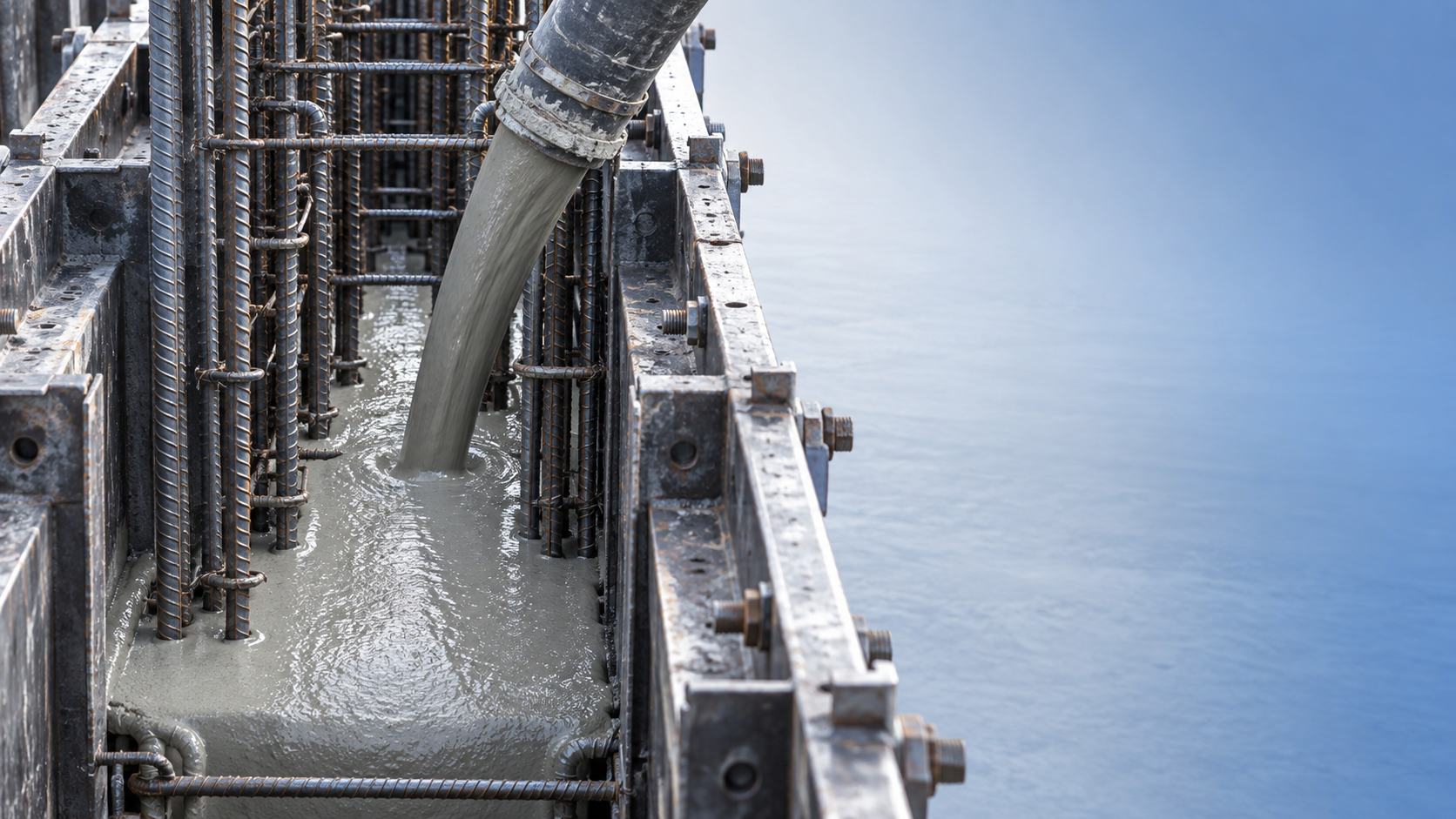
Self-compacting concrete technology reduces placement risk when the main threat is inconsistent consolidation rather than concrete supply alone. It is most valuable where internal vibrators cannot reliably reach every part of a pour, where vibration could disturb the work, or where a defect would be difficult to detect and repair after formwork removal. Its ability to spread under its own weight, pass through reinforcement, and fill corners without mechanical vibration can make the finished element more predictable, but only when the fresh mix remains stable from batching through discharge.
The strongest applications are not simply those with “difficult concrete.” They are placements in which access, geometry, reinforcement density, pumping route, placement sequence, and finish expectations create a high probability that ordinary concrete will be placed unevenly. A highly flowable mix is not automatically self-compacting concrete, and a slump-flow result alone does not prove that the material will resist segregation, pass through steel, or retain its behavior after transport.
Congested reinforcement is a clear trigger
Closely spaced bars, couplers, stirrups, embedded plates, ducts, anchor zones, and service penetrations create narrow flow paths. Conventional concrete may enter these zones but leave trapped air, mortar-starved pockets, or coarse aggregate blockages behind the outer reinforcement layer. Internal vibration can improve consolidation only where a vibrator head can be inserted and moved without striking steel or displacing inserts. Even then, the effect is localized; a visible surface may appear acceptable while voids remain around concealed reinforcement.
Self-compacting concrete is suited to this condition when its passing ability has been established for the actual reinforcement arrangement, not merely for an open test container. The nominal spacing between bars is only part of the assessment. Bar orientation, overlapping congestion, ties crossing the flow path, and the position of embedded items can create restrictions that are much more severe than a single measured gap suggests.
Aggregate size, aggregate shape, mortar volume, paste viscosity, and admixture response all influence whether the mix will move through the reinforcement without blocking. Reducing maximum aggregate size may improve passage, but it can also change shrinkage behavior, paste demand, pumping pressure, and material cost. The appropriate choice is therefore a mix-and-detail decision rather than a simple instruction to use smaller stone.
Complex formwork changes the value of flowability
Architectural panels, curved walls, thin sections, deep beams, transfer elements, heavily recessed facades, and forms with many returns are frequent candidates for self-compacting concrete. These forms contain locations where vibration energy is hard to transmit: narrow corners, soffits, abrupt changes in section depth, and areas behind liners or blockouts. When concrete must travel laterally after entering the form, the likelihood of poor consolidation rises if the material loses workability or separates during movement.
In these cases, self-compaction reduces risk by limiting reliance on repeated vibrator insertion and by allowing a controlled, continuous front of concrete to advance through the form. Yet the placement point still matters. A mix that fills well from one location may segregate if it falls too far, strikes dense reinforcement at high velocity, or is forced to travel an excessive horizontal distance. The pour plan should identify fill points, expected flow direction, lifting sequence, and any locations where air must escape.
Formwork pressure deserves separate attention. Because self-compacting concrete remains fluid for a longer period than a lower-workability mix, lateral pressure may approach a hydrostatic condition when placement is rapid or setting is delayed. A form that performed safely with vibrated concrete cannot be assumed to have the same margin. Form design, tie capacity, joints, access platforms, and the permitted rate of rise need to match the fresh-concrete behavior expected on the day of placement.
Restricted access is not only a labor issue
Placement risk increases sharply where workers cannot safely position, insert, and withdraw vibrators. This includes narrow excavations, confined wall forms, tunnel works, foundations around existing structures, elevated pours with limited working room, and pours made near vibration-sensitive assets. Self-compacting concrete can reduce the number of manual consolidation actions required in these locations, lowering the chance that inaccessible zones are simply under-vibrated.
It also reduces noise and local vibration, which can matter around occupied buildings, sensitive equipment, fresh adjacent concrete, or temporary works. That benefit should not be confused with a license to place without control. A silent pour can still fail through segregation, excessive air entrainment, delayed discharge, inadequate venting, or blocked flow at a constriction. The control burden shifts from vibration technique toward mix verification, delivery timing, pump operation, and observation of form filling.
Surface quality demands favor self-compaction, with limits
Where exposed concrete is specified, visual defects often originate from incomplete filling near the form face, inconsistent vibration, trapped air, or paste loss at joints. Self-compacting concrete can improve surface uniformity because it fully contacts the form without the localized over-vibration that sometimes causes color variation, bugholes, aggregate settlement, or paste accumulation.
However, surface appearance is governed by more than concrete flow. Form-face cleanliness, release-agent application, joint tightness, liner condition, lift height, air venting, and curing all contribute. A mix with excellent filling ability can still leave blemishes if air cannot escape from high points or if grout leaks through a poorly sealed joint. Conversely, small surface voids do not automatically prove that the concrete lacked passing ability; they may indicate air adhesion to the form face, unsuitable release agent, or a placement rate that trapped air ahead of the flow front.
When pumping conditions support the decision
Self-compacting concrete often works well with pumped placement because the paste-rich matrix can provide stable flow through pipelines. The combination becomes less reliable when the mix has been qualified only at the batching plant and not across the full delivery route. Pumping imposes shear, pressure, and heat effects that can alter the apparent viscosity and distribution of mortar around aggregate. A mix that initially appears too stiff may loosen after pumping; another may lose its spread or develop a tendency to separate after a delay.
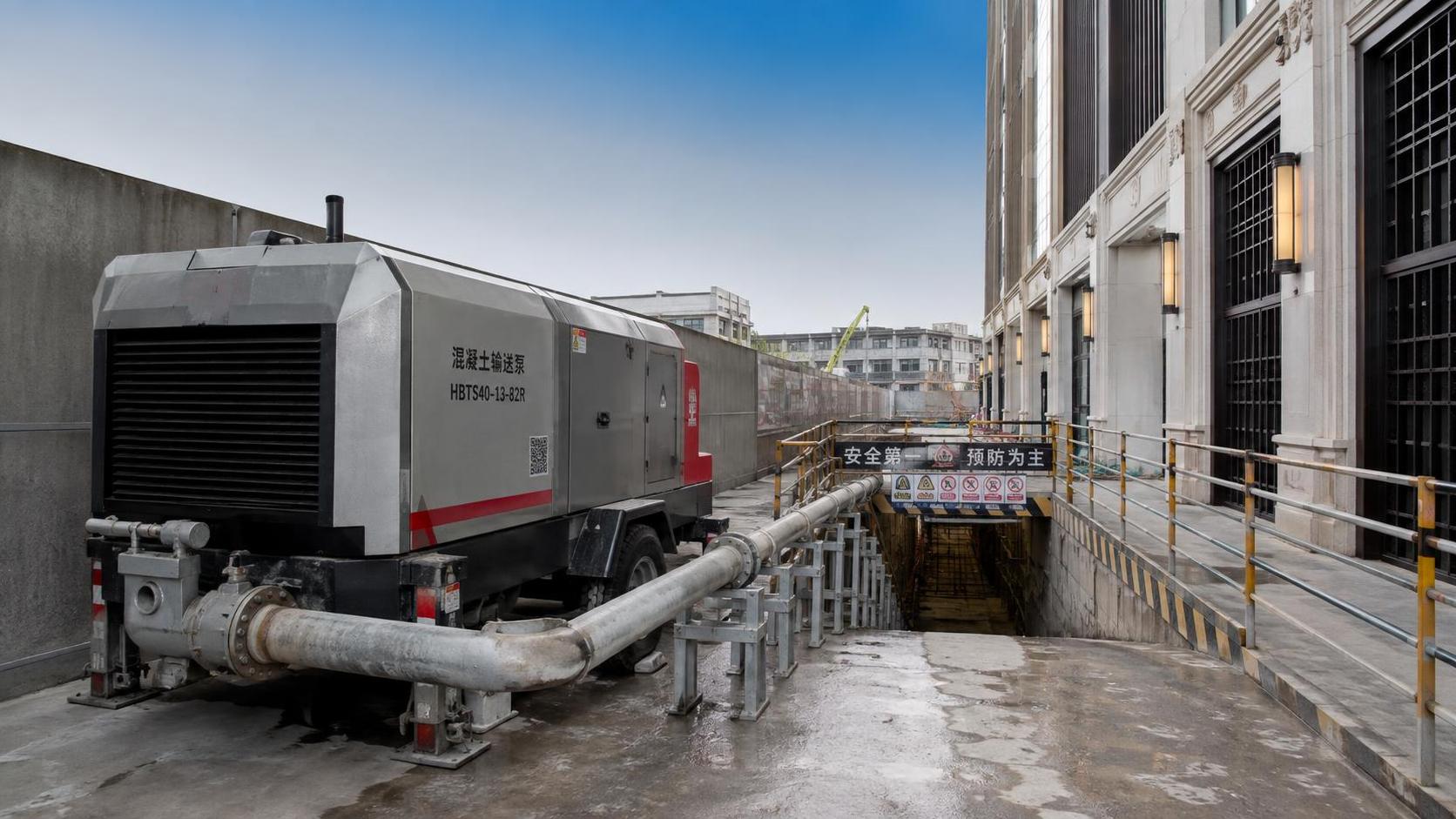
The pipeline should be considered part of the placement system. Diameter changes, reducers, sharp bends, vertical rises, hose length, priming method, residual wash water, and interruptions at the pump all affect the concrete arriving at the form. A long boom route is not equivalent to a short ground line, even with the same approved mixture. The relevant question is whether the concrete at the end hose has sufficient filling and passing ability without becoming unstable.
Pressure is also an early-warning signal, but it cannot be interpreted in isolation. Rising pump pressure may reflect a stiffening mix, blocked aggregate, inadequate lubrication, an unfavorable line configuration, or a problem at the hopper. Lower pressure is not always favorable either; an unexpectedly fluid material may have excess water, admixture overdose, temperature-related slump retention, or segregation. Pressure trends should be interpreted alongside the discharge appearance and fresh-property tests.
Fresh-property testing must distinguish flow from stability
A self-compacting mix is commonly judged by its ability to spread, but spread is only one part of the decision. Filling ability indicates whether the concrete can flow under its own weight. Passing ability addresses whether it can move through reinforcement without blocking. Segregation resistance indicates whether the aggregate and mortar remain sufficiently uniform during transport, pumping, and filling. These properties are connected, yet improving one can weaken another.
For example, adding water to increase spread may produce a more impressive visual flow while reducing resistance to aggregate settlement or paste separation. Increasing viscosity can stabilize the mix but may restrict passage through narrow reinforcement. A high-range water reducer may provide the desired initial flow, but its effect can vary with cement chemistry, supplementary materials, aggregate moisture, temperature, mixing energy, and the time between batching and placement.
Testing should therefore represent the stage where the concrete is actually used. A result immediately after batching is useful for production control, but it does not replace testing after transport, after a hold period, or after pumping when those stages are part of the work. The acceptance window should include the properties that matter to the element rather than relying on one number that can mask a developing problem.
- Observe the edge of the spread. A uniform edge and coherent mortar suggest controlled flow; coarse aggregate collecting at the perimeter or a watery ring points toward instability.
- Look at the discharge stream. A steady, cohesive flow is different from intermittent surging, visible stone accumulation, or mortar arriving separately from aggregate.
- Compare early and late loads. Changes across a delivery sequence can reveal moisture variation, admixture timing issues, or temperature effects that a single trial batch did not expose.
- Confirm behavior after interruptions. A short stoppage can materially change a mix that depends on a narrow balance between flowability and viscosity.
Batching consistency often determines whether the technology lowers risk
Self-compacting concrete has less tolerance for uncontrolled variation than many conventional mixes because its performance depends on a carefully balanced paste system. Aggregate moisture errors alter effective water content. Fine aggregate grading changes the amount of paste required to coat particles and sustain flow. Inconsistent admixture dosing can cause a load to be too stiff, excessively fluid, or slow to set. Mixing sequence and mixing energy also matter, particularly where powder additions or viscosity-modifying admixtures are used.
Production controls should focus on the variables that can change within a shift. Moisture measurement needs verification when weather changes or stockpiles are turned. Reclaimed water, if used, requires consistent solids control. Admixtures should be added in a sequence compatible with the established mix procedure, because late additions can create a different response from the same total dosage added at the plant. A correction made casually at the truck can restore visible flow while moving the mix outside the balance that provides stability.
Delivery time must be planned against the mix's retention behavior rather than assumed from a general concrete schedule. Delays at gates, traffic interruptions, pump changes, or formwork holds can turn an otherwise acceptable material into a difficult placement. Where retention is uncertain, a pre-agreed adjustment process is safer than improvising water additions after the material has begun to change.
Placement sequence still governs the result
Self-compacting concrete should enter the form in a way that avoids entraining air and prevents the mix from separating under impact. Excessive free fall, rapid discharge into one small location, or allowing concrete to strike reinforcement repeatedly can undermine the advantages of the material. The hose should be managed so that discharge remains controlled and the advancing concrete front is visible where practical.
For walls and deep elements, the selected lift arrangement should account for form pressure, reinforcement layout, and the distance the concrete must travel sideways. Filling from multiple points can reduce travel distance, but poorly coordinated points may trap air between approaching flow fronts or create uneven pressure. A single-point strategy can be effective in a simple element but may be unsuitable for a heavily obstructed shape. Trial placement in a representative mock-up is especially valuable when the consequences of a defect are high or the form geometry cannot be inspected during filling.
Mechanical vibration is usually unnecessary, and indiscriminate vibration can damage the mix by driving aggregate downward or causing paste separation. Limited, carefully justified intervention may still be needed at a local obstruction or around an unusual detail, but it should be treated as an exception with a defined method. Replacing a poor self-compacting mix with aggressive vibration does not restore the intended system.
Situations where the risk reduction is weak
Self-compacting concrete is not automatically the lower-risk option for open, lightly reinforced slabs with easy access and well-established conventional placement methods. If the placement is simple, the crew is experienced, vibration access is excellent, and finish requirements are conventional, the added sensitivity of the mix may offer little practical advantage. The decision becomes less favorable where batch-to-batch consistency is doubtful, the pumping arrangement has not been validated, or formwork cannot tolerate the expected fluid pressure.
It also requires caution for work involving steep slopes, highly open forms, or placements where the concrete must hold a sharply defined shape immediately after discharge. These applications may require a different rheological balance or another placement method. The proper comparison is not between “advanced” and “standard” concrete; it is between the failure modes of each method under the specific geometry and delivery conditions.
Self-compacting concrete technology reduces placement risk most reliably when the mix, formwork, pump route, and placement sequence are designed as one operation. When those elements are aligned, it removes the uncertainty of inaccessible vibration and creates more consistent filling. When they are treated separately, its fluidity can expose problems that conventional concrete would have concealed until later.
Industry Briefing
Get the top 5 industry headlines delivered to your inbox every morning.