
Concrete Pumping Costs: Boom Truck vs Line Pump

Concrete Pumping Costs: Boom Truck vs Line Pump
Understanding concrete pumping costs is not only about comparing hourly rates.
The real decision depends on equipment capability, site constraints, pour volume, labor availability, and schedule risk.
Boom trucks and line pumps serve different construction conditions.
Choosing the wrong option can increase standby charges, setup time, cleanup labor, and total project cost.
This guide explains the main concrete pumping cost drivers and helps compare boom pump productivity against line pump flexibility.
Why Concrete Pumping Costs Need a Checklist
Concrete placement is time-sensitive.
Once ready-mix trucks arrive, delays affect slump, finishing windows, crew efficiency, and quality control.
A boom truck may cost more per hour, but it can reduce placement time on large or elevated pours.
A line pump may appear cheaper, but hose handling and labor can offset the lower equipment rate.
A checklist prevents decisions based only on rental quotes.
It connects concrete pumping rates with access, volume, reach, mix design, and site logistics.
Core Concrete Pumping Cost Checklist
- Confirm total pour volume before pricing, because small pours often carry minimum charges that change the real cost per cubic yard.
- Measure horizontal distance and vertical lift, then compare them with boom reach or hose capacity before selecting concrete pumping equipment.
- Check site access for outriggers, truck staging, overhead power lines, soft ground, and traffic control before booking a boom truck.
- Estimate hose labor for a line pump, including pulling, securing, repositioning, cleaning, and managing bends during placement.
- Review concrete mix design, aggregate size, slump, admixtures, and pumpability before assuming either pump can handle the material.
- Calculate expected placement rate, because faster concrete pumping can reduce crew waiting time and ready-mix truck standby fees.
- Ask about mobilization charges, fuel surcharges, washout requirements, environmental fees, and overtime rules before confirming the quote.
- Plan the pour sequence, including truck arrival intervals, finish crew readiness, backup access, and communication with the pump operator.
Boom Truck Cost Profile
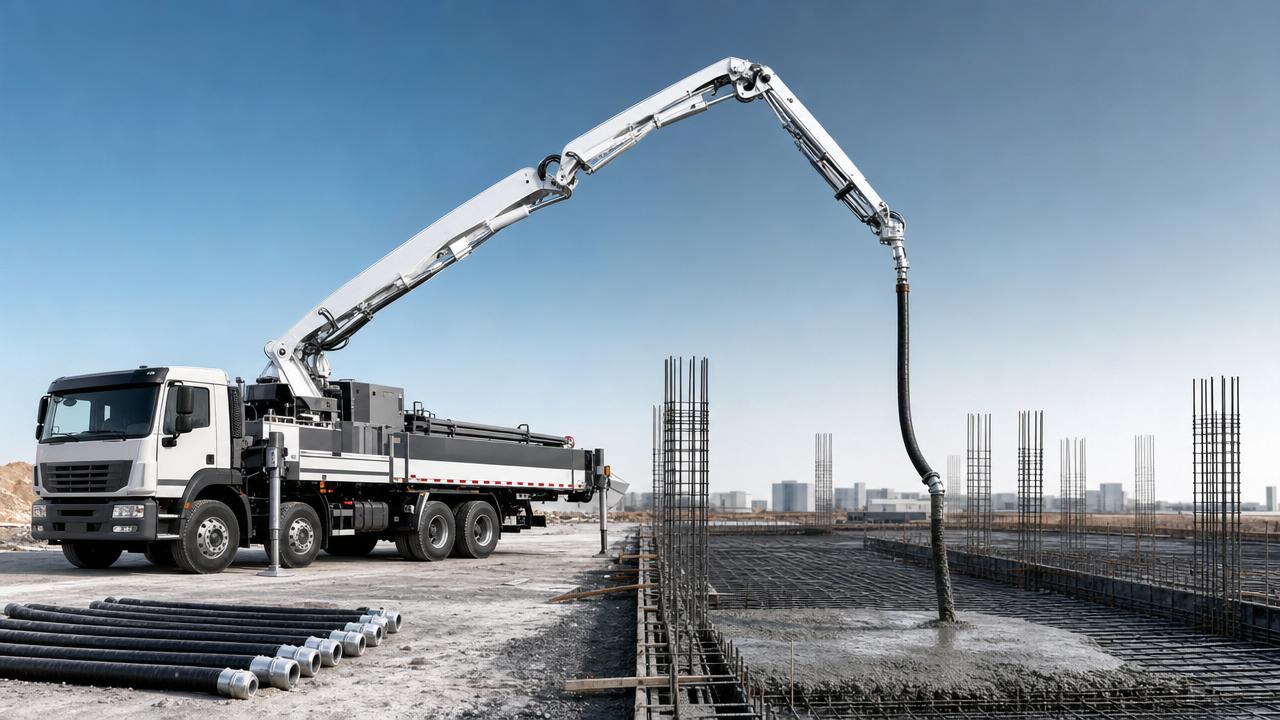
Boom trucks use a hydraulic placing boom mounted on a truck chassis.
They are designed for fast concrete pumping where reach, accuracy, and reduced manual hose movement matter.
Their hourly rates are usually higher than line pumps.
However, the total cost can be lower when the pour requires speed, height, or precise placement over obstacles.
When a Boom Truck Makes Financial Sense
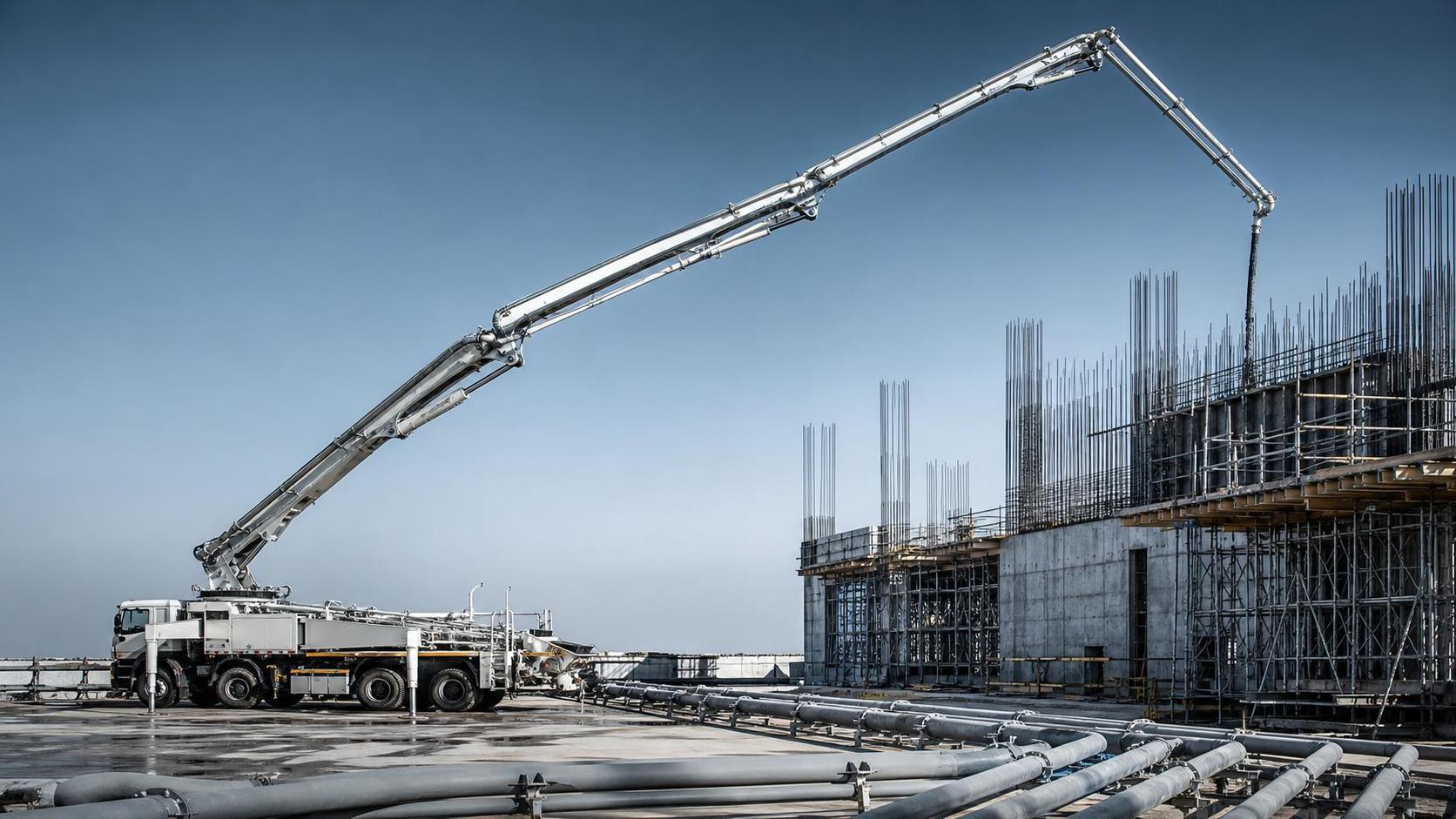
- Use a boom pump for elevated decks, multi-story slabs, bridge work, large foundations, and pours with limited ground-level access.
- Select a boom truck when reducing labor exposure, hose dragging, and placement congestion improves safety and productivity.
- Choose boom-based concrete pumping when truck mixers can discharge continuously and the finish crew can keep pace.
The main cost advantage is productivity.
A properly positioned boom can place concrete quickly across a wide work area with minimal repositioning.
This is especially valuable on high-volume pours where time savings exceed the higher pump rate.
Line Pump Cost Profile
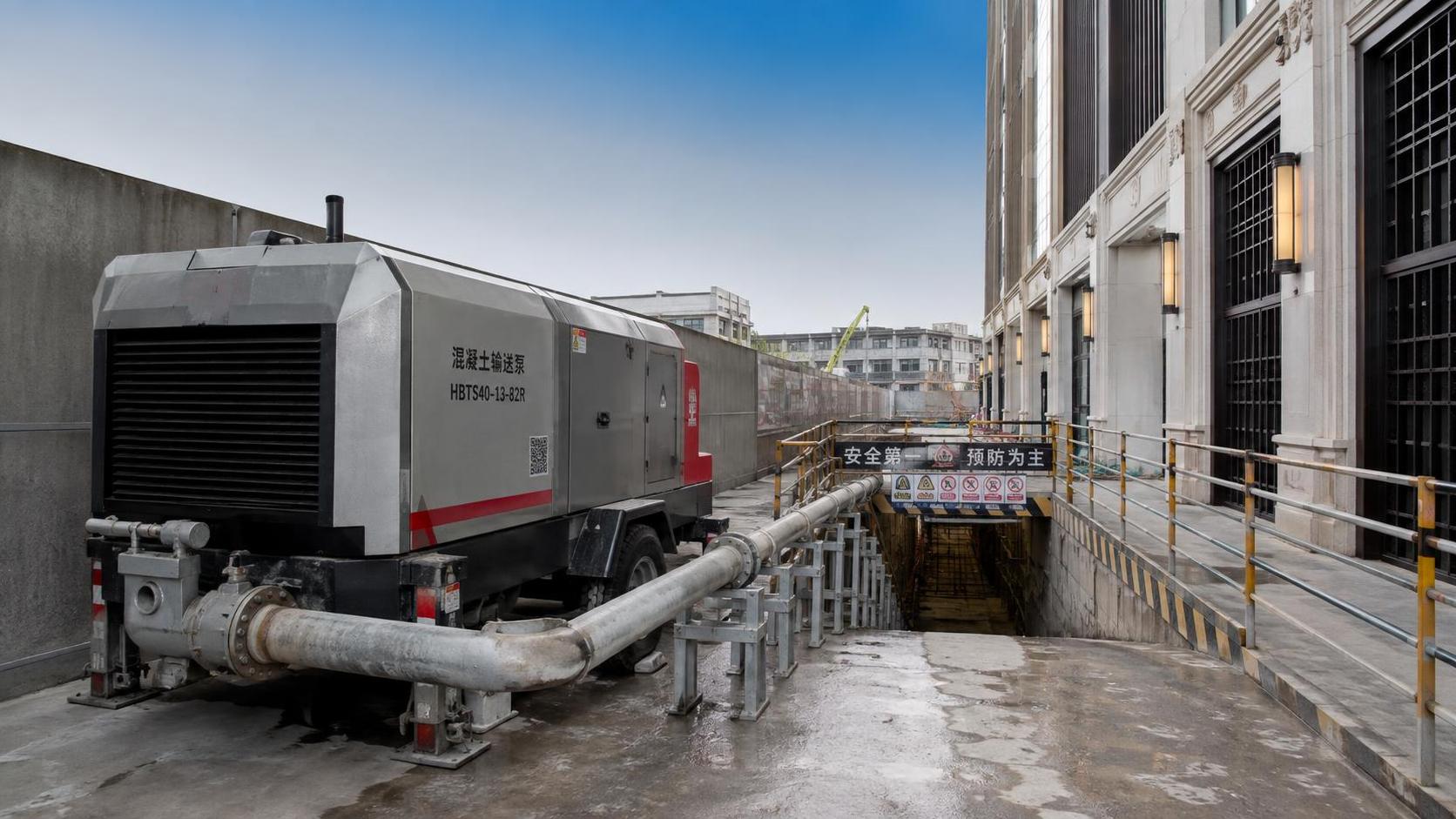
Line pumps move concrete through hoses or steel pipeline placed along the jobsite.
They are commonly used for residential slabs, footings, block fills, pool decks, sidewalks, and tight-access projects.
Their base rental rate is often lower than a boom truck.
Yet the final concrete pumping cost depends heavily on hose length, setup effort, labor, and cleanup time.
When a Line Pump Is More Economical
- Use a line pump when the pour area is narrow, obstructed, indoors, behind structures, or inaccessible to a boom truck.
- Select line-based concrete pumping for smaller pours where a boom truck minimum charge would dominate the budget.
- Plan extra labor when hoses must cross grades, stairs, finished surfaces, rebar mats, or long horizontal distances.
Line pumps are flexible.
They can reach spaces where a truck-mounted boom cannot safely set outriggers or unfold the placing boom.
The trade-off is slower placement and more manual handling.
Boom Truck vs Line Pump: Cost Comparison
This comparison shows why concrete pumping quotes require context.
A lower hourly number can become expensive if placement slows, labor increases, or trucks wait.
Scenario Notes for Better Equipment Selection
Large Slabs and Commercial Foundations
Boom trucks often perform better on large slabs and commercial foundations.
The boom can cover broad zones while keeping mixer trucks in a controlled discharge position.
For high-volume concrete pumping, faster placement reduces cold joint risk and supports consistent finishing operations.
Residential Work and Restricted Access
Line pumps are practical for driveways, patios, small footings, and backyard pours.
They can route hoses through gates, around buildings, or across confined urban sites.
For small-volume concrete pumping, the lower mobilized cost may be more important than maximum placement speed.
Elevated Decks and Vertical Placement
Vertical placement favors boom equipment when reach and stability requirements are within the machine’s operating envelope.
A boom pump reduces manual lifting, hose control challenges, and cycle interruptions on upper-level concrete pumping work.
Indoor or Low-Clearance Projects
Indoor placements often require line pumps because booms need clear unfolding space and safe overhead clearance.
In warehouses or renovations, hose routing may be slower but more adaptable to structural limitations.
Commonly Missed Cost Risks
Standby time: Waiting for late mixer trucks, missing inspectors, or unprepared crews can quickly increase concrete pumping charges.
Minimum charges: Many pump providers apply minimum billing periods, so short pours may not benefit from quick completion.
Washout planning: Poor washout access can add cleanup time, environmental handling issues, and extra site coordination.
Blockage risk: Harsh mixes, oversized aggregate, low slump, or excessive hose bends can interrupt concrete pumping and waste material.
Access failure: Soft ground, slopes, overhead utilities, and parked vehicles can prevent safe setup after the pump arrives.
Crew mismatch: Fast pumping without enough finishers causes quality problems, while slow placement creates expensive idle labor.
Practical Steps Before Booking Concrete Pumping
- Prepare a simple site sketch showing pump location, mixer truck route, discharge point, obstacles, washout area, and placement sequence.
- Share pour volume, mix design, aggregate size, slump target, reinforcement density, and estimated truck spacing with the pump supplier.
- Request a quote that separates hourly rate, minimum billing, mobilization, overtime, cleanup, hose fees, and cancellation terms.
- Confirm whether additional hose handlers, traffic control, spotters, lighting, mats, or washout containers are required.
- Schedule concrete delivery so the pump operates continuously without overwhelming the placing and finishing sequence.
- Walk the site before pour day and verify clearance, ground bearing, hose paths, utility hazards, and safe communication points.
These steps turn concrete pumping from a rental decision into a production plan.
They also reduce disputes when actual site conditions differ from the assumptions behind the quote.
How to Estimate Total Cost More Accurately
Start with the pump’s minimum charge and expected operating hours.
Add mobilization, hose charges, cleanup, fuel, overtime, and any required support equipment.
Then compare the number against productivity.
If a boom truck finishes two hours faster, include saved labor and reduced mixer truck standby.
If a line pump avoids access preparation, crane coordination, or traffic disruption, include those savings too.
The best concrete pumping choice is the one with the lowest controlled total cost, not the lowest visible rate.
Summary and Action Guide
Boom trucks usually fit larger, elevated, and open-site pours where reach and speed justify higher equipment rates.
Line pumps usually fit smaller, restricted, and low-clearance work where flexibility matters more than peak output.
Before approving any concrete pumping quote, verify volume, access, reach, mix pumpability, labor support, and standby rules.
Use a checklist, compare total installed placement cost, and match equipment to the real jobsite conditions.
That approach keeps concrete pumping predictable, efficient, and aligned with construction schedule demands.
Industry Briefing
Get the top 5 industry headlines delivered to your inbox every morning.