
Underground Engineering Systems: Key Design Risks to Check Early

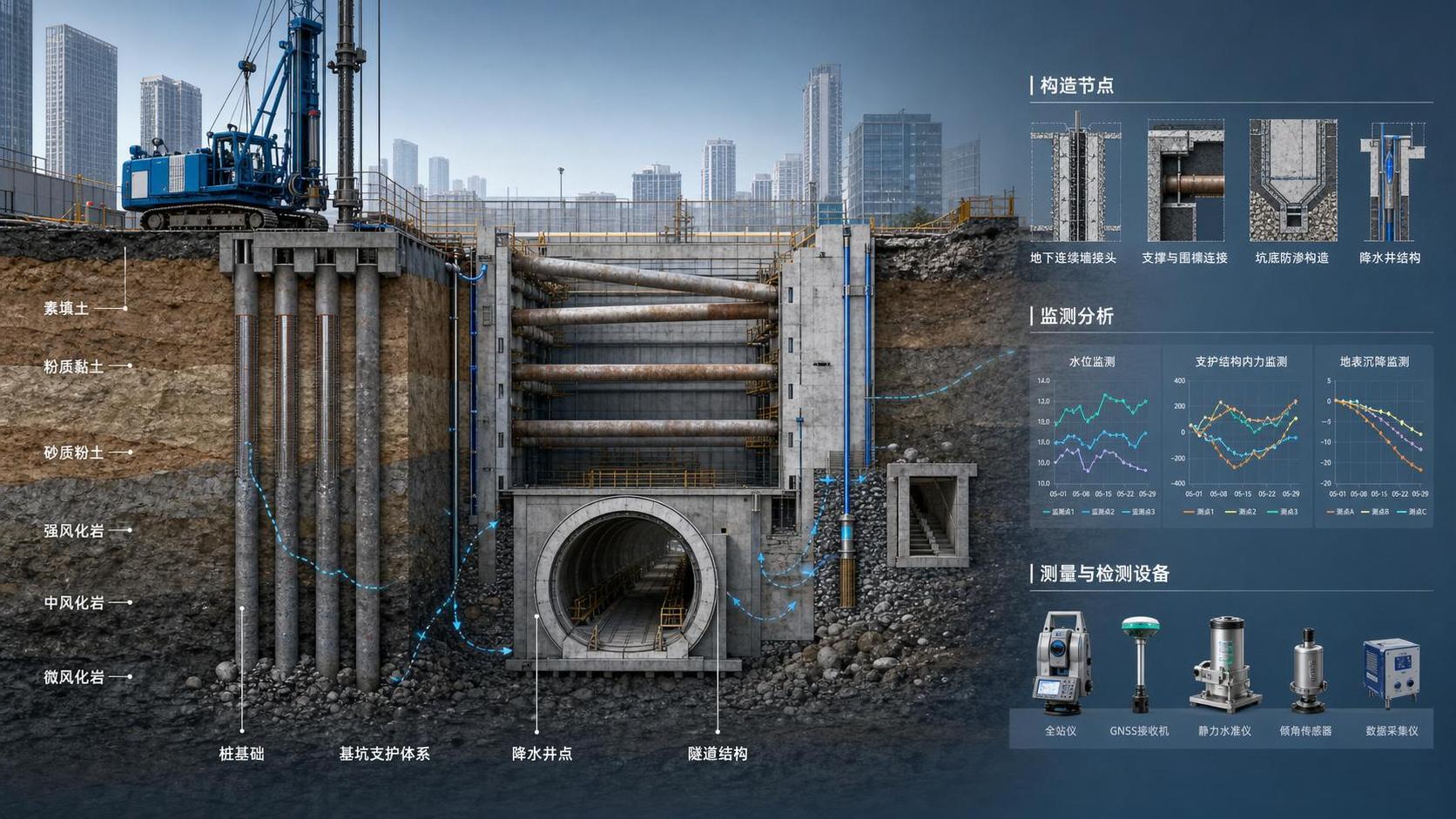
Underground Engineering Systems: Key Design Risks to Check Early
For technical evaluators, underground engineering systems need scrutiny long before excavation starts.
Early-stage errors often stay hidden until bids are fixed, equipment is mobilized, and schedule pressure limits correction options.
That is why early review matters.
In underground engineering systems, small wrong assumptions can trigger large consequences across safety, cost, environmental control, and long-term performance.
The practical question is not whether risk exists.
The real question is whether the design team has checked the right risks early enough to act.
Why early checking changes project outcomes
Underground engineering systems combine geology, structural behavior, water, machinery, and sequence planning in one tightly linked package.
If one part is oversimplified, the rest can fail to align.
A pile design may look acceptable on paper, yet clash with drilling limits, casing needs, spoil handling, or neighboring structures.
A support system may satisfy calculations, yet still be difficult to construct under groundwater pressure.
Early review of underground engineering systems reduces redesign loops and exposes hidden dependencies before they become claims or field improvisation.
1. Geotechnical assumptions that look complete but are not
Most underground engineering systems begin with subsurface interpretation.
That interpretation is often less certain than the report format suggests.
Check whether borehole spacing matches the actual foundation footprint, excavation depth, and structural sensitivity.
Pay close attention to transitions between fill, soft layers, cobbles, weathered rock, and hard rock.
These interfaces often control drilling difficulty, settlement variation, and pile performance.
Early geotechnical checks should confirm:
- Whether design parameters come from representative tests, not generalized regional assumptions.
- Whether groundwater seasonality has been captured, including recharge and perched water risks.
- Whether obstructions, old foundations, or buried services were screened early.
- Whether rock strength and discontinuities were assessed for actual tooling selection.
In underground engineering systems, unclear ground models usually produce false confidence rather than visible caution.
2. Load transfer paths that hide structural mismatch
Another early risk sits in load transfer assumptions.
Many underground engineering systems are checked for capacity, but not always for actual force flow under staged construction and long-term conditions.
Review whether loads are axial only, or whether bending, uplift, group effects, and lateral actions also matter.
Basements, retaining walls, transfer slabs, and temporary supports often interact in ways that static summaries miss.
Key questions include:
- Are pile loads based on realistic combinations, including temporary stages?
- Has differential settlement been checked across mixed support zones?
- Do wall and slab restraints change the assumed earth pressure regime?
- Could adjacent excavation works alter the support response over time?
For underground engineering systems, a correct load value is not enough if the load path itself is misunderstood.
3. Groundwater control risks that exceed the dewatering plan
Groundwater is often the biggest gap between design intent and field reality.
In underground engineering systems, water affects stability, base heave, piping, concrete quality, productivity, and nearby settlement.
A basic dewatering note is rarely enough.
The early check should compare inflow assumptions with permeability variation, cutoff wall performance, recharge sources, and discharge restrictions.
It is also important to check whether lowering groundwater could affect adjacent roads, utilities, tunnels, or heritage structures.
Useful screening points are:
- Base uplift resistance under worst credible water level.
- Filter compatibility for seepage and fine migration control.
- Emergency response if pumps fail during heavy inflow periods.
- Water treatment needs before discharge approval.
Strong underground engineering systems treat groundwater as a design driver, not a temporary nuisance.
4. Equipment compatibility and construction method conflicts
A recurring weakness in underground engineering systems appears when design choices outrun available equipment capability.
This matters especially for rotary drilling rigs, piling machinery, concrete batching support, and pumping access.
For example, a specified pile diameter may be technically possible, yet impractical under headroom, spoil volume, or torque limits.
A diaphragm wall mix may meet strength targets, yet be difficult to place consistently without stable slurry control and dependable concrete supply.
Early constructability review should test:
- Rig weight, operating radius, and access route suitability.
- Tooling compatibility with cobbles, hard seams, and abrasive rock.
- Concrete delivery continuity for deep pours and tremie operations.
- Batching, pumping, and reinforcement sequencing during peak output periods.
- Noise, vibration, and emissions constraints in dense urban sites.
This is where underground engineering systems benefit from real equipment intelligence, not just generic method statements.
5. Interface risks between temporary and permanent works
Many failures begin at interfaces.
In underground engineering systems, temporary retaining works, permanent substructures, waterproofing, and drainage often evolve under separate design packages.
That separation can hide gaps in responsibility and detail continuity.
Check whether anchors, props, pile caps, liners, joints, and membranes can be installed in the planned order without damaging future work.
Review access for inspection and repair before areas become buried or enclosed.
Better underground engineering systems are coordinated around interfaces early, when change is still cheap.
6. Monitoring plans that are too late or too vague
Monitoring is often discussed after design, when it should support design decisions from the start.
Underground engineering systems need monitoring tied to predicted behavior, alert thresholds, and response actions.
Without that link, instrumentation becomes record-keeping rather than risk control.
An early monitoring framework should define:
- What movement, pressure, vibration, or settlement needs tracking.
- Where instruments must sit to capture critical mechanisms.
- How often readings are required during changing construction stages.
- What actions follow when trigger levels are approached or exceeded.
For underground engineering systems, useful monitoring is specific, staged, and connected to decisions.
A practical early-review checklist
A disciplined review process helps technical teams compare underground engineering systems with fewer blind spots.
At minimum, confirm these points before design freeze:
- Ground model uncertainty is stated clearly, with known data gaps.
- Load paths are checked for temporary, permanent, and abnormal cases.
- Groundwater strategy covers stability, discharge, and adjacent asset effects.
- Construction method matches realistic rig, pump, and batching capability.
- Temporary and permanent works interfaces are coordinated in sequence.
- Monitoring triggers are linked to forecast behavior and response plans.
- Urban constraints on noise, vibration, carbon, and access are tested early.
This kind of review makes underground engineering systems more predictable, more buildable, and easier to defend during procurement and execution.
Closing view
The best underground engineering systems are not the ones with the longest reports.
They are the ones where early assumptions were challenged, interfaces were tested, and construction reality shaped design choices.
From a technical evaluation standpoint, that is where risk becomes visible and manageable.
When underground engineering systems are reviewed early through geology, load transfer, groundwater, equipment, and sequencing, project decisions become stronger.
That early discipline is usually what separates stable delivery from expensive correction later.

Industry Briefing
Get the top 5 industry headlines delivered to your inbox every morning.