
Concrete Pump Trucks: How Boom Reach Affects Jobsite Output

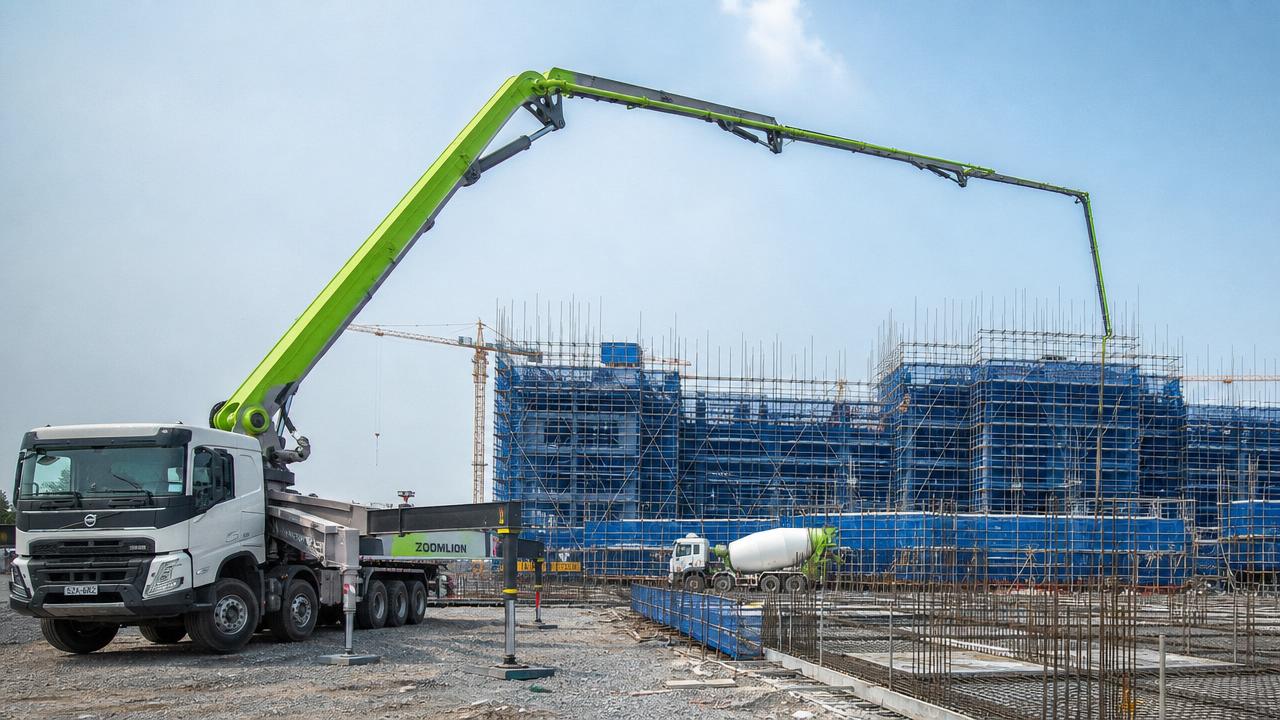
For project leaders under pressure to hit pour schedules and control labor costs, concrete pump trucks are more than equipment—they directly influence jobsite productivity. Boom reach affects placement speed, site access, crew coordination, and overall efficiency, especially on complex or high-rise projects. Understanding how reach impacts output helps managers choose the right pump configuration, reduce delays, and keep concrete delivery aligned with demanding construction timelines.
The core search intent behind this topic is practical decision-making. Readers are not looking for a generic definition of boom length. They want to know how boom reach changes daily output, when a longer boom improves productivity, and when it simply adds cost and setup complexity.
For project managers and engineering leads, the main concern is straightforward: will a specific pump configuration help the team place more concrete safely, faster, and with fewer interruptions? The answer depends on how boom reach interacts with site layout, pour sequence, traffic flow, and access restrictions.
The most useful way to approach this subject is not by treating reach as an isolated specification. Reach matters because it affects hose repositioning, truck placement options, crane conflicts, labor coordination, and the risk of dead time during a pour.
That is why this article focuses on jobsite output, equipment selection logic, and project-level tradeoffs. It gives managers a framework to evaluate concrete pump trucks based on productivity impact rather than brochure numbers alone.
Why Boom Reach Matters More Than Many Teams Expect
On paper, boom reach looks like a simple metric. In practice, it determines how much of the pour area a truck can cover from one setup position, which directly affects cycle time and crew momentum.
When boom reach is too short, the pump truck may need to be repositioned several times. Each move interrupts concrete placement, forces labor to reset, and increases the chance of coordination gaps with mixer truck arrivals.
These interruptions may seem minor at first. But on a large slab, elevated deck, or congested urban site, repeated repositioning can add significant non-pumping time and reduce total cubic meters placed per shift.
Longer reach often improves continuity. A pump that can access more pour zones from one location allows the crew to maintain rhythm, reduce handling, and keep placement aligned with the planned sequence.
For project leaders, this is the key point: boom reach affects output not only through physical distance, but through the reduction of avoidable downtime. Productivity gains often come from fewer resets rather than faster pumping speed alone.
How Reach Influences Placement Speed on Real Jobsites
Placement speed is shaped by more than pump pressure and pipeline condition. The effective coverage area of the boom determines how quickly crews can move from one pour section to another without stopping the operation.
On broad foundations or transfer slabs, a longer boom can reduce the need for line extensions and manual handling. That lowers labor fatigue and helps crews keep a more stable placement rate over the full pour window.
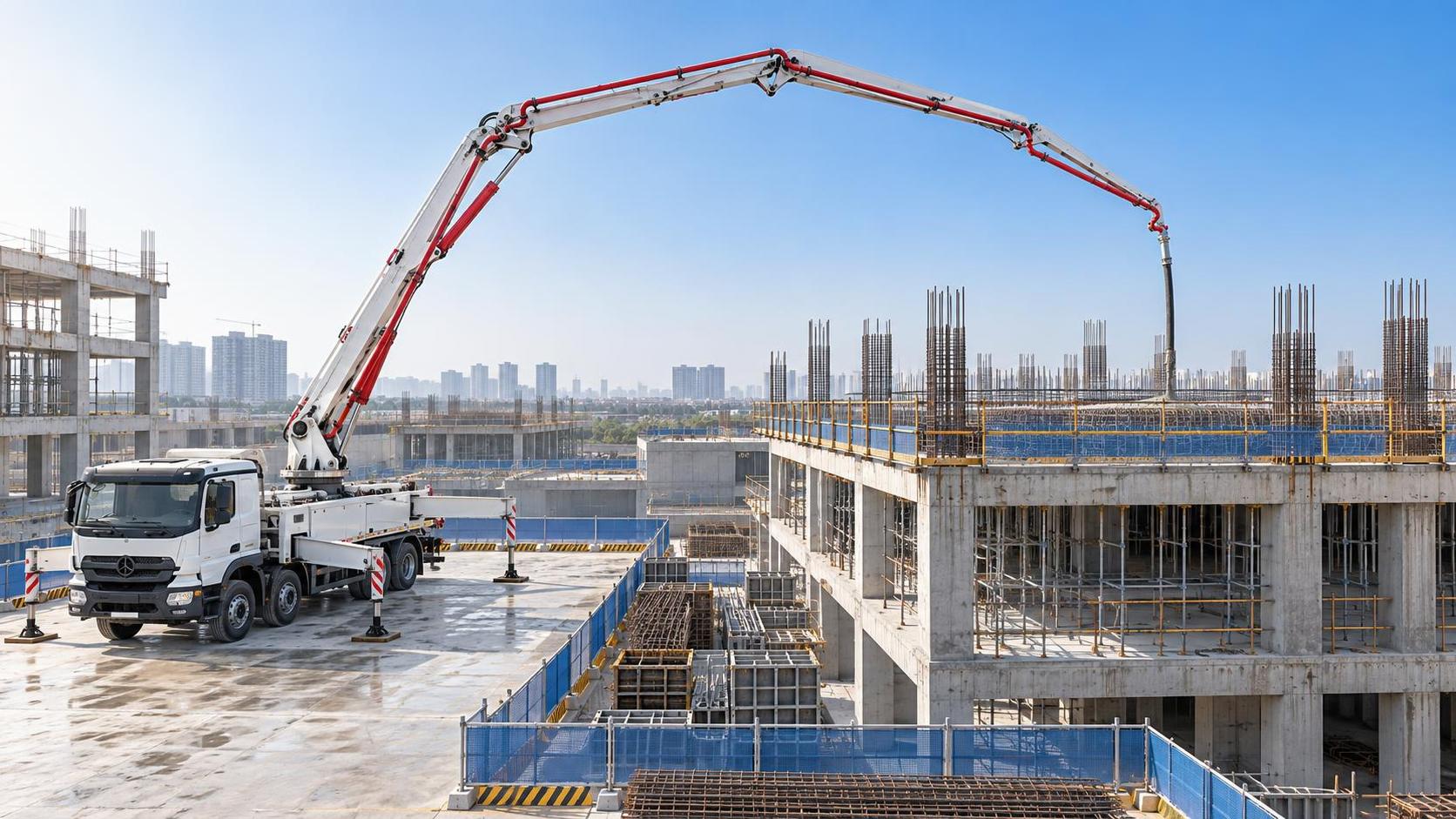
On vertical projects, reach becomes even more valuable. If the boom can serve upper or offset work areas without relocating the truck, the team avoids bottlenecks caused by access restrictions and vertical delivery challenges.
Shorter reach can still work well on compact, open sites. But once the project includes multiple obstructions, uneven access, or segmented work faces, the placement speed advantage of greater reach becomes easier to measure.
In other words, jobsite output improves when the boom fits the geometry of the pour. The best-performing concrete pump trucks are not always the largest ones, but the ones that minimize movement across the actual working area.
When a Longer Boom Delivers Clear Productivity Gains
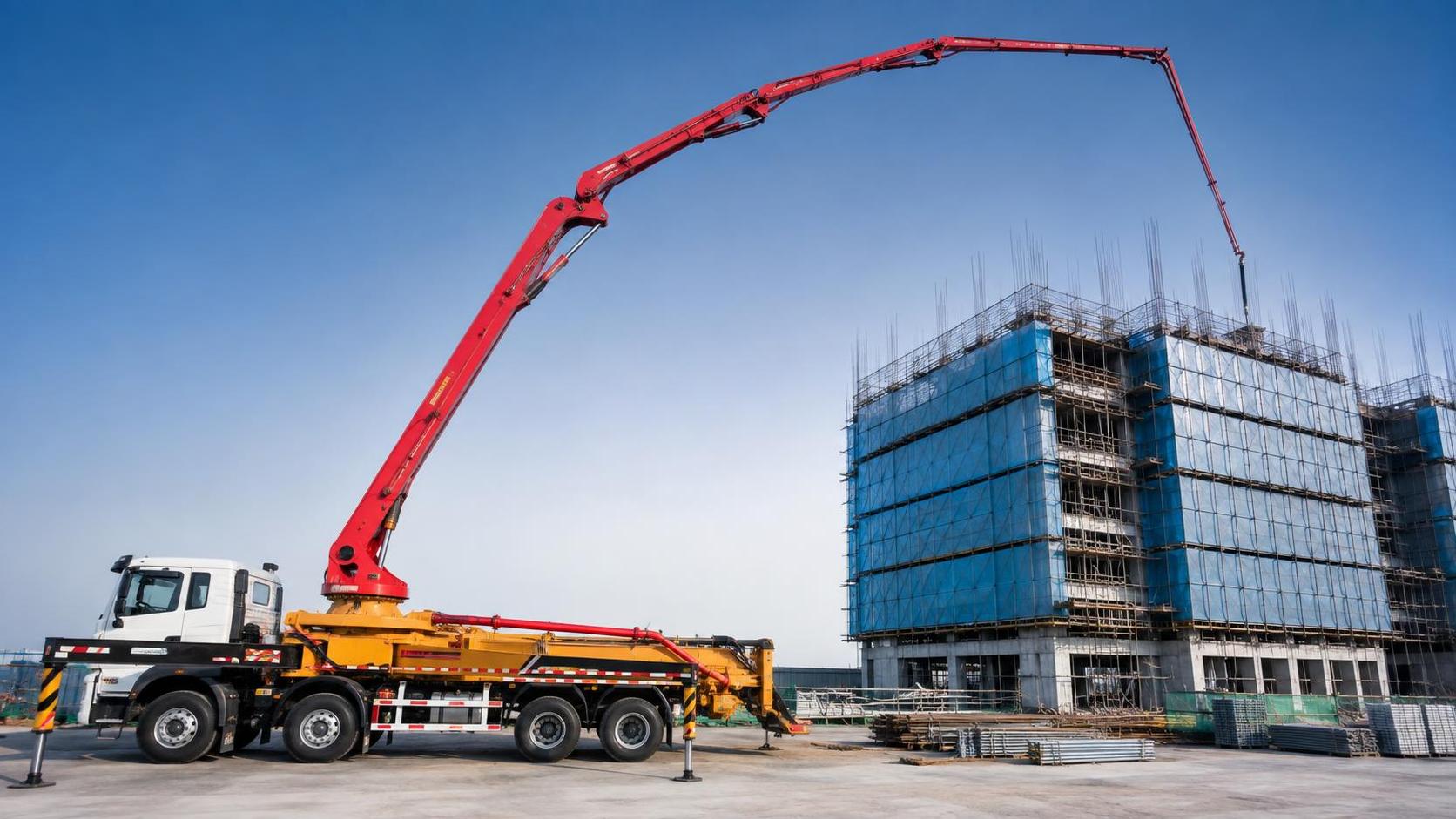
There are several scenarios where longer boom reach creates a strong return in schedule performance. The first is high-rise or multi-level construction, where elevation and horizontal offsets combine to complicate delivery paths.
Another common case is urban construction with narrow access roads, neighboring structures, or limited staging space. Here, the truck may not be able to park close to the pour zone, so reach becomes critical.
Large mat foundations and wide industrial slabs also benefit. A longer boom can cover more area from one setup point, helping crews avoid repeated truck moves that interrupt finishing, vibration, and quality control.
Bridge works and infrastructure pours often present a similar challenge. Obstacles such as barriers, excavations, formwork systems, or traffic management zones can prevent ideal truck positioning, making extra reach operationally valuable.
In these settings, longer reach supports output by reducing setup frequency, improving access flexibility, and keeping concrete delivery synchronized with crew activity. The value comes from smoother execution, not just from added theoretical range.
When More Reach Does Not Automatically Mean Better Output
It is easy to assume that the longest boom always delivers the highest productivity. For many projects, that assumption leads to overspending or introduces operational constraints that cancel out the supposed advantage.
Longer boom concrete pump trucks are typically heavier, more expensive, and more demanding in terms of setup space and outrigger deployment. If the site is small and open, that extra capability may go largely unused.
On low-rise residential, small commercial, or repetitive ground-level pours, a mid-range boom may complete the work just as efficiently. In these cases, simplicity, mobility, and easier site circulation can matter more than maximum reach.
Very long booms may also face issues on tight sites where full stabilization is difficult. If the truck cannot deploy safely or must operate under strict positioning limits, the expected productivity benefit may shrink quickly.
For decision-makers, the lesson is clear: more reach only improves output when the project conditions allow that reach to be used effectively. Equipment capacity must match site reality, not just project ambition.
How Boom Reach Affects Crew Coordination and Labor Efficiency
Output on a concrete pour depends heavily on crew flow. Boom reach influences where hose operators stand, how finishers progress, and how easily supervisors maintain control over the planned sequence.
If the boom cannot reach key zones cleanly, crews may spend more time dragging hose, adjusting position, or waiting for the next truck move. These small delays create labor inefficiency and can disrupt surface quality management.
With adequate reach, the placing crew can work in a more predictable pattern. Finishers, vibrators, and support staff stay aligned with the pour front, reducing overlap, confusion, and idle time.
Longer reach can also reduce the need for temporary pipeline arrangements or excessive manual redirection. That lowers handling effort and can help reduce fatigue during long pours, especially in hot weather or demanding site conditions.
For project managers tracking labor cost per cubic meter placed, this matters. Better boom coverage often leads to more stable crew utilization, which is one of the most overlooked contributors to jobsite productivity.
The Link Between Reach, Site Access, and Setup Time
Many productivity problems begin before pumping starts. A pump truck may have enough theoretical output capacity, but poor setup positioning can limit boom effectiveness and delay the entire pour operation.
Boom reach provides flexibility when ideal access is unavailable. If the truck can operate from a less-than-perfect location and still cover the target area, the site team gains options in traffic management and staging.
This is especially important on congested sites where mixer trucks, cranes, rebar deliveries, and formwork crews compete for limited space. A pump with suitable reach can reduce conflict between logistics zones and active work areas.
However, setup time must still be considered. Larger booms may need more careful positioning, wider stabilization areas, and tighter safety controls around overhead lines or nearby structures.
The right evaluation is not simply reach versus no reach. It is whether the selected machine reduces total operational friction from arrival to washout. That full-cycle view gives a more accurate picture of true jobsite output.
How to Choose the Right Reach for Different Project Types
For project leaders, a practical selection method is to start with the pour geometry, not with equipment class. Map the farthest placement point, vertical lift requirement, obstructions, and legal truck positioning options first.
Next, estimate how many setups the pump will require at different boom lengths. If a shorter boom needs multiple relocations during a critical pour, the hidden productivity cost can outweigh the lower rental or mobilization price.
For tower or podium work, review how boom reach interacts with floor edge conditions, climbing sequences, and nearby structures. For large horizontal pours, focus on coverage radius and the continuity of the placement path.
It is also useful to compare projected labor demand. A pump with better reach may reduce hose handling and crew strain, which can improve consistency over long shifts and support more reliable schedule performance.
In short, the best concrete pump trucks are selected through a coverage-and-disruption analysis. Managers should ask which option completes the pour with the fewest stoppages, safest access, and strongest alignment with delivery timing.
Key Risks of Mismatched Boom Reach
Choosing insufficient reach can create immediate operational problems. The truck may be forced into repeated repositioning, line improvisation, or awkward placement angles that slow work and increase supervision demands.
This mismatch can also affect quality. If placement becomes stop-and-go, crews may struggle to maintain uniform pacing, consolidation, and finishing timing, especially on large pours with narrow process windows.
Oversizing the boom brings different risks. Higher equipment cost, heavier axle loads, larger setup footprints, and more restricted site access can reduce flexibility where a smaller unit would have moved more easily.
There are safety implications as well. Complex boom movements in confined areas require careful planning around structures, utilities, and personnel. A poorly matched machine can increase both operational stress and exposure to mistakes.
For project responsibility holders, the cost of the wrong choice is rarely limited to equipment rental. It can ripple into labor inefficiency, scheduling pressure, quality risk, and even downstream claims tied to delayed pours.
What Project Managers Should Ask Before Booking Concrete Pump Trucks
Before confirming a pump, managers should ask how much of the target pour area can be reached from one safe setup point. This single question often reveals whether expected productivity assumptions are realistic.
They should also review whether the truck can enter, position, stabilize, and exit without disrupting the rest of the site. Reach has little value if the machine creates major logistics conflicts during peak activity.
Another critical question concerns the number of planned relocations during the pour. Every move should be treated as a productivity event with time, labor, and quality implications, not as a minor operational detail.
It is equally important to confirm compatibility with the pour schedule and delivery plan. A pump with suitable reach can only deliver output if mixer truck arrivals, crew readiness, and site sequencing are equally well coordinated.
Finally, ask the supplier or operations team for project-specific recommendations rather than generic capacity claims. The best pumping solution is the one that fits the actual jobsite constraints and protects pour continuity.
Final Takeaway: Reach Should Be Measured by Output, Not Spec Sheet Appeal
Boom reach plays a major role in how concrete pump trucks influence jobsite output. It affects placement speed, coverage efficiency, labor coordination, setup flexibility, and the number of interruptions during a pour.
For project managers and engineering leaders, the most important insight is that reach should be evaluated in relation to site conditions. A longer boom adds value when it reduces movement, improves access, and supports continuous placement.
But more reach is not always better. If the project does not require it, or if site conditions limit safe deployment, a larger machine may increase cost without improving real productivity.
The best decision comes from matching boom reach to pour geometry, access constraints, labor strategy, and schedule risk. When that match is right, concrete pump trucks become a direct lever for faster, more controlled, and more efficient execution.
In a market where time pressure, labor cost, and site complexity continue to increase, understanding how boom reach affects output is no longer a technical detail. It is a core project planning decision.
Industry Briefing
Get the top 5 industry headlines delivered to your inbox every morning.