
Rotary Drill Technology and Verticality Control

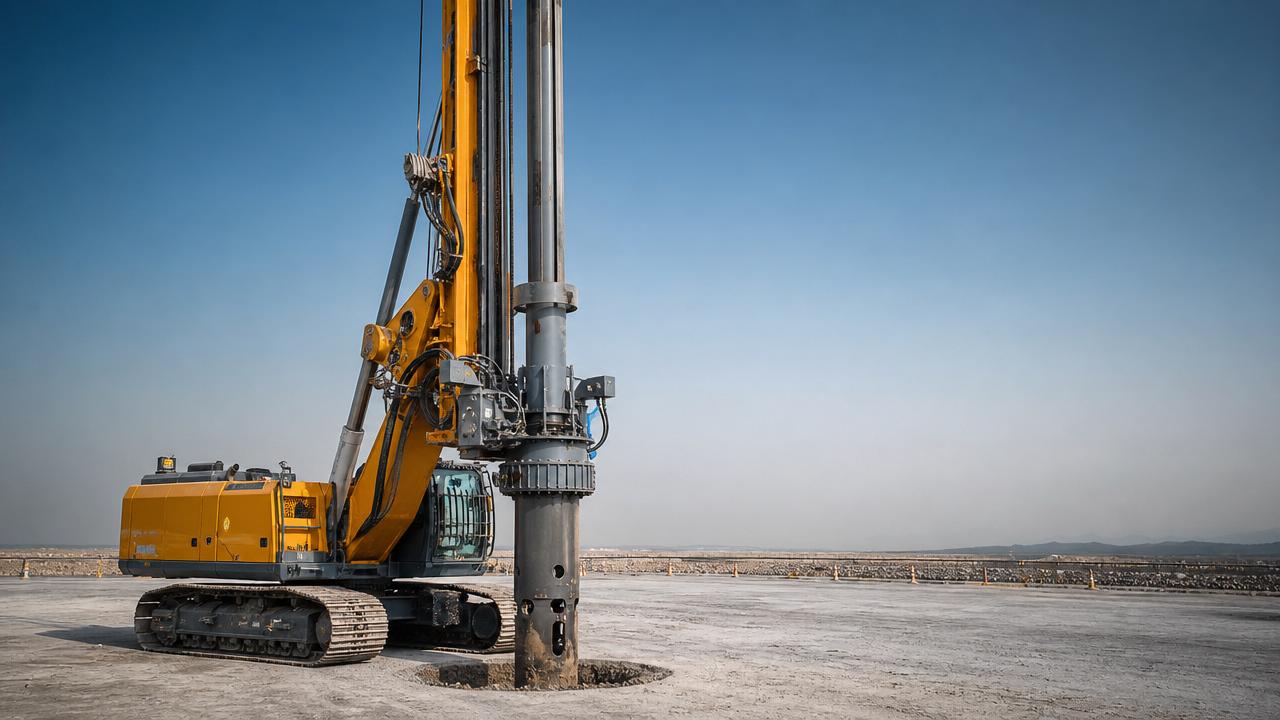
Rotary Drill Technology and Verticality Control
In deep foundation construction, small pile verticality errors can disrupt load transfer, increase rework, and weaken site safety.
Modern rotary drill technology changes how borehole alignment, geological risk, and drilling accuracy are controlled in real time.
With calibrated masts, digital inclination sensors, and data-driven drilling parameters, verticality control becomes a measurable foundation quality benchmark.
Why Verticality Control Needs a Checklist
Pile verticality is not only a geometric requirement. It affects bearing capacity, reinforcement cage installation, concrete continuity, and final structural reliability.
A checklist helps convert rotary drill technology into repeatable actions instead of relying only on operator experience or post-drilling inspection.
Complex ground conditions make this approach essential. Quicksand, cobbles, karst cavities, and hard rock can all push the borehole away from design alignment.
When drilling data, equipment condition, and inspection frequency are checked together, deviations can be corrected before they become expensive defects.
Core Checklist for Rotary Drill Technology
Use the following checklist before, during, and after drilling. Each item supports safer verticality control and more consistent piling performance.
- Verify the drilling platform stiffness, surface level, drainage, and bearing capacity before positioning the rig for any vertical pile operation.
- Calibrate the mast inclination system and confirm that displayed angles match independent measurements from a level or total station.
- Inspect rotary drive, Kelly bar, guide frame, and crowd cylinder for looseness, wear, deformation, or delayed response under load.
- Select the drilling bucket, auger, or core barrel according to strata, diameter, torque demand, and expected deviation risk.
- Set initial drilling parameters for speed, crowd force, torque, and slurry control based on verified geological investigation data.
- Start drilling slowly through the guide section to form a stable, accurate entry path before applying full production parameters.
- Monitor mast angle, drilling depth, torque fluctuation, and verticality alarms continuously instead of checking alignment only at milestones.
- Stop drilling when abnormal vibration, sudden torque loss, excessive spoil change, or rapid slurry level movement appears.
- Recheck borehole alignment after hard layer penetration, bucket change, casing installation, or any rig repositioning movement.
- Record final verticality, depth, tool type, drilling time, correction actions, and geological observations for traceable quality acceptance.
This checklist turns rotary drill technology into a controlled process. It also links machine behavior with pile acceptance evidence.
Equipment Checks That Influence Borehole Alignment
Mast and Chassis Stability
The mast is the main reference line for drilling verticality. Any chassis settlement or mast deflection can transfer directly into pile deviation.
Rotary drill technology now uses automatic leveling, electronic inclinometers, and alarm thresholds to keep the mast within allowable limits.
However, sensors cannot compensate for weak platforms. Ground preparation remains the first verticality control measure on every piling site.
Kelly Bar and Tool Concentricity
A worn Kelly bar can create eccentric rotation. This effect increases in deep piles, especially when drilling large diameters.
Check locking keys, telescopic sections, pins, and tool connections. Small mechanical gaps can produce measurable borehole drift under high torque.
Advanced rotary drill technology helps identify abnormal torque patterns, but mechanical inspection is still required before drilling critical piles.
Sensor Calibration and Data Reliability
Digital readings are useful only when calibrated. Inclination sensors, depth encoders, and pressure sensors should be checked at planned intervals.
If sensor drift is ignored, rotary drill technology may give false confidence while actual borehole deviation increases below ground.
Geological Scenarios and Control Measures
Soft Soil and Quicksand Layers
Soft soil increases the risk of borehole wall collapse and uneven tool resistance. Verticality may change even when mast angle remains correct.
Use casing, slurry stabilization, and low-speed drilling through unstable sections. Rotary drill technology should be paired with real-time slurry level monitoring.
Cobbles and Boulders
Cobbles can deflect the drilling tool sideways. Sudden impact loads often appear as vibration, torque spikes, and irregular spoil discharge.
Reduce crowd force, use suitable rock tools, and confirm position after obstruction removal. Do not force penetration without alignment verification.
Inclined Hard Rock Surfaces
Sloping rock faces are a common cause of borehole deviation. The tool may slide before the cutting edge forms a stable socket.
Use staged drilling, pilot holes, core barrels, and controlled feed pressure. Rotary drill technology supports this process through torque trend analysis.
Inspection Points During Drilling
Verticality control should be active during the entire drilling cycle. Waiting until final depth limits the chance for correction.
- Check mast inclination after every major depth interval and after any visible platform settlement near the crawler tracks.
- Compare design depth, actual depth, and tool advance rate to detect hidden obstructions or abnormal cutting resistance.
- Review torque and crowd force curves for sudden changes that may indicate boulders, cavities, or tool deflection.
- Observe spoil type, moisture, particle size, and color to confirm whether the actual strata match the expected profile.
- Measure borehole position and verticality before reinforcement cage installation, especially for deep piles or tight pile groups.
These checks improve the value of rotary drill technology by connecting digital information with visible field evidence.
Digital Control and Data-Driven Decisions
Modern rotary drill technology integrates mast sensors, torque monitoring, depth recording, and sometimes cloud-based reporting into one operating interface.
This data helps identify patterns across piles. Repeated deviation in one zone may reveal an unrecognized geological boundary.
Data also supports quality documentation. Time-stamped drilling records provide stronger evidence than manual notes alone.
However, digital systems should not replace engineering judgment. The best results come from combining instrument readings with field inspection.
Commonly Overlooked Risks
Ignoring Platform Settlement
A level rig at the start may become tilted after repeated bucket lifting, spoil dumping, or rainfall. Recheck the platform frequently.
Overtrusting Automatic Leveling
Automatic leveling improves rotary drill technology, but it cannot correct hidden subgrade weakness or crawler instability during heavy drilling loads.
Using One Tool for All Strata
Incorrect tool selection increases side cutting, vibration, and deviation. Match the tool to the actual strata, not only the design report.
Delaying Deviation Correction
Small deviation at shallow depth can become serious at final depth. Stop early, evaluate cause, and correct drilling direction immediately.
Practical Execution Recommendations
Establish a verticality control plan before production drilling. Define tolerance limits, inspection frequency, correction procedures, and acceptance documentation.
Use trial piles to verify drilling parameters. Trial results should guide tool selection, casing strategy, slurry control, and sensor alarm thresholds.
Create a daily equipment inspection routine. Include mast calibration, Kelly bar condition, hydraulic response, crawler stability, and data recording functions.
Review drilling records at the end of each shift. Rotary drill technology becomes more valuable when data drives next-day adjustments.
For high-risk piles, add independent verification. Borehole inclination measurement, sonic logging preparation, and as-built position checks reduce acceptance disputes.
Final Action Guide
Reliable verticality control depends on three linked factors: stable equipment, suitable drilling methods, and verified data.
Rotary drill technology provides the tools to monitor these factors, but disciplined inspection turns technology into foundation quality.
Before the next pile, check the platform, calibrate the mast, confirm the tool, set parameters, and define stop-work triggers.
During drilling, respond to abnormal torque, vibration, spoil change, or slurry movement before deviation becomes irreversible.
After drilling, keep complete records. A traceable verticality file protects structural performance, project schedule, and long-term foundation safety.
Industry Briefing
Get the top 5 industry headlines delivered to your inbox every morning.