
When Foundation Engineering Consulting Services Add Value


For business evaluators assessing project risk, lifecycle cost, and execution certainty, foundation engineering consulting services can be a decisive value driver.
They clarify subsurface uncertainty, test design assumptions, and connect geotechnical findings with practical construction methods and equipment realities.
In modern civil works, the cost of early mistakes often exceeds the cost of expert guidance many times over.
That is why foundation engineering consulting services matter across towers, bridges, transport hubs, industrial plants, and dense urban redevelopment sites.
They also align with the intelligence-driven approach seen across DFCS coverage of piling systems, rotary drilling rigs, batching plants, and concrete pumping ecosystems.
What are foundation engineering consulting services, and why do they matter early?
Foundation engineering consulting services evaluate how soil, rock, groundwater, loads, and construction constraints interact before irreversible decisions are made.
Their role goes beyond a single report.
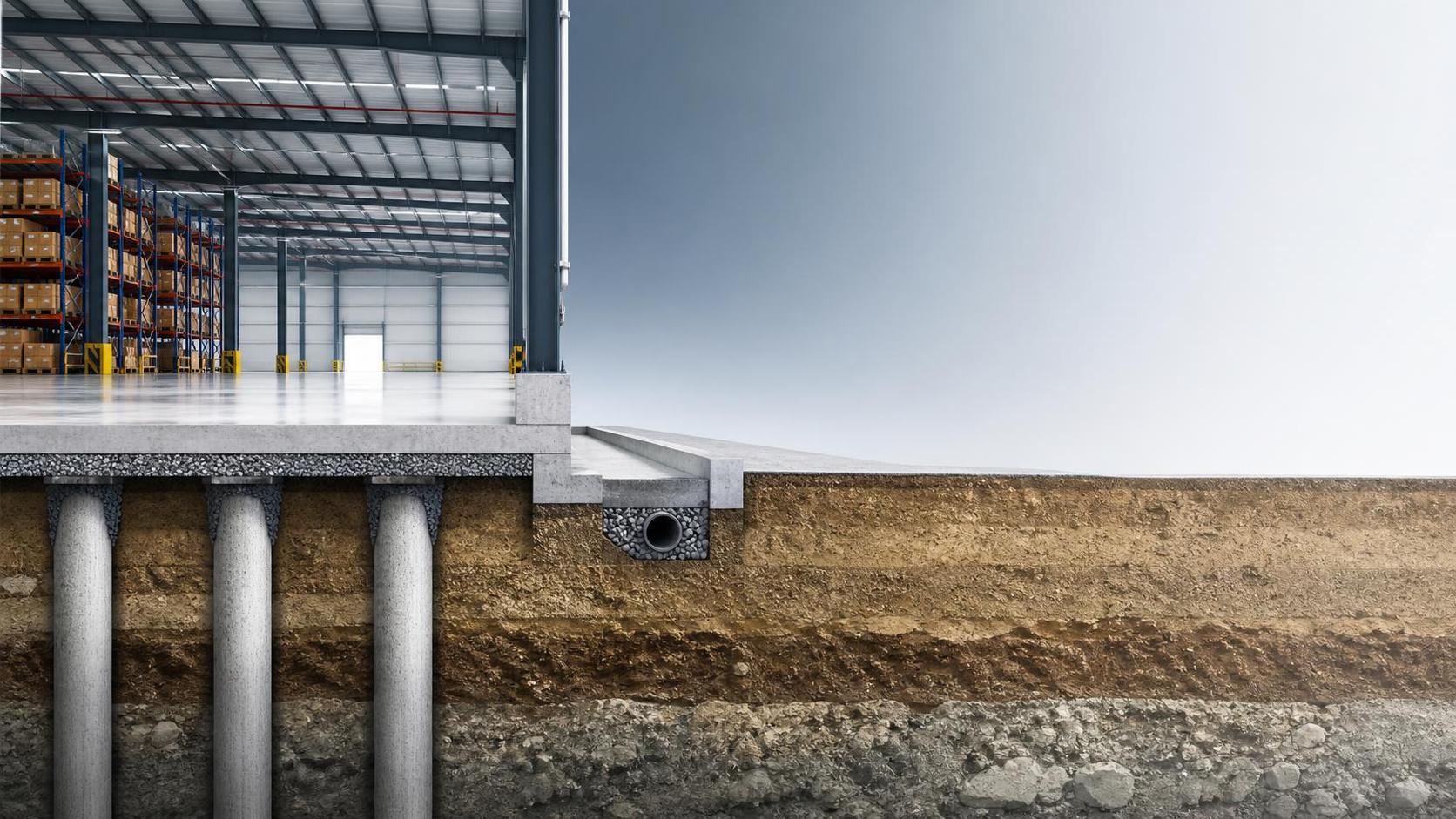
They help shape investigation scope, foundation type selection, piling strategy, temporary works, instrumentation plans, and long-term performance expectations.
Early involvement creates value because site conditions rarely behave like simplified assumptions in a tender document.
A consultant can identify missing borehole coverage, inconsistent lab data, settlement sensitivity, or constructability gaps before design freeze.
That prevents overdesign in some areas and dangerous underdesign in others.
In high-rise and underground projects, this timing effect is especially strong.
Load transfer, pile group behavior, excavation support, and nearby structure movement all depend on assumptions that must be stress-tested early.
Typical early-stage outputs
- Ground risk screening and data-gap review
- Preliminary foundation system comparison
- Piling method suitability assessment
- Equipment-fit and access feasibility review
- Budget and schedule risk implications
When do foundation engineering consulting services add the most value?
The highest value usually appears when uncertainty, interface complexity, or consequences of failure are high.
That includes tall buildings, marine works, deep basements, transportation corridors, energy facilities, and sites with mixed fill or hard rock transitions.
Foundation engineering consulting services are also valuable during competitive bid preparation.
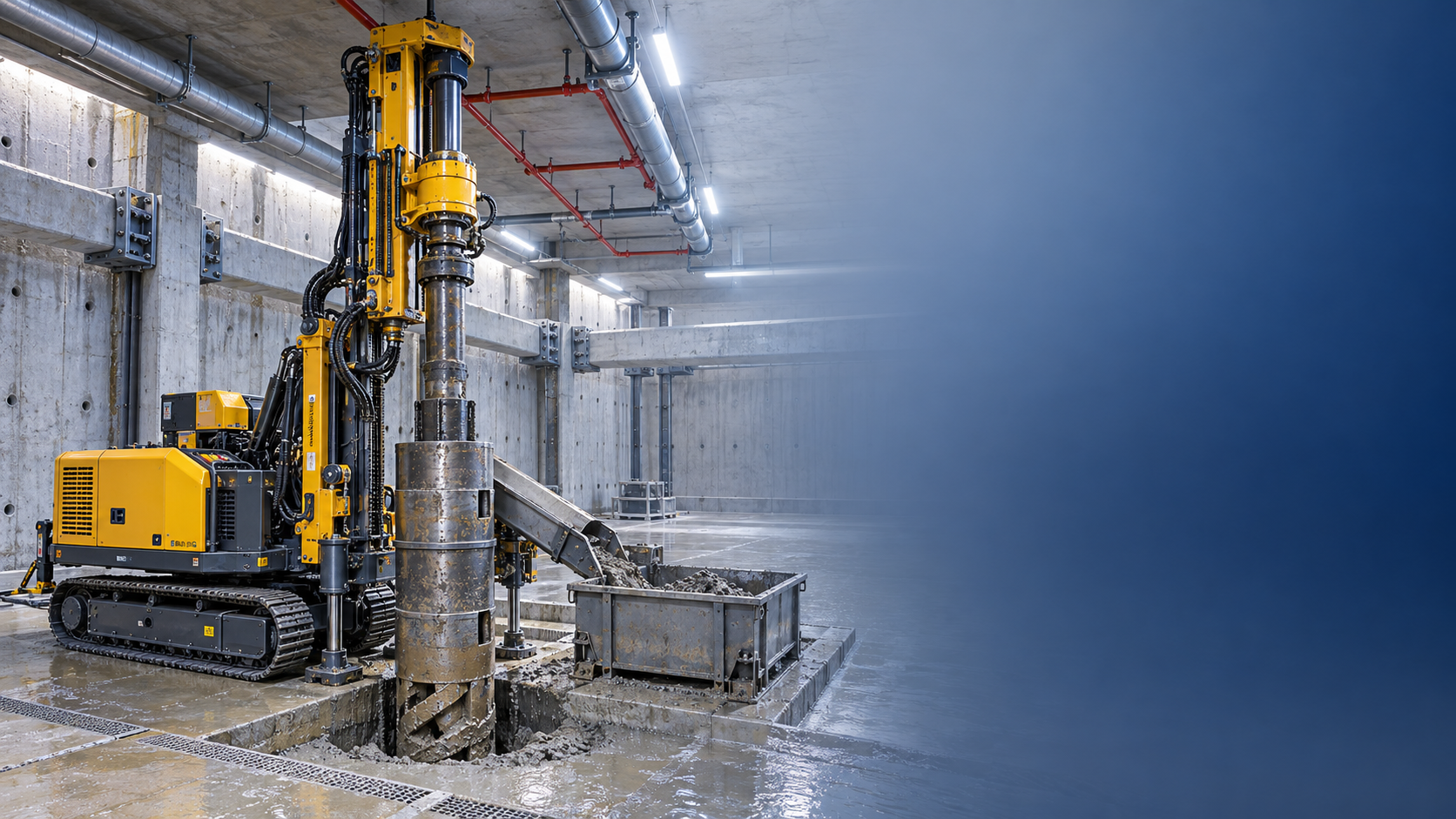
They can test whether a proposed pile diameter, drilling tool, casing solution, or concrete placement plan matches actual field constraints.
This reduces the chance of winning a project with unrealistic production assumptions.
Urban sites are another strong use case.
Noise limits, vibration restrictions, traffic control, spoil handling, and adjacent utility risk can eliminate otherwise attractive foundation options.
A consulting review helps compare rotary bored piles, driven piles, CFA systems, static pressing, and hybrid approaches with practical discipline.
Common scenarios where value is highest
- Incomplete geotechnical data before final pricing
- Conflicting design and construction assumptions
- Need to compare multiple piling technologies
- Sites with strict settlement or vibration limits
- Projects facing carbon, safety, or compliance pressure
How do these services reduce risk, cost, and schedule pressure?
Foundation engineering consulting services reduce risk by making hidden assumptions visible and measurable.
For example, consultants can flag where groundwater drawdown may affect excavation stability or nearby foundations.
They can also identify where pile refusal risk, tool wear, slurry control, or concrete segregation could slow progress.
Cost reduction does not always mean choosing the cheapest pile type.
It often means choosing the most reliable whole-life solution with fewer redesigns, claims, delays, and remedial works.
This is especially important where concrete batching quality, pumping distance, tremie performance, or reinforcement congestion affects pile integrity.
Schedule benefits come from realistic sequencing.
A consultant can connect geology with drilling penetration rates, casing requirements, concrete logistics, spoil removal, and testing windows.
That kind of integrated planning is aligned with DFCS attention to the full chain, from drilling and piling to batching and pumping reliability.
Risk areas often improved by consulting input
- Subsurface variability and insufficient exploration
- Unsuitable foundation method selection
- Poor equipment matching for geology or access
- Concrete quality and placement control weaknesses
- Testing, monitoring, and acceptance ambiguity
How should decision makers compare consulting options and judge quality?
Not all foundation engineering consulting services deliver the same practical value.
The best evaluations look at technical depth, site experience, construction realism, and the ability to communicate actionable findings clearly.
A strong consultant does more than restate codes.
They explain why a certain pile type works, where assumptions may fail, and what field controls are essential.
They should also understand equipment implications.
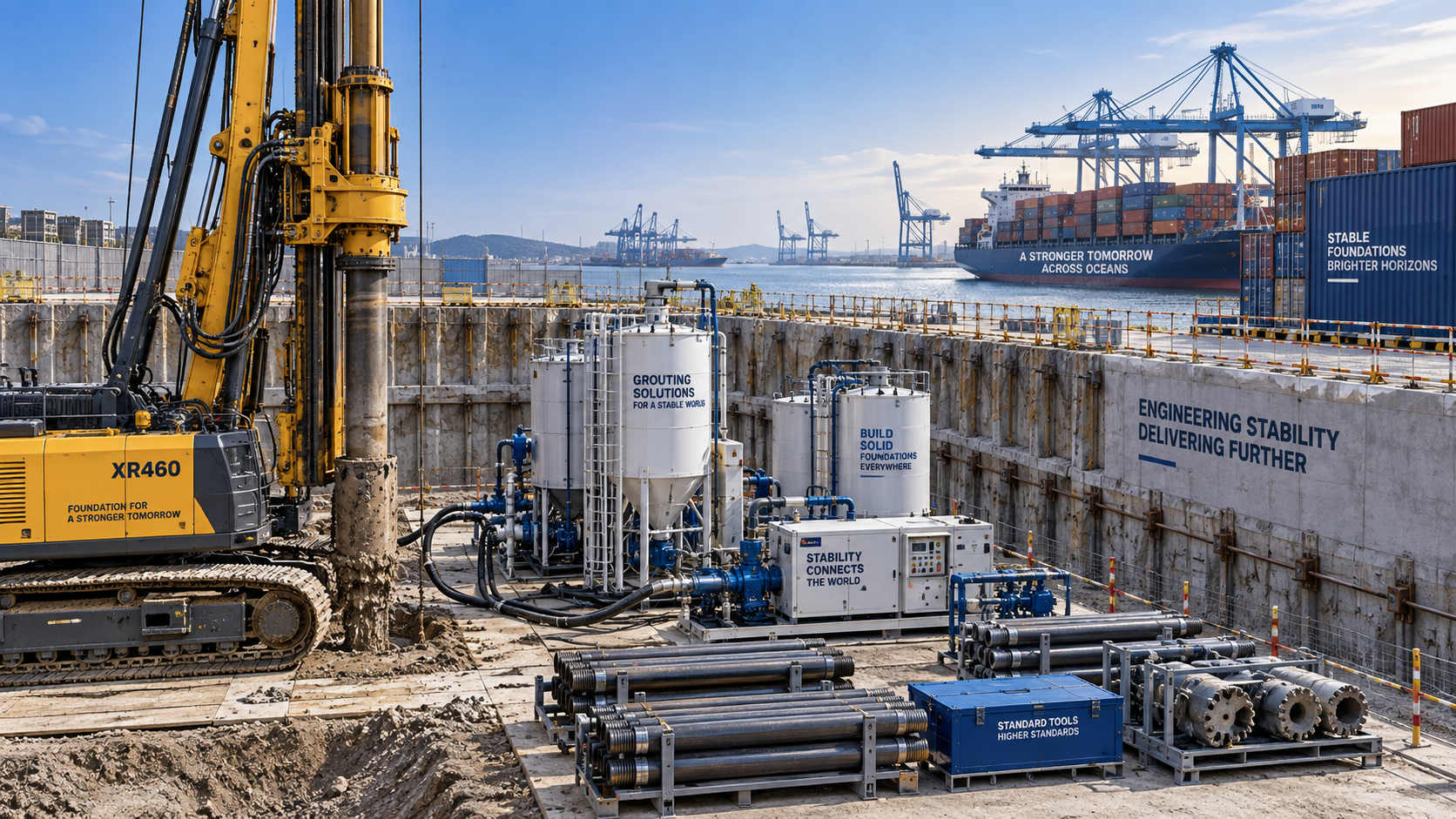
For example, a recommendation involving ultra-deep bored piles must reflect rotary drilling rig capability, bit wear behavior, spoil management, and concrete supply continuity.
Good consulting is measurable.
It should improve scope clarity, reduce contingency driven by uncertainty, and support more credible planning and procurement decisions.
Quality checklist for selection
What mistakes reduce the value of foundation engineering consulting services?
One common mistake is bringing consultants in after major technical choices are already locked.
At that stage, the service often becomes damage control instead of value creation.
Another mistake is treating geotechnical data as complete when borehole spacing, sampling quality, or groundwater observations are weak.
A third mistake is focusing only on initial cost.
If a cheaper option increases vibration complaints, concrete defects, drilling delays, or long-term settlement risk, total value declines quickly.
Misalignment across disciplines is another hidden issue.
Foundation decisions affect batching plant output planning, pump truck selection, rebar congestion, testing programs, and environmental controls.
Ignoring these interfaces weakens the usefulness of any recommendation.
Quick warning signs
- No explanation of assumptions behind pile capacity or settlement estimates
- Recommendations without constructability discussion
- Limited attention to groundwater and adjacent structures
- No clear testing or monitoring framework
- Little connection to concrete logistics or equipment performance
How can organizations turn consulting findings into better project outcomes?
The best results come when foundation engineering consulting services are integrated into decision gates, not filed away as reference documents.
Use the findings to update bid assumptions, refine method statements, validate equipment lists, and adjust concrete supply strategy.
Where uncertainty remains, create trigger points.
Examples include extra boreholes, trial piles, instrumented test sections, or revised casing plans if groundwater behavior differs from prediction.
It also helps to connect recommendations with execution data.
Production rates, spoil volumes, concrete consumption, pumping interruptions, and test results should be reviewed against the original consulting assumptions.
This creates a feedback loop for stronger future decisions.
Practical implementation steps
In complex construction, foundation engineering consulting services add value when they connect science, equipment, execution, and lifecycle thinking.
They are most powerful before key choices harden, when uncertainty can still be managed economically.
For projects involving deep foundations, rotary drilling, piling systems, or high-performance concrete delivery, informed review can protect both capital and credibility.
Use foundation engineering consulting services as a decision tool, not a paperwork step.
That approach leads to clearer bids, stronger execution certainty, and better long-term asset performance.
Industry Briefing
Get the top 5 industry headlines delivered to your inbox every morning.