
When do zero-emission regulations apply to construction equipment?

Zero-emission requirements apply to construction equipment when an enforceable rule or project condition covers the machine, the activity, and the relevant date. The trigger could be a restriction on selling new equipment, a fleet replacement obligation, or a condition for entering a particular jobsite. There is no single global deadline that makes all existing construction machinery subject to the same requirement.
For concrete pumping, batching, and foundation work, the starting point is the exact scope of the obligation: where the equipment operates, how it is classified, which functions must produce zero emissions, and when compliance becomes mandatory. A machine that remains legal to own and operate elsewhere can still be excluded from a specific construction contract.
The deadline follows the regulated activity
A date in a policy announcement does not establish an equipment compliance deadline by itself. The underlying document must identify what changes on that date. Publication, legal entry into force, the start of an application period, and the first mandatory compliance date can be separate events.
These distinctions matter when ordering long-lead machinery. Signing a purchase agreement before a deadline does not necessarily preserve eligibility if the controlling event is delivery or first registration. Conversely, a restriction expressly covering new sales does not automatically prohibit continued operation of every previously purchased machine.
For phased obligations, identify the provision covering each project period. Equipment accepted during early groundworks might face different conditions when a later construction phase begins. Schedule extensions also require attention if the governing requirement changes during the extended period.
Classify the machine before applying the rule
“Construction equipment” is too broad to establish legal coverage. Relevant categories can distinguish road vehicles, non-road mobile machinery, stationary installations, engines, and particular power ranges. A commercial product name does not resolve those boundaries.
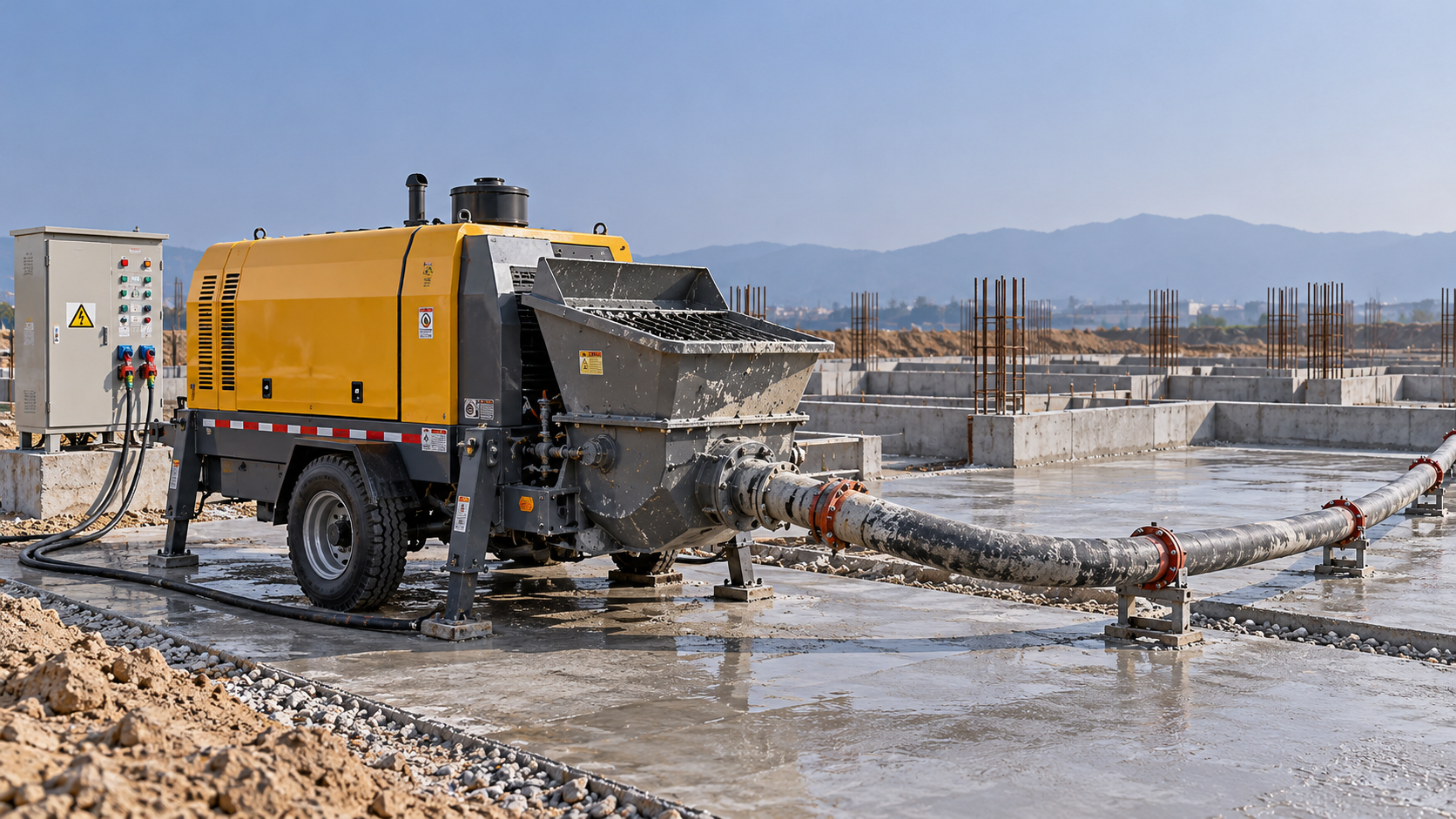
A truck-mounted concrete pump illustrates the problem. Its road chassis, propulsion engine, auxiliary engine, and pumping system perform different functions. A road access requirement could govern the truck’s movement, while a construction-site condition governs pumping. Whether one obligation covers both functions must be established from its definitions.
An electric pumping system therefore does not establish that the entire truck qualifies as zero-emission. A diesel chassis could still prevent entry where the access condition covers propulsion. Equally, a requirement limited to emissions during pumping needs a different assessment from one covering travel to and from the site.
Similar distinctions affect mixer trucks. Electric drum rotation does not establish zero-emission road transport, and electric propulsion does not establish that every auxiliary function is combustion-free. The specification should identify which functions the requirement covers.
Batching plants introduce a different boundary. A plant’s fixed installation, aggregate handling equipment, delivery vehicles, and standby power supply need separate classification. Electrifying the mixer alone does not establish compliance for the entire installation if combustion heating or generator operation falls within the requirement.
Establish what “zero-emission” means in the controlling document
A pollutant emissions standard is not automatically a zero-emission requirement. Engine rules that limit nitrogen oxides, particulate matter, or other pollutants can permit combustion engines. Meeting such a standard does not establish that equipment satisfies a requirement for zero exhaust emissions during operation.
The assessment boundary also matters. Zero emissions at the machine’s exhaust, zero direct emissions across a jobsite, and lifecycle greenhouse-gas performance measure different things. An electrically powered piling rig has no exhaust at the rig, but a diesel generator supplying it produces emissions elsewhere on the site.
Whether that arrangement qualifies depends on the requirement’s wording. A provision assessing only the machine’s direct exhaust requires a different determination from one covering all energy generation within the project boundary. If tender documents prohibit combustion-powered temporary generation, an electric machine connected to a diesel generator does not satisfy that condition.
Hybrid equipment requires particular care. A selectable electric mode establishes a capability; it does not prove that the required work will remain emission-free. Battery depletion, automatic engine starts, heating demand, and high-load assistance can change the operating state. Where compliance depends on electric-only operation, the accepted operating envelope and evidence must be explicit.
Alternative fuel claims need the same scrutiny. A fuel’s renewable origin or claimed carbon benefit does not establish zero exhaust emissions from the engine. Eligibility follows the adopted definition, including any expressly accepted technologies or fuels.
Separate legal obligations from tender conditions
A construction project can impose equipment conditions that exceed the general legal minimum. A public procurement specification, development agreement, environmental permit, or private contract can create an earlier practical deadline for a particular jobsite.
These sources have different consequences. A legal operating restriction can affect permission to use the machine within its jurisdiction. A contract requirement determines whether the proposed equipment meets the agreed scope and what contractual consequences follow from substitution or noncompliance. Calling both a “ban” obscures the distinction.
Tender wording deserves close reading. “Zero-emission equipment required,” “preference for zero-emission equipment,” and “submit an emissions reduction plan” create different obligations. A scored preference should not be treated as an absolute eligibility condition, while a mandatory specification cannot be satisfied solely by describing a future transition plan.
Definitions should also establish the treatment of hired machinery and subcontracted work. A fleet requirement tied to an entity’s ownership is different from a project condition applying to every machine operating within the site boundary. Replacing an owned diesel rig with an equivalent rented diesel rig does not resolve a requirement that covers site operation regardless of ownership.
Existing fleets, exemptions, and temporary replacements
Existing equipment needs its own applicability assessment. Relevant provisions could distinguish machines by manufacture date, first registration, engine category, operating location, or another defined characteristic. Continued operation must be supported by the applicable text; age alone establishes neither permission nor prohibition.
Exemptions require equally precise treatment. Where a rule provides an exception for specialist machinery, limited operating hours, emergency work, or unavailable alternatives, the stated conditions control. Technical difficulty does not create an exemption unless the governing framework recognizes it.
For a large rotary drilling rig, the absence of a suitable electric alternative might support an application only where that route exists. Useful supporting evidence would address required torque, drilling depth, ground conditions, working radius, and available electrical capacity. A general statement that electric equipment is unsuitable provides little basis for evaluating the actual task.
Any exemption should be documented with its scope, duration, conditions, and approving authority. Approval for one machine or work package should not be extended to other equipment without a basis in that approval.
Breakdown replacements also need advance treatment. A compliant primary machine does not make an unrestricted diesel substitute acceptable. Contract provisions can establish whether temporary replacements require prior approval, how long they can operate, and what records must accompany their use.
Match compliance to the actual construction duty
Once the applicable requirement is clear, equipment selection must establish that the compliant configuration can complete the intended work. Otherwise, combustion backup can become necessary during execution and undermine the accepted operating plan.
For concrete pumping, assess the simultaneous delivery pressure and output required by the placement, together with operating duration and interruptions. A pump’s peak electrical rating alone does not establish sustained performance. Vertical lift, pipeline layout, concrete characteristics, and cleaning operations affect the power and energy needed across the shift.
Rotary drilling and piling require a different load assessment. Hard layers, repeated extraction, casing operations, and long work cycles affect both peak demand and total energy use. Average daily consumption can conceal short periods when the electrical supply cannot support the required load.
The distinction between power and energy is particularly important. A battery can contain enough energy for the planned task while its discharge capability or the machine’s drive system limits peak performance. A grid connection can supply adequate peak power yet provide insufficient charging time between shifts.
Site distribution must support the proposed arrangement. Connection capacity, voltage, cable routes, protective devices, earthing, and exposure to water or mechanical damage determine whether the supply is usable. A planned utility connection that arrives after foundation work starts leaves an unresolved gap if generator operation is restricted.
Equipment acceptance should therefore link the permitted configuration to a defined duty and power source. Where operating mode determines compliance, records of mode selection and engine use can provide stronger evidence than a brochure describing the machine as “electric-ready.”
Build the evidence around the applicable obligation
There is no universal certificate that proves construction equipment complies with every zero-emission requirement. Product documentation, road registration, engine approvals, site permissions, and contract acceptance serve different purposes. A general conformity declaration should not be assumed to prove eligibility under a separate project condition.
A useful compliance record connects four elements:
- The controlling requirement: the legal provision, permit clause, or contract specification, including the version and applicable date.
- Machine identity and configuration, with enough detail to distinguish propulsion, auxiliary drives, and any onboard combustion equipment.
- The permitted operating arrangement. Record the power source, required operating mode, site boundary, and any restrictions affecting the planned task.
- Supporting evidence and approvals, including an exemption or accepted substitution where relevant, with expiry dates retained alongside the equipment record.
The responsible authority or contractual approver should resolve ambiguity before mobilization. A supplier’s interpretation is useful technical input, but it does not replace a determination from the body administering the requirement.
The resulting deployment decision should be specific: the identified machine is accepted for the stated activity, at the named location, during the relevant period, using the documented power arrangement. If a machine substitution, project extension, or revised power supply changes one of those facts, the acceptance needs reassessment before the changed arrangement is used.
 When do zero-emission regulations apply to construction equipment?Time : Oct 26, 2026
- Which modern construction techniques suit Middle East heat and water limits?Time : Sep 29, 2026
- How to compare concrete machinery suppliers on innovation supportTime : Sep 22, 2026


Industry Briefing
Get the top 5 industry headlines delivered to your inbox every morning.