
Construction Equipment Sourcing Guide: Avoid Hidden Supply Risks

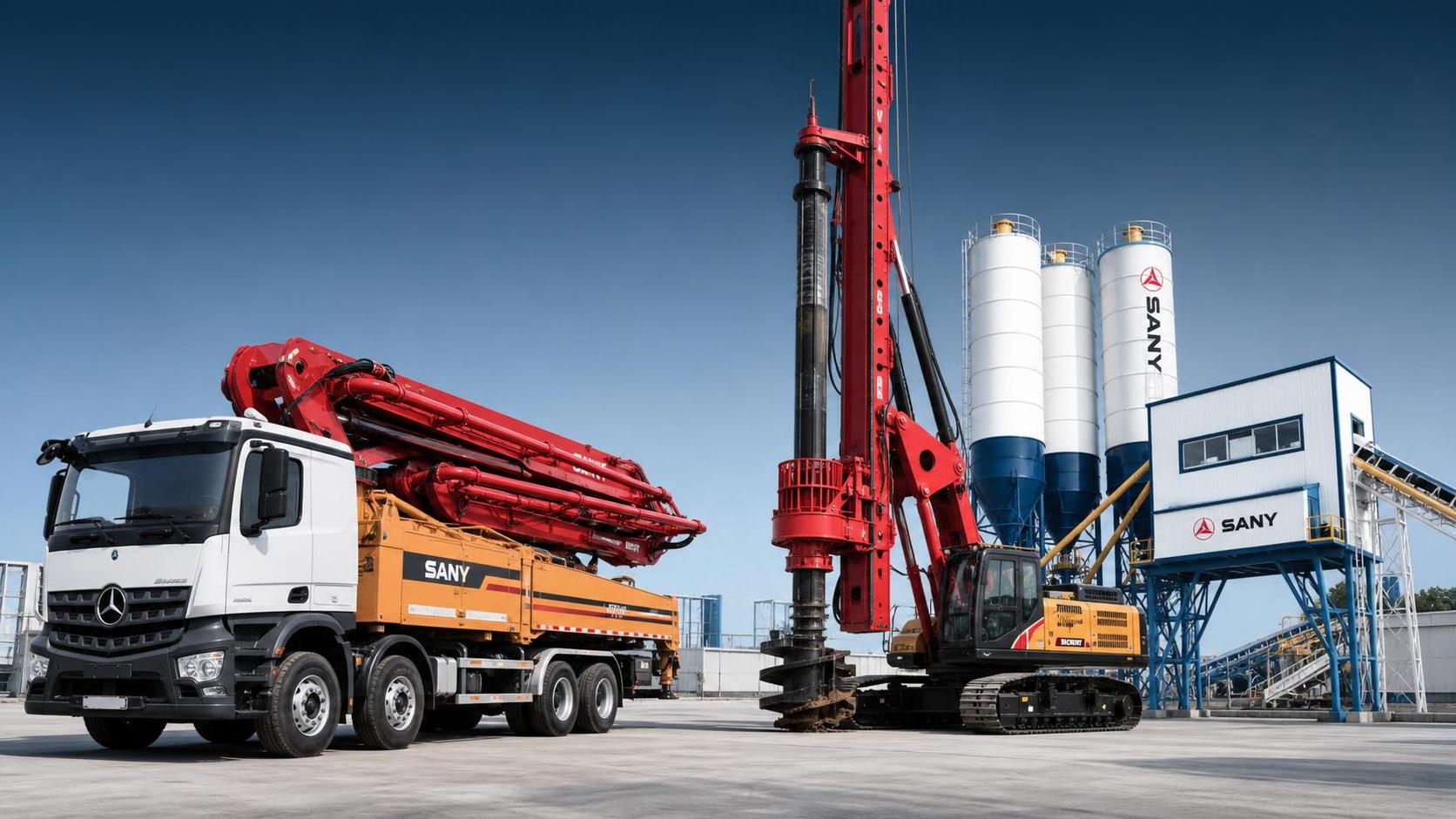
Construction Equipment Sourcing Guide: Avoid Hidden Supply Risks
This construction equipment sourcing guide helps business evaluators spot risks before they turn into cost overruns, delays, or compliance trouble.
For concrete pumps, batching plants, mixer trucks, rotary drilling rigs, and piling machinery, price alone no longer gives a safe buying signal.
In today’s market, supply resilience, parts access, engineering fit, and after-sales response shape total ownership cost far more than a headline quotation.
That shift is especially clear in deep foundation and concrete systems, where downtime can stall several linked contractors at once.
A practical construction equipment sourcing guide should therefore test supplier strength, technical reliability, and lifecycle economics at the same time.
Why hidden supply risks are getting harder to ignore
Recent market changes have made sourcing more complex than many procurement models assumed a few years ago.
Lead times move faster. Emission rules tighten earlier. Component substitutions happen quietly. Dealer coverage also varies widely between countries and jobsite types.
For heavy civil and high-rise work, one weak link can disrupt pumping schedules, piling sequences, or batching continuity.
This is why a modern construction equipment sourcing guide must look beyond machine specification sheets and catalog photos.
A pump truck may meet output targets on paper, yet still fail sourcing review if boom parts require long overseas replenishment.
Likewise, a rotary drilling rig can appear competitively priced, while wear part availability makes its real operating cost much higher.
The five supply risks most buyers miss first
1. Hidden component dependency
Many machines are assembled locally but depend on imported hydraulic pumps, control modules, sensors, or specialized steel sections.
A solid construction equipment sourcing guide should ask which critical parts are single-source and what substitute paths are approved.
2. Overstated service coverage
Some suppliers advertise global support, but actual field technicians may be limited, outsourced, or unfamiliar with local geology and operating conditions.
That matters when a piling rig or concrete pump fails during a narrow construction window.
3. Compliance drift
Noise, dust, engine emission, and electrical safety rules are changing across regions faster than many sourcing teams expect.
A machine that is legal today may need retrofit spending much sooner than budgeted.
4. Weak production traceability
If a supplier cannot document weld procedures, quality checks, calibration records, or load testing, failure risk rises later in the field.
This is especially relevant for booms, masts, turntables, and pressurized delivery systems.
5. Misread lifecycle cost
Purchase price is only one line item. Fuel, wear parts, operator training, downtime, and resale value often reshape the business case.
Any useful construction equipment sourcing guide should treat these costs as core sourcing inputs, not post-award surprises.
How to evaluate suppliers with fewer blind spots
In practice, the strongest sourcing decisions come from structured comparison rather than broad supplier claims.
A good construction equipment sourcing guide uses evidence that can be checked, not marketing language that sounds reassuring.
Request these supplier proofs early
- Factory capacity by model and monthly output stability.
- Bill of materials for critical imported and local components.
- Regional spare parts inventory and average emergency dispatch time.
- Failure history for core assemblies over the last two years.
- Certification scope, not just certificate copies.
- Reference projects matching soil conditions and output demand.
- Commissioning, training, and preventive maintenance commitments.
This approach makes a construction equipment sourcing guide far more practical because it converts vague risk into comparable facts.
Use a weighted review model
A balanced scorecard usually works better than a lowest-price ranking.
For a sourcing team, this kind of construction equipment sourcing guide creates clearer trade-off logic and stronger internal approval notes.
Equipment-specific checks that change sourcing outcomes
Different asset categories fail in different ways. A generic review process often misses those differences.
Concrete pump trucks
Check boom fatigue history, hydraulic stability, pipe wear rates, and remote diagnostics support.
A solid construction equipment sourcing guide should also verify parts lead time for cylinders, valves, and control boards.
Concrete batching plants
Focus on weighing accuracy, dust control systems, mixer liner wear, automation software, and calibration traceability.
Poor enclosure design or weak controls can create both compliance risk and unstable mix quality.
Concrete mixer trucks
Review drum material durability, drivetrain efficiency, discharge consistency, and service support for electrified platforms where relevant.
Rotary drilling rigs and piling machinery
Look closely at mast rigidity, crowd force stability, tooling wear patterns, and control performance in hard rock or mixed soil.
An effective construction equipment sourcing guide should connect these checks to local geology, urban noise limits, and project depth requirements.
Questions that expose real supplier strength
The best sourcing questions are concrete enough that weak suppliers cannot hide behind general claims.
- Which components have changed in the last 12 months, and why?
- What is the average spare part fill rate in the target region?
- How many field engineers support this equipment category locally?
- What failures are excluded from warranty in normal heavy-duty use?
- Which customer sites match the same concrete grade, geology, or duty cycle?
- What retrofit path exists for future emission or automation requirements?
When used consistently, this construction equipment sourcing guide method reduces guesswork and improves negotiation leverage.
It also helps separate technically credible suppliers from those mainly competing on front-end discounts.
A practical sourcing process for lower total risk
A simple process usually works best when teams need faster decisions without losing control.
- Define project conditions, output targets, and compliance thresholds first.
- Shortlist suppliers by technical fit and service footprint before pricing review.
- Audit critical component sources and parts support capability.
- Check references from similar duty cycles, not generic customer lists.
- Model lifecycle cost using realistic downtime and maintenance assumptions.
- Lock service terms, spare stock, and training scope into the contract.
This construction equipment sourcing guide is most useful when applied before final negotiation, not after purchase approval is nearly closed.
That timing gives teams room to challenge assumptions, compare alternatives, and price risk properly.
For deep foundation and concrete systems, disciplined sourcing is no longer just a procurement task. It is a project continuity decision. Use this construction equipment sourcing guide to test supplier resilience, verify technical truth, and protect long-term asset value before hidden risks surface on site.

Industry Briefing
Get the top 5 industry headlines delivered to your inbox every morning.