
Concrete Pumping Systems: Cost, Reach, and Output Compared

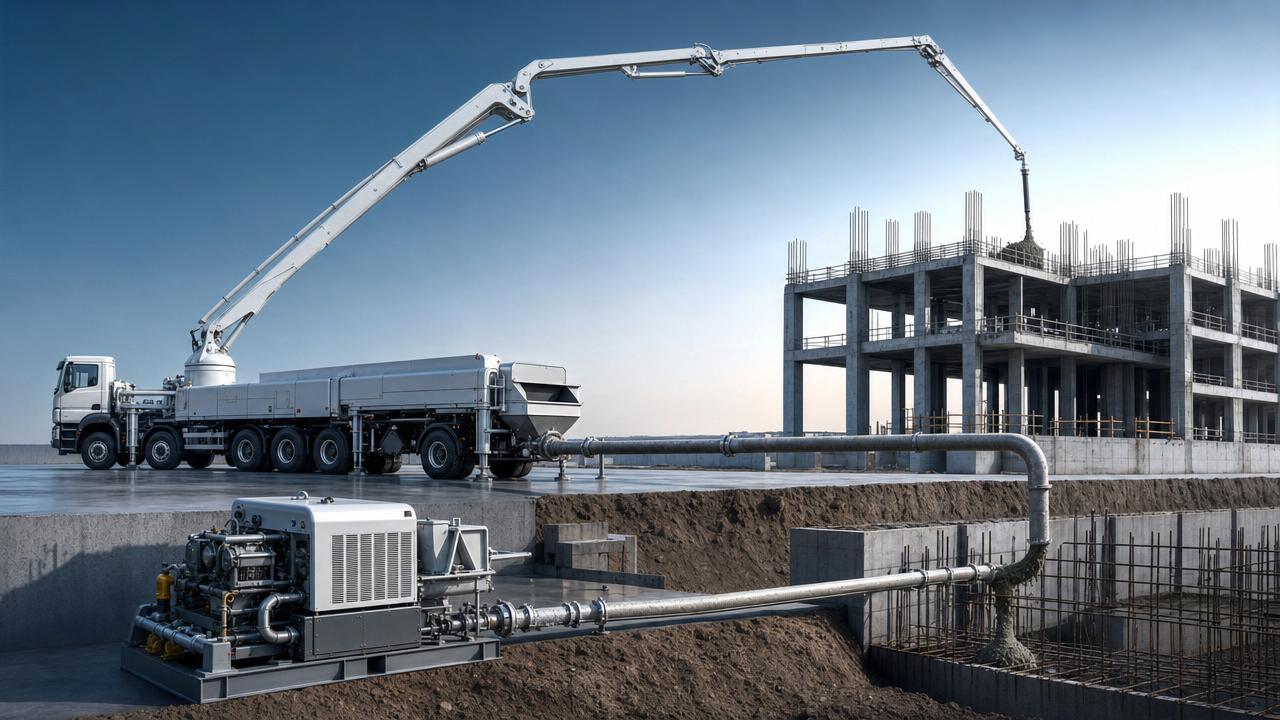
Concrete pumping systems: what matters beyond the headline price?
When concrete pumping systems are compared only by purchase price, the result is often a costly mismatch. Reach, output, line layout, and site conditions usually decide the real value.
In daily project delivery, the pump is not an isolated machine. It works with batching plants, mixer trucks, placing crews, and sometimes piling or deep foundation operations.
That is why the better question is not simply, “Which unit is cheaper?” A more useful question is, “Which system keeps concrete moving safely, steadily, and with fewer interruptions?”
This is also the angle often emphasized across DFCS industry intelligence. Pumping performance sits at the intersection of pressure, material consistency, site logistics, and long-term equipment efficiency.
If the job includes towers, bridge decks, raft foundations, tunnels, or congested urban pours, concrete pumping systems should be judged as production assets, not just line items.
Which concrete pumping systems are usually compared in real buying decisions?
Most buying discussions focus on three practical categories. Each one solves a different delivery problem, and each creates a different cost structure.
Boom pumps for vertical reach and fast placement
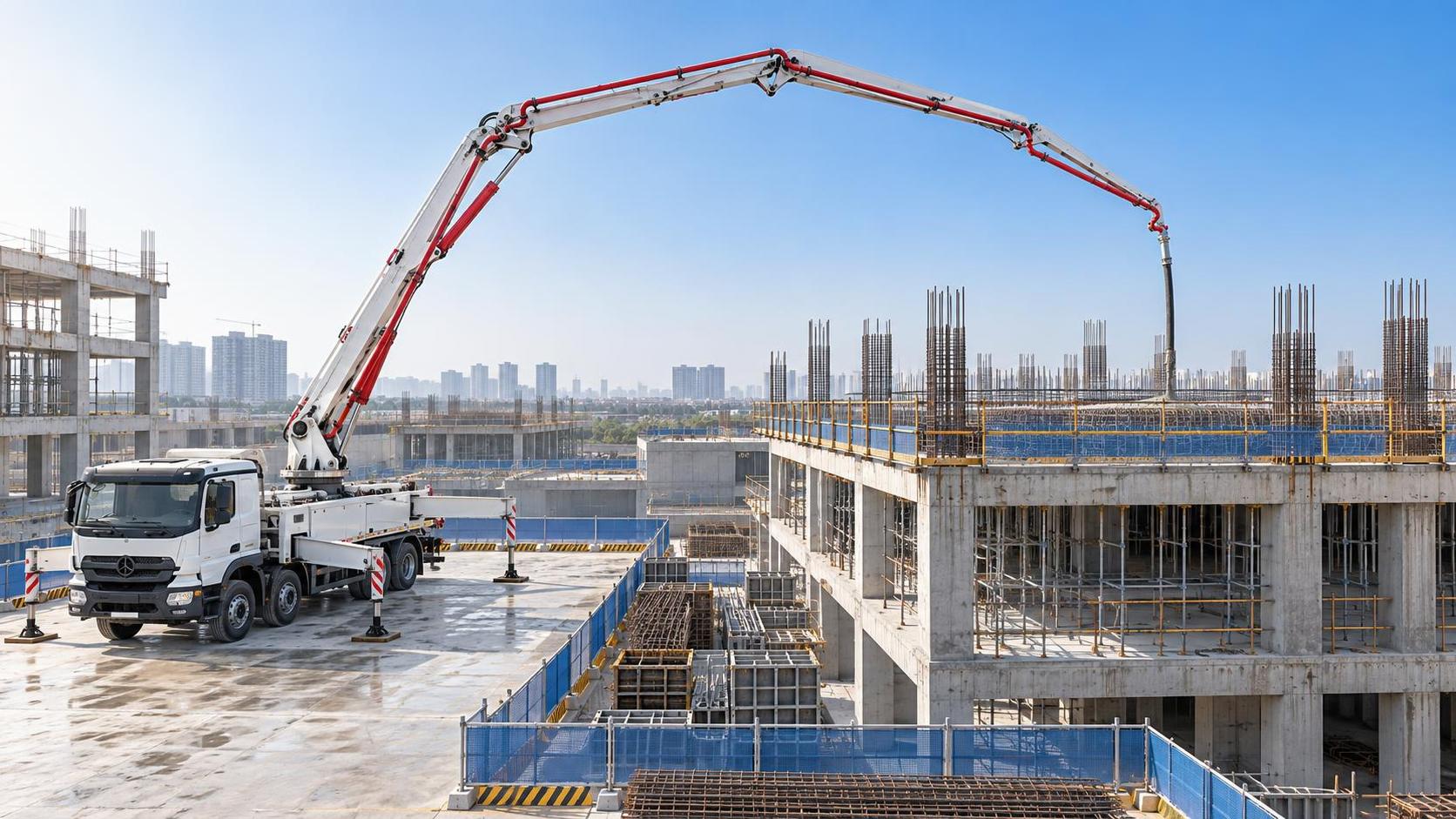
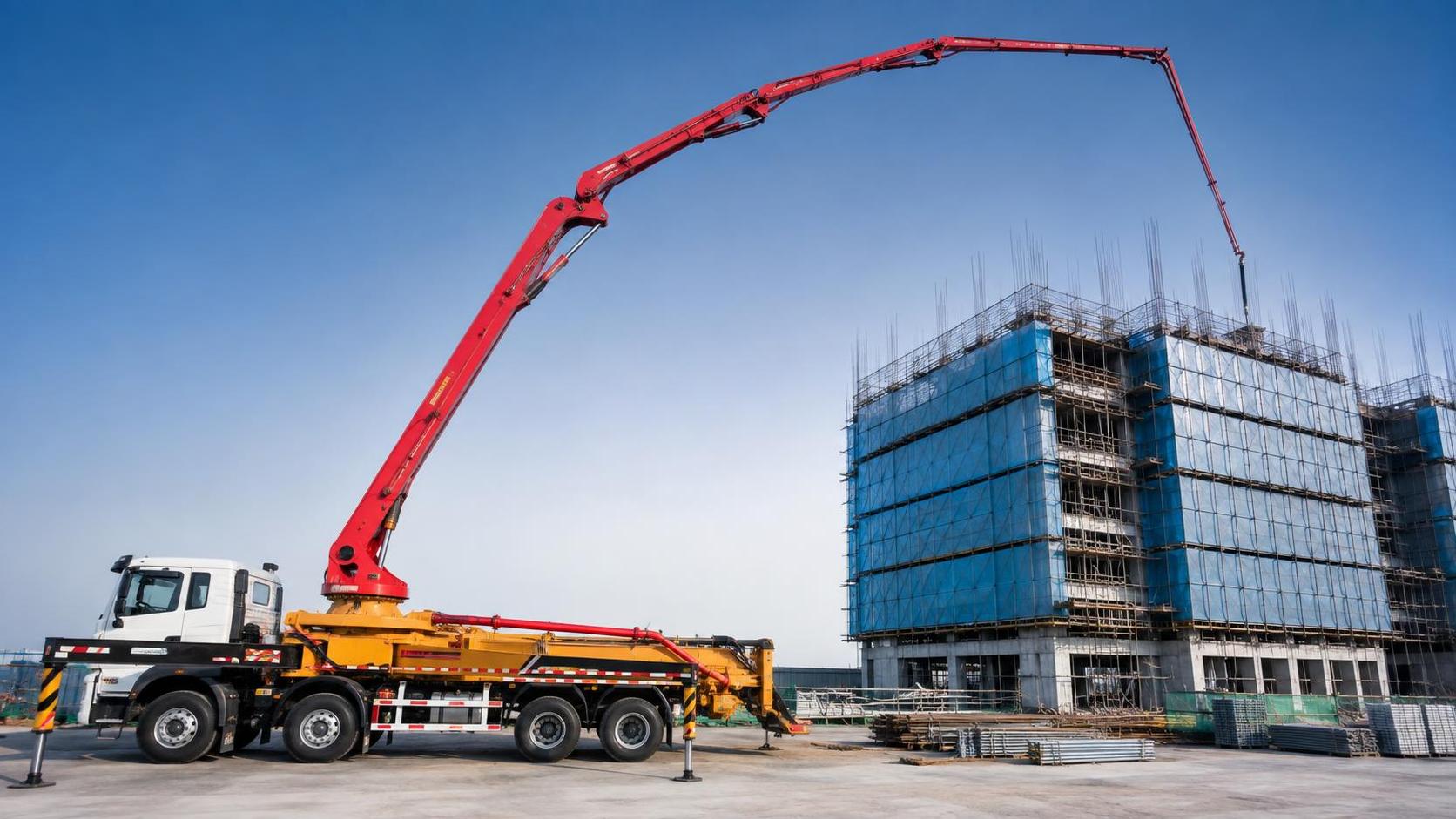
Boom pumps are chosen when access is difficult, placement points change quickly, or high-rise work demands long vertical reach. They reduce manual hose handling and speed up cycle times.
The tradeoff is obvious. Boom-equipped concrete pumping systems usually carry higher purchase, maintenance, and transport costs than simpler line setups.
Line pumps for flexibility and lower entry cost
Line pumps are common on slabs, low-rise buildings, tunnel sections, and foundation work. They are generally easier to position and can be economical for repeated horizontal pumping.
However, output depends heavily on pipe layout, hose length, aggregate size, and mix consistency. A low-cost line pump can become a slow system if the whole setup is not engineered well.
Stationary pumps for long-distance or specialized pours
Stationary concrete pumping systems are often selected for large infrastructure, dam sections, marine works, and deep foundation projects requiring consistent pressure over long distances.
They may not look as versatile at first glance, yet on repetitive high-volume jobs they often deliver stronger lifecycle economics than mobile alternatives.
How should cost be compared without missing hidden expenses?
The visible acquisition price is only the starting point. Real comparison should include setup time, crew intensity, wear parts, fuel or power use, cleaning downtime, and transport constraints.
In practice, concrete pumping systems often differ more in operating cost per placed cubic meter than in list price alone. That difference becomes significant on long-duration projects.
Wear components deserve special attention. Delivery cylinders, cutting rings, spectacle plates, pipelines, elbows, and seals can shift operating economics faster than expected in abrasive mixes.
Another hidden expense comes from under-specification. If output is too low, trucks queue longer, concrete risks slump loss, and labor waits. The cheaper machine may create the more expensive pour.
A simple table never replaces a job-specific review, but it does reveal where concrete pumping systems often win or lose value.
How much reach is really needed, and when does extra reach stop paying back?
Reach is one of the most misunderstood buying criteria. More reach sounds safer, yet unused reach adds weight, capital cost, and maintenance burden.
The useful way to evaluate concrete pumping systems is to map actual placing geometry. Check vertical height, horizontal distance, obstructions, setup zones, and how often the placing point moves.
For tower cores or elevated decks, reserve margin matters. For repetitive low-rise pours, oversized boom length may bring little operational advantage.
On deep foundation or basement projects, line routing can matter more than headline boom length. Tight corners, long elbows, and elevation changes can increase resistance even on moderate distances.
This is where coordination with batching and mix design becomes important. DFCS often highlights that pumping performance is shaped not only by machine capability but also by material behavior under pressure.
- Check maximum vertical and horizontal placing distance separately.
- Review pipe diameter against aggregate size and slump range.
- Allow for future projects, but avoid paying for unused extremes.
- Confirm local transport and site access restrictions before selection.
Output figures look impressive, but which numbers are actually trustworthy?
Catalog output is rarely the same as jobsite output. Rated capacity is usually measured under favorable conditions, not under difficult pipeline geometry or inconsistent concrete supply.
A better comparison starts with net placed volume per hour during normal working windows. That figure reflects pumping interruptions, truck arrival gaps, cleaning cycles, and operator rhythm.
For many concrete pumping systems, the real bottleneck is upstream supply. If batching accuracy varies or mixer dispatch is irregular, a high-capacity pump cannot recover lost continuity.
The same applies to foundation and infrastructure work. If reinforcement congestion slows placement, theoretical output remains theoretical.
Questions worth asking suppliers and internal teams
- What output was achieved on projects with similar mix design and line length?
- At what pressure does output start dropping sharply?
- How sensitive is the system to mix variation and hot-weather slump loss?
- What cleaning time is typical between consecutive pours?
- Which wear parts limit sustained high-output operation?
These questions move the discussion from brochure claims to predictable project performance.
Where do buyers usually make the wrong call on concrete pumping systems?
One common mistake is treating all concrete mixes as equally pumpable. They are not. Aggregate grading, admixtures, fines content, and temperature can change pumping behavior dramatically.
Another mistake is ignoring the broader equipment chain. Concrete pumping systems depend on mixer scheduling, batching consistency, and jobsite sequencing more than many first-time evaluations assume.
Some decisions also overvalue peak performance and undervalue serviceability. A machine with excellent nominal reach but weak parts support can create unacceptable downtime during critical pours.
In urban work, compliance risk is rising too. Noise restrictions, emissions rules, and space limits increasingly affect the practical suitability of diesel-driven or oversized equipment.
That is why market intelligence matters. DFCS tracks not only machine trends, but also the low-carbon shift, smarter batching integration, and the operational standards shaping equipment selection globally.
What is a practical way to choose the right system for the next project cycle?
A reliable decision usually starts with three layers: project profile, production chain, and ownership model. If one layer is ignored, comparison becomes distorted.
Build the shortlist around actual operating conditions
List pour heights, line distances, expected daily volume, access width, concrete mix range, and utilization across multiple projects. This quickly removes poor-fit concrete pumping systems.
Compare ownership cost, not just procurement cost
Include spare parts, energy use, setup labor, transport needs, and expected resale path. On larger fleets, telematics and maintenance predictability may justify a higher initial spend.
Test supplier support under pressure
The best time to assess support is before purchase. Ask about local parts stock, response time, training, commissioning, and field troubleshooting for difficult concrete pumping systems.
If the fleet strategy includes greener construction targets, also review electric or lower-emission pathways, especially where urban infrastructure work is expanding.
Final question: how do cost, reach, and output come together in a sound decision?
The best concrete pumping systems are rarely the cheapest, the longest, or the fastest on paper. They are the ones matched closely to material behavior, site geometry, and production rhythm.
If cost is the priority, check placed-volume economics instead of sticker price. If reach is the concern, verify real placement geometry. If output matters most, test the entire concrete supply chain.
A useful next step is to create a comparison sheet for two or three concrete pumping systems using the same project assumptions. Include line layout, mix profile, crew plan, wear expectations, and support availability.
That approach turns selection from a price debate into an engineering decision, which is exactly where long-term value is usually found.
Industry Briefing
Get the top 5 industry headlines delivered to your inbox every morning.