
Concrete Machinery Maintenance Guide for Fewer Breakdowns


For after-sales service teams, a practical concrete machinery maintenance guide is essential to reduce unplanned downtime, extend equipment life, and improve jobsite reliability.
From pump trucks and mixer trucks to batching plants and piling equipment, disciplined maintenance helps detect wear early, prevent expensive failures, and keep output stable under demanding field conditions.
Concrete Machinery Maintenance Guide: Core Definition and Scope
A concrete machinery maintenance guide is a structured set of inspection, lubrication, cleaning, calibration, and replacement practices for heavy construction equipment.
Its goal is simple: fewer breakdowns, safer operation, better concrete quality, and lower lifetime ownership cost across mixed equipment fleets.
In modern projects, maintenance is no longer limited to reactive repair.
It now includes predictive checks, digital records, condition monitoring, and standardized service routines aligned with OEM requirements and actual jobsite conditions.
For concrete systems, the most critical assets usually include:
- Concrete pump trucks and stationary pumps
- Concrete mixer trucks
- Concrete batching plants
- Rotary drilling rigs
- Piling machinery and auxiliary hydraulic systems
Each machine has different wear patterns, yet the same maintenance logic applies: inspect early, record accurately, and intervene before small faults become shutdown events.
Current Industry Focus and Maintenance Pressure Points
The global construction equipment market is changing fast, and this raises the importance of every concrete machinery maintenance guide used in daily service operations.
Equipment is working longer hours, often in harsher environments, while projects demand tighter schedules, lower emissions, and better traceability.
These pressures explain why a concrete machinery maintenance guide should be treated as an operating system, not a static checklist.
Operational Value of a Concrete Machinery Maintenance Guide
A strong concrete machinery maintenance guide delivers value across uptime, safety, quality, fuel use, spare parts control, and equipment resale performance.
The first benefit is fewer unplanned stoppages.
When boom pins, wear plates, mixer drums, filters, belts, and hydraulic hoses are checked on schedule, failures are easier to prevent.
The second benefit is stable process quality.
Well-maintained batching plants produce more consistent mix ratios, while reliable pumps reduce placement interruptions and minimize segregation risks.
The third benefit is improved safety.
Maintenance records often reveal hidden risks such as cracked welds, abnormal oil temperature, brake wear, and unstable pressure behavior.
The fourth benefit is better lifecycle economics.
Preventive service usually costs less than emergency repair, crane support, concrete waste disposal, and schedule penalties caused by sudden breakdowns.
Typical Equipment Categories and Key Maintenance Items
A useful concrete machinery maintenance guide should separate routines by machine type because failure points vary significantly across the fleet.
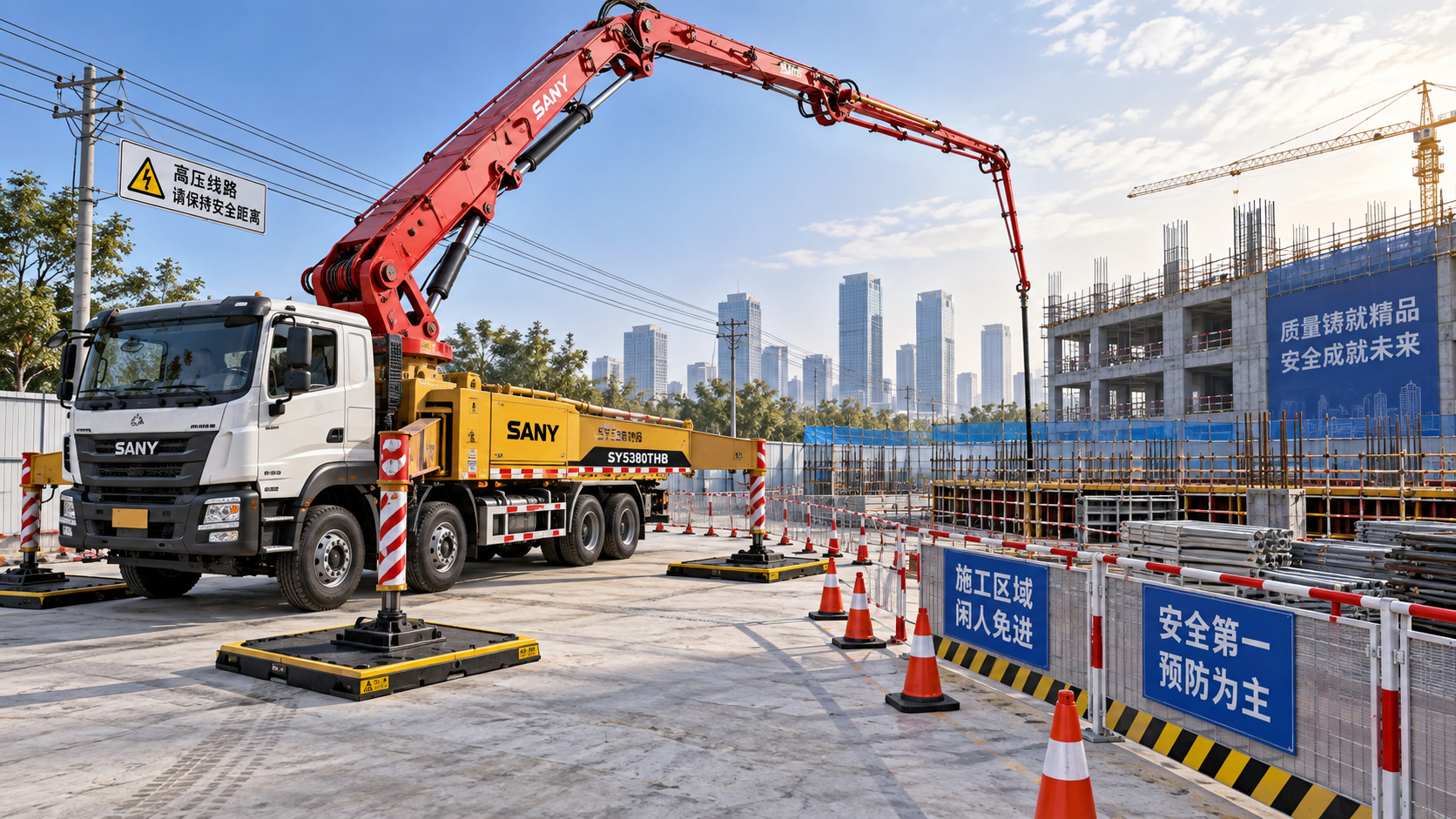
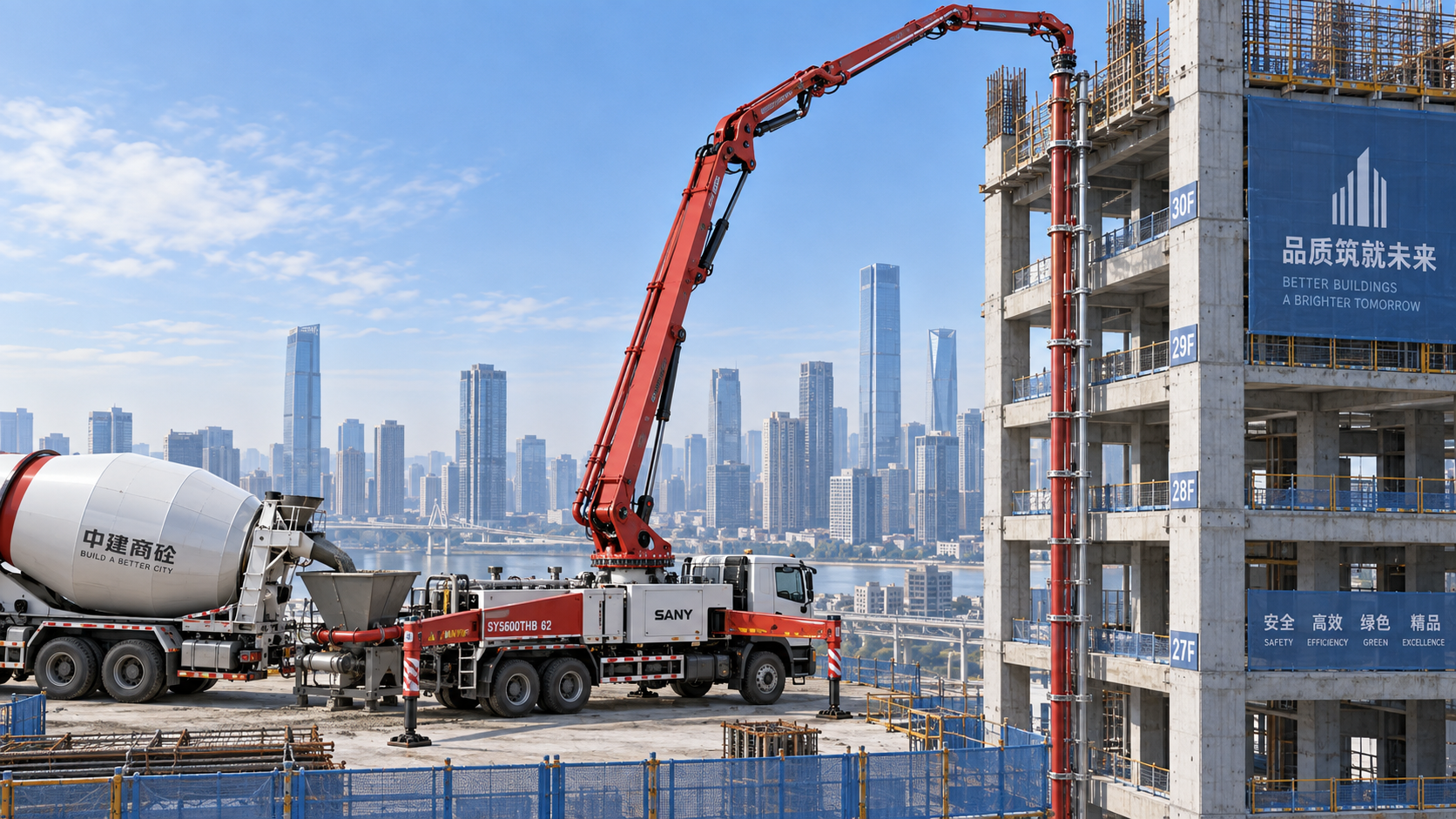
Concrete pump trucks
- Inspect hydraulic oil, filters, and leakage points daily
- Check boom structure, pins, bushings, and weld areas
- Monitor wear parts such as delivery pipes, elbows, and spectacle plates
- Test lubrication circuits and hopper cleaning effectiveness
Concrete mixer trucks
- Check drum blade wear and residual buildup
- Inspect water system, chute movement, and reduction gearbox
- Confirm tire condition, brake response, and frame integrity
- Clean the drum consistently to avoid hardened concrete accumulation
Concrete batching plants
- Calibrate weighing systems and moisture sensors regularly
- Inspect conveyor belts, rollers, motors, and gear units
- Maintain dust collectors, air compressors, and pneumatic valves
- Clean mixer shafts, blades, discharge gates, and cement silos
Rotary drilling rigs and piling machinery
- Inspect Kelly bars, mast alignment, and drilling tools
- Track hydraulic pressure, swing function, and winch behavior
- Check track systems, undercarriage wear, and structural fasteners
- Review vibration or static pressing performance for irregular load signs
Maintenance Scheduling Methods That Reduce Breakdowns
An effective concrete machinery maintenance guide should combine time-based, usage-based, and condition-based maintenance instead of relying on one method alone.
- Daily checks: leaks, fluids, abnormal noise, visible cracks, safety devices, and cleanup status.
- Weekly checks: lubrication points, fastener torque, filter condition, wear part measurement, and electrical terminals.
- Monthly checks: sensor calibration, hydraulic sampling, alignment review, and brake or drive system testing.
- Seasonal checks: cooling system, battery performance, weather sealing, and startup readiness for heat or cold.
Usage hours are especially important for pumps, rigs, and batching mixers operating under continuous loads.
Condition signals should also guide service decisions.
Examples include rising oil temperature, pressure fluctuation, excessive vibration, slow response, increased power draw, and unusual metal particles in filters.
Common Failure Sources and Practical Prevention Measures
Most failures in concrete equipment are not sudden events.
They usually begin as ignored contamination, poor cleaning, delayed parts replacement, or incomplete inspection after a demanding shift.
This is where a concrete machinery maintenance guide becomes highly practical.
It standardizes decisions, reduces guesswork, and supports consistent service quality across multiple sites and machine categories.
Documentation, Digital Tracking, and Team Discipline
Even the best concrete machinery maintenance guide fails without reliable records.
Service logs should capture operating hours, fault symptoms, replaced components, oil condition, calibration dates, and inspection findings with timestamps.
Digital maintenance tracking improves visibility across the fleet.
It helps identify repeat failures, compare machine reliability, manage spare inventory, and support warranty or compliance documentation.
Short feedback loops also matter.
When field observations are shared quickly, cleaning issues, abnormal noises, and performance drift are less likely to be overlooked.
Action Path for Stronger Maintenance Performance
To put a concrete machinery maintenance guide into daily use, start with the highest-failure components and the most heavily utilized machines.
- Build machine-specific inspection sheets
- Set daily, weekly, and monthly service intervals
- Track wear parts with measurable replacement thresholds
- Use oil analysis and calibration records for trend review
- Review breakdown history and update preventive tasks regularly
A practical concrete machinery maintenance guide is not only about servicing equipment.
It is about protecting project continuity, concrete quality, foundation safety, and the long-term value of critical construction assets.
With disciplined inspection, clean documentation, and timely intervention, breakdown frequency can fall significantly while equipment reliability remains strong under real field pressure.

Industry Briefing
Get the top 5 industry headlines delivered to your inbox every morning.