
Construction machinery innovation trends reshaping fleet uptime

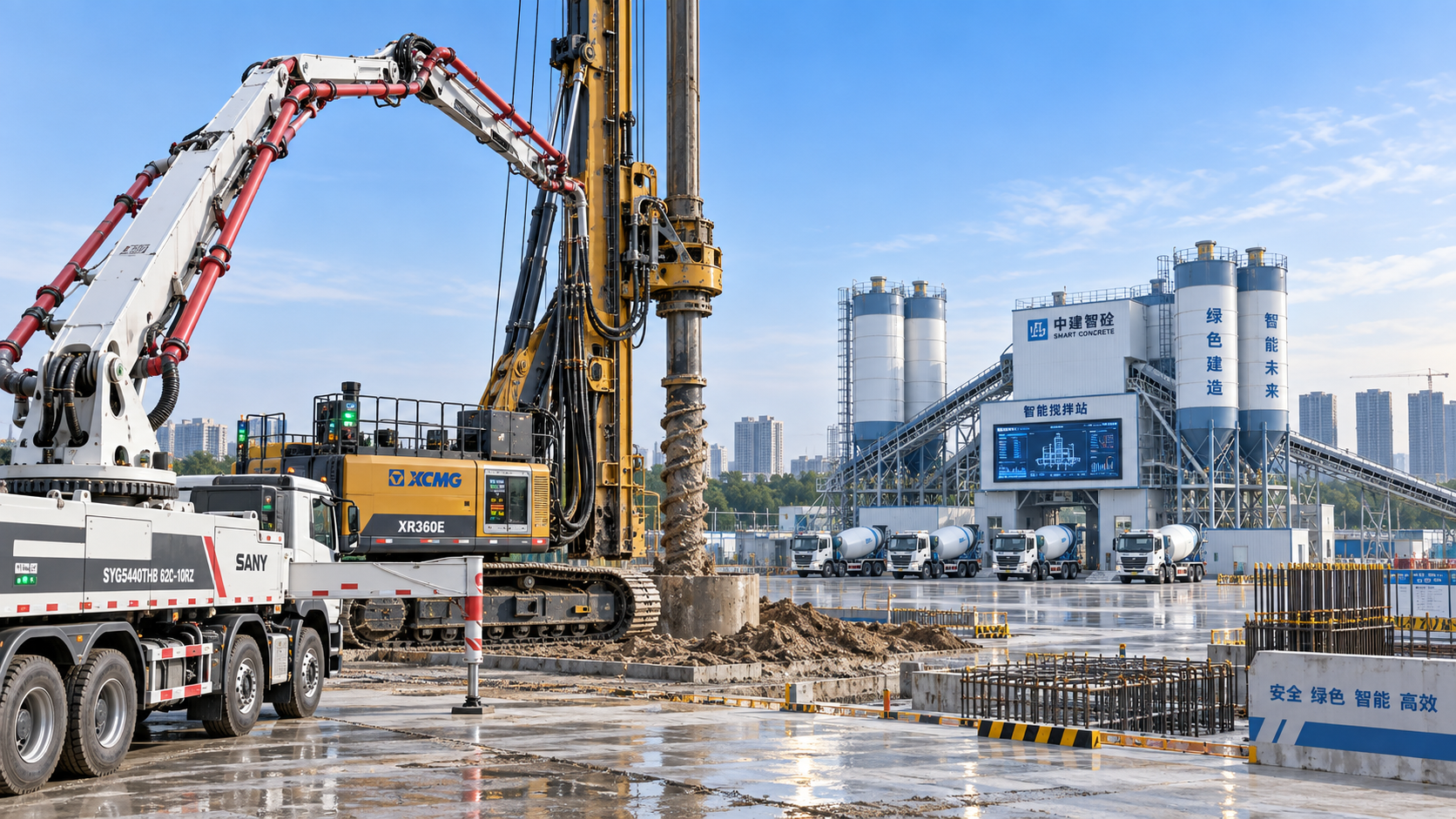
A concrete pour is scheduled, the crew is in place, trucks are arriving, and the pump truck develops an intermittent hydraulic fault. Or a rotary drilling rig reaches a variable rock layer and begins showing abnormal torque behavior while the pile sequence is already committed. In both situations, the immediate problem is not simply a machine that needs repair. It is lost production time, disrupted deliveries, idle labor, changing material conditions, and a greater chance that a recoverable issue becomes a schedule event.
Construction machinery innovation trends are reshaping fleet uptime by moving maintenance decisions earlier, connecting machine condition to site operations, and reducing the number of failures discovered only after equipment has stopped. For teams running concrete and deep-foundation equipment, the most useful innovations are not necessarily the most visible ones. The real value comes from systems that help planners identify wear, operating stress, material flow problems, energy constraints, and operator-related risks before they interrupt critical work.
Uptime is becoming an operational planning issue
Traditional fleet management often separates equipment maintenance from production planning. A workshop tracks service intervals, while the project team tracks pour windows, drilling progress, pile installation rates, and delivery milestones. That division becomes fragile when a single pump truck, batching plant, mixer truck, drilling rig, or piling machine is operating near its capacity limit.
Connected equipment is narrowing that gap. A machine can now provide a more useful picture than a basic engine-hour record: pressure fluctuations, hydraulic oil temperature, battery state, mixer drum behavior, boom movement, drilling torque, fuel use, component alarms, and idle time can all indicate whether the asset is still suitable for the next task. The goal is not to create more dashboard activity. It is to answer a practical question before the shift begins: Can this machine complete the planned work without creating an avoidable interruption?
This changes the way uptime should be measured. Availability alone can be misleading. A rig may be technically available but unable to sustain expected penetration in hard rock. A pump truck may start and pass a basic inspection yet be unsuitable for a long high-pressure placement because of rising hydraulic temperature or worsening pipeline wear. Reliable fleet planning considers both mechanical readiness and task readiness.
Predictive maintenance is replacing calendar-only servicing
Scheduled servicing remains necessary, especially for safety-critical systems and components with defined replacement intervals. However, fixed schedules do not fully reflect the operating conditions of construction machinery. Two identical units can experience very different wear depending on pumping distance, aggregate characteristics, ambient temperature, drilling depth, soil abrasiveness, operator technique, loading cycles, and idle patterns.
Condition-based maintenance uses machine signals and inspection findings to decide when attention is needed. It is particularly valuable where deterioration develops gradually but failure creates a major production loss. Instead of waiting for a warning light or a breakdown, the maintenance team looks for changes from the machine’s normal pattern.
Signals that deserve attention before a stoppage occurs
- Hydraulic systems: recurring temperature increases, unstable pressure response, slower actuator movement, unusual leakage, or filter contamination can point to a developing problem before a pump, valve, hose, or cylinder fails.
- Concrete pumping equipment: rising pumping pressure for a familiar mix and delivery route may indicate line wear, blockages beginning to form, poor lubrication, or a mismatch between material behavior and the pumping setup.
- Mixer trucks: abnormal drum rotation loads, inconsistent discharge behavior, repeated washout issues, or charging delays can affect both vehicle reliability and concrete quality.
- Rotary drilling rigs: torque spikes, inconsistent crowd force, increased vibration, reduced drilling efficiency, or irregular spoil characteristics may signal tool wear, unsuitable drilling parameters, or changing ground conditions.
- Piling machinery: shifts in vibration response, hydraulic pressure behavior, penetration rate, or alignment performance should be reviewed against pile type, ground resistance, and the intended installation method.
Trend data is more useful than isolated data. A single elevated temperature reading may be caused by a hot day or a temporary workload peak. Repeated temperature elevation under comparable conditions is more meaningful. The same principle applies to drill torque, pumping pressure, battery draw, or fuel consumption. Maintenance planning improves when the team compares current behavior with the unit’s own operating baseline rather than relying only on generic thresholds.
Smart batching plants protect uptime beyond the plant gate
Batching plant innovation is often discussed in terms of accuracy, automation, dust control, or output. Those features matter, but their uptime effect is equally important. A plant that cannot dose materials consistently, verify inventory, or maintain stable moisture correction creates downstream disruption for the entire concrete fleet. Mixer trucks wait, pump crews receive inconsistent material, and site teams face a narrower working window.
Modern weighing, moisture monitoring, automated material handling, and plant-control systems can help operators see where a production issue begins. The useful question is not merely whether the plant produced the scheduled volume. It is whether each batch was produced with stable timing and within the mix parameters required for transport, placement, and finishing.
For example, when pumpability changes during a placement, it is tempting to inspect only the pump truck. Yet the cause may sit upstream: changing aggregate moisture, inconsistent admixture dosing, delayed mixing, aggregate segregation, or an adjustment made without considering the delivery route. A connected workflow makes these links easier to investigate. Plant records, mixer dispatch timing, transit behavior, and pump pressure history can be reviewed together instead of being treated as unrelated events.
That does not eliminate the need for experienced operators. It gives them better context. Site conditions, mix design limits, and practical observations remain essential when deciding whether to continue, adjust the process, or hold material before it reaches the placing point.
Electrification changes the maintenance model, not just the power source
Electric mixer trucks and other electrified construction machines are becoming more relevant where emissions, noise, operating costs, or urban access restrictions influence equipment deployment. Their uptime advantage is often described as reduced engine-related maintenance, but that is only part of the decision.
An electric asset introduces a different readiness question: is the machine, charging arrangement, route, auxiliary load, and expected duty cycle aligned with the day’s work? A mixer truck may have fewer conventional powertrain service points, yet its availability still depends on battery condition, thermal management, charging access, payload requirements, traffic patterns, drum operation, and contingency planning. The result is not automatic uptime; it is a different set of constraints that must be planned more deliberately.
The practical lesson is to avoid treating electrification as a direct one-for-one replacement decision. The equipment must be matched to the operating pattern. Short, repeatable urban routes with dependable charging may suit one deployment model, while remote sites, irregular shifts, and long standby periods may require a different mix of assets or supporting infrastructure.
Automation helps most when it reduces variability
Automation is often associated with fewer operators, but its more immediate contribution to fleet uptime is consistency. Repeated tasks performed within controlled parameters place less unpredictable stress on equipment and make abnormal behavior easier to detect.
On concrete pump trucks, boom control assistance, stability monitoring, and system feedback can support safer positioning and reduce unnecessary movement. On batching plants, automated sequencing can reduce dosing variation and prevent avoidable process delays. In drilling, machine guidance and real-time parameter monitoring can help operators maintain planned depth, verticality, torque, and crowd-force ranges while making ground changes visible sooner. For piling work, control systems can improve monitoring of installation behavior where noise, vibration, alignment, and refusal conditions must be carefully managed.
Automation should not be treated as a substitute for site judgment. A system can identify deviation, but it cannot independently resolve every conflict between production pressure, geological uncertainty, material behavior, safety limits, and access constraints. Uptime suffers when automation is used to push a machine past the point where a trained operator would pause and reassess.
Deep-foundation fleets need task-specific condition monitoring
Rotary drilling rigs and piling equipment operate in conditions where the ground itself can change the machine’s wear profile within a short distance. A shift from soft soil to cobbles, fractured rock, groundwater-bearing layers, or hard strata affects tooling, torque demand, vibration, spoil handling, and the time required for each operation. A maintenance system that only records hours cannot explain whether a rig is being operated within an appropriate range.
Project leaders should connect drilling records with maintenance records. When tool consumption increases, hydraulic temperatures rise, or productivity falls, review the geology encountered, bore diameter, depth, tooling selection, drilling fluid or casing requirements, and operating method. The answer may be a component repair, but it may also be a tooling mismatch or a sequencing decision that is forcing the rig into inefficient work.
Similar logic applies to piling machinery. Repeated high-load operation, unexpected refusal, or unusual vibration behavior should not be dismissed as ordinary site resistance. The team needs to distinguish between a machine-condition issue, a pile-related issue, and a ground-condition issue. That distinction protects uptime because it prevents the wrong response: servicing a machine when the installation method needs adjustment, or continuing to force installation when the equipment requires inspection.
From machine alerts to decisions that crews can use
More sensors do not automatically create better uptime. A fleet can become less effective when alarms are poorly prioritized, fault codes are not linked to work orders, or site teams receive data without clear responsibility for acting on it. The useful operating model is simple: define what matters, decide who reviews it, and establish what action follows each type of warning.
A practical escalation process may separate conditions into three groups:
- Monitor during normal operation: a minor variance with no immediate safety or production effect, recorded for trend review.
- Inspect before the next critical task: a recurring alert, unusual pressure pattern, reduced performance, or visible wear that could affect the next pour, drilling shift, or piling sequence.
- Remove from service or obtain technical assessment: a condition involving structural stability, hydraulic integrity, electrical safety, braking, boom function, rig stability, abnormal vibration, or other safety-critical behavior.
That structure prevents two damaging extremes: ignoring warnings until failure occurs, and pulling equipment from service every time a non-critical alert appears. It also makes handovers more reliable. The night shift should not have to reconstruct a machine’s condition from verbal fragments, especially when the next activity has tight timing or limited recovery options.
Procurement decisions are shifting toward lifecycle visibility
When evaluating new equipment, purchase price and rated capacity still matter, but they do not explain how the asset will behave across its working life. Fleet uptime depends on service access, component standardization, diagnostic capability, parts planning, software support, training requirements, and whether the available data can be used by the people responsible for maintenance and production.
Before selecting a machine or digital system, it is worth testing the proposal against the actual operating environment. Can the system show the condition indicators relevant to the intended work? Are alerts understandable enough to support a shift supervisor’s decision? Can maintenance history be connected to usage conditions? Does the technology depend on site connectivity that may not be reliable? Are operators able to override automated settings safely when conditions demand it?
The strongest construction machinery innovation trends are therefore not isolated features. They are changes in how equipment, materials, operators, maintenance teams, and project schedules are connected. A fleet becomes more dependable when data identifies emerging stress, automation reduces avoidable variability, and operational plans account for the real limits of each machine. That is how uptime becomes a controlled project variable rather than a last-minute recovery exercise.

Industry Briefing
Get the top 5 industry headlines delivered to your inbox every morning.