
Construction Equipment Intelligence in Fleet Planning

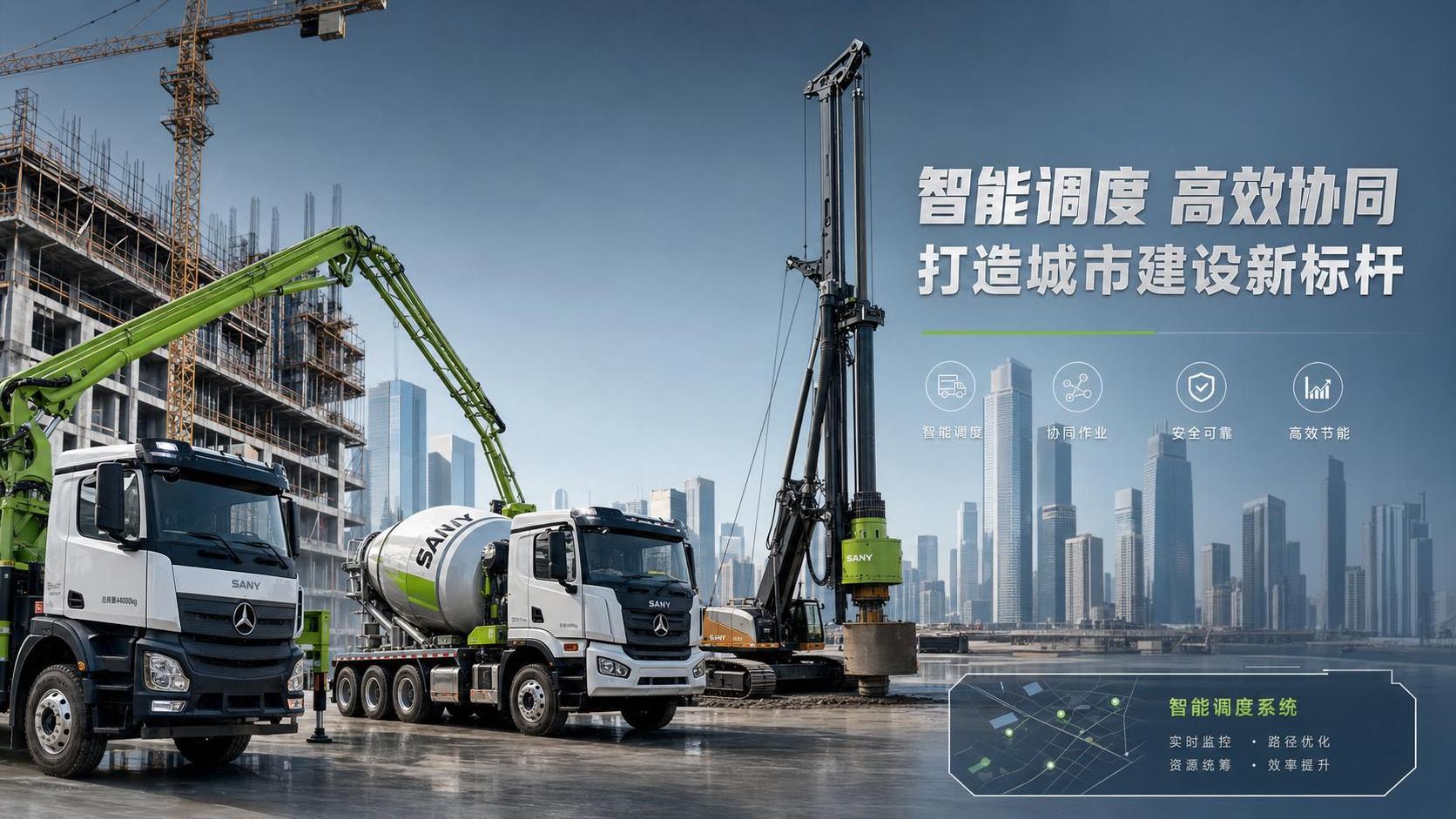
Construction equipment intelligence starts with how the fleet is actually used
Construction equipment intelligence changes fleet planning because heavy equipment rarely works under one stable condition.
A pump truck serving a dense city tower faces different pressure, access, and compliance limits than one assigned to broad industrial slabs.
The same applies to rotary drilling rigs, piling systems, mixer trucks, and batching plants.
What looks efficient on a specification sheet can become expensive when rock conditions shift, haul routes lengthen, or emissions rules tighten.
That is why construction equipment intelligence matters most in fleet planning, not only in daily dispatch.
It helps compare utilization patterns, maintenance exposure, fuel or energy choices, and the lifecycle fit of each asset.
Within concrete and deep foundation work, this judgment is especially important.
DFCS follows these equipment categories closely because they shape both project pace and structural reliability.
Its intelligence perspective is useful precisely because modern fleets now sit between hydraulic performance, geological uncertainty, and low-carbon transition targets.
Why similar projects still create different fleet decisions
Two projects may both be labeled high-rise or infrastructure, yet their equipment logic can be completely different.
One may demand long boom reach, vibration control, and narrow-site maneuvering.
Another may depend more on batching consistency, uninterrupted mixer circulation, and round-the-clock reliability.
Construction equipment intelligence works when it connects site conditions with asset behavior over time.
In actual use, the better question is not which machine is strongest.
The better question is which fleet mix remains stable under changing loads, schedules, restrictions, and service intervals.
For deep foundation fleets, geology can reset everything.
For concrete systems, delivery rhythm and material consistency often decide whether capacity is real or theoretical.
This is where intelligence-based planning becomes more valuable than one-time purchasing logic.
A practical comparison of scenario differences
The table below shows why construction equipment intelligence cannot rely on generic fleet assumptions.
When pumping fleets serve vertical projects, stability matters more than headline reach
High-rise and restricted-site pours usually expose the limits of simplified planning.
Many teams focus first on boom length.
In reality, construction equipment intelligence places similar weight on vibration damping, hydraulic response, setup footprint, and restart reliability.
A longer boom is useful only when the machine remains stable under repeated cycles and awkward placement angles.
This is one reason DFCS tracks non-linear boom control and pumping behavior so closely.
On towers and elevated structures, fluid delivery consistency often has more operational value than nominal maximum reach.
The supporting fleet matters too.
If mixer trucks cannot maintain arrival rhythm, pump efficiency drops even when the pump itself is technically capable.
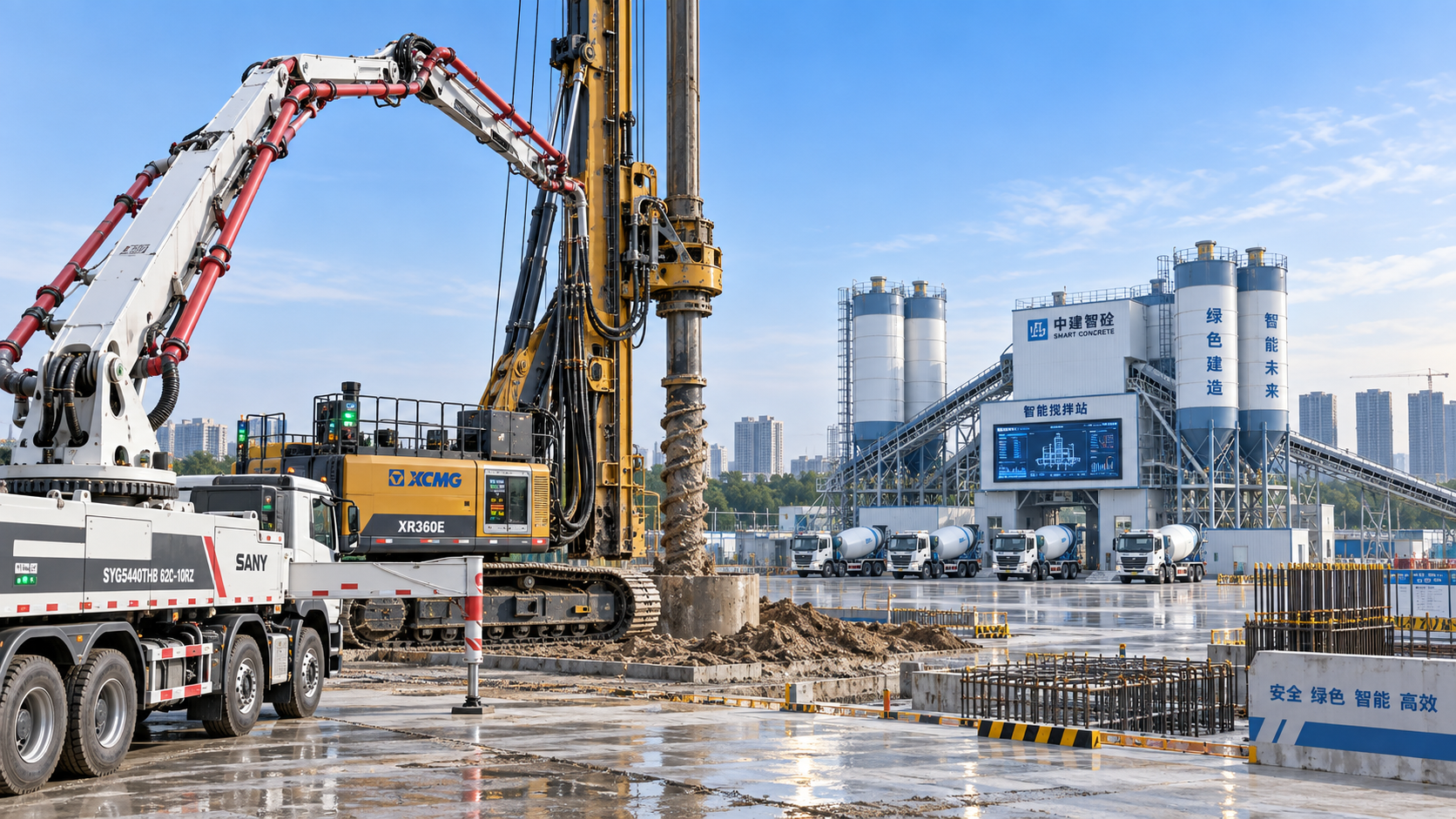
That is why construction equipment intelligence should assess pump trucks, mixers, and batching sources as one chain.
For vertical concrete work, the weakest interface often defines the true fleet capacity.
Batching and mixer decisions change when continuity becomes the real risk
Large slabs, tunnels, transport corridors, and industrial campuses create a different planning pattern.
Here, the pressure is less about reach and more about uninterrupted supply.
Construction equipment intelligence in these settings should examine weighing accuracy, enclosure design, material handling rhythm, and dispatch buffering.
A smart batching plant with precise IoT weighing can reduce quality deviation, but that advantage fades if aggregate moisture swings are ignored.
Likewise, electric or lightweight mixer trucks may lower operating cost, yet route distance, charging windows, and ambient temperature still shape practical value.
The better judgment is to compare delivery cycle stability, not simply fuel type.
In greener concrete programs, enclosed dust removal and emissions compliance become strategic rather than optional.
Construction equipment intelligence helps show whether replacement demand comes from productivity pressure, regulatory pressure, or both.
What usually deserves closer review
- Actual batching throughput during peak hours, not only nameplate output.
- Mixer turnaround time under traffic, weather, and site queue variation.
- Dust, washout, and enclosure systems against local environmental thresholds.
- Maintenance staffing and spare part access for continuous operation windows.
Foundation work becomes a different equation once geology leads the decision
Rotary drilling rigs and piling machinery are often compared by size classes first.
That is useful, but rarely sufficient.
In deep foundation work, construction equipment intelligence should start with formation variability, hole depth, casing method, and wear exposure.
Hard rock, cobbles, quicksand, and mixed strata do not punish machines in the same way.
A drilling rig that performs well in one geology may become maintenance-heavy in another because bit consumption, torque loading, and retrieval frequency shift.
DFCS pays attention to wear modeling for this reason.
Fleet planning improves when wear, downtime, and tooling change intervals are treated as financial variables, not workshop details.
Urban piling adds another layer.
Where vibration and noise restrictions are strict, hydraulic static pressing may fit better than methods that appear faster on open sites.
Construction equipment intelligence helps avoid the mistake of treating all pile installation conditions as interchangeable.
Common misreadings that distort fleet planning
Several errors appear repeatedly when fleet choices are made from isolated data points.
- Choosing by peak specification, while ignoring access limits, setup time, or material flow constraints.
- Comparing purchase price, while overlooking wear parts, downtime exposure, and operator learning curves.
- Assuming similar projects need identical fleets, despite different geology, permits, and logistics.
- Treating electrification as a simple replacement path without checking charging, payload effect, and duty cycles.
- Reviewing machines separately, while the real bottleneck sits between batching, transport, pumping, and foundation sequencing.
These misreadings are exactly where construction equipment intelligence adds value.
It turns scattered equipment data into a more realistic view of project behavior.
A more reliable way to match fleets with real conditions
A useful planning method is to define fleet choices around scenario thresholds rather than broad categories.
For concrete systems, those thresholds may include delivery interruption tolerance, pour height, site access, and environmental control demands.
For deep foundation fleets, they usually include formation hardness, pile depth, spoil handling, vibration limits, and tool replacement cycles.
Construction equipment intelligence becomes practical when each threshold is tied to an asset response.
That makes investment decisions more resilient, especially when project portfolios change across regions.
DFCS is relevant in this context because it links market movement, technical evolution, and compliance pressure across the core equipment families.
The result is not a generic ranking of machines.
It is a clearer framework for deciding which fleet mix can support reliability, low-carbon targets, and long-term asset productivity.
The next step is to build a scenario-based equipment standard
Construction equipment intelligence works best when it becomes a repeatable internal standard.
Start by mapping the most common job conditions across concrete delivery, batching, drilling, and piling activities.
Then compare which constraints actually drive cost, delay, or compliance risk.
From there, define the parameters that must be checked before expanding or replacing the fleet.
That usually includes duty cycle, site geometry, geology, emissions rules, maintenance support, and replacement timing.
The value of construction equipment intelligence is not just better data.
It is better judgment under real operating pressure.
When fleet planning reflects actual scenarios instead of abstract capacity, investment decisions tend to stay useful much longer.

Industry Briefing
Get the top 5 industry headlines delivered to your inbox every morning.