
Heavy Equipment Electrification Trends in 2026

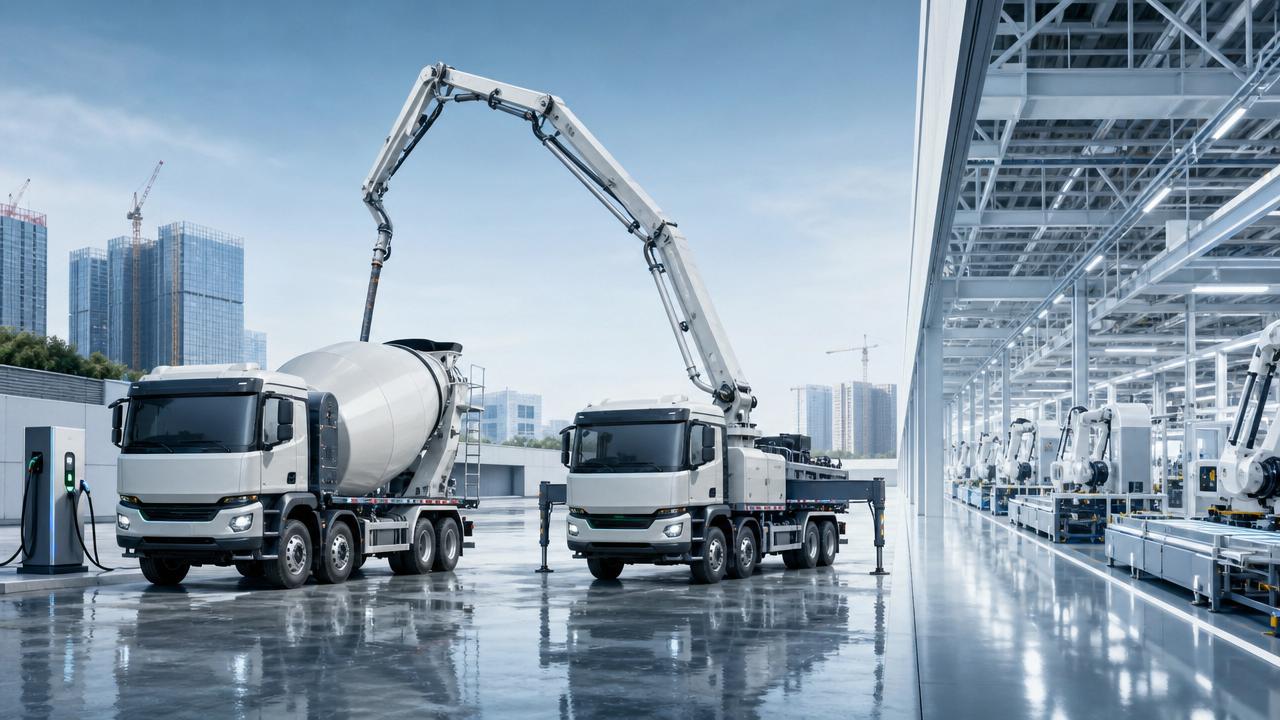
Heavy Equipment Electrification Trends in 2026: What Is Really Changing?
Heavy equipment electrification is moving from pilot projects to procurement priority in 2026.
It is reshaping how construction leaders evaluate concrete pumps, mixer trucks, batching plants, rotary drilling rigs, and piling machinery.
The shift is no longer only about emissions compliance.
It now affects lifecycle cost, jobsite productivity, tender competitiveness, and readiness for low-carbon mega-infrastructure projects.
This article answers the practical questions behind heavy equipment electrification in 2026.
1. What does heavy equipment electrification mean in 2026?
Heavy equipment electrification means replacing diesel-dominant powertrains with battery-electric, plug-in hybrid, grid-connected, or electric-hydraulic systems.
In 2026, the definition is broader than simply adding batteries.
It includes charging infrastructure, energy management software, regenerative hydraulics, telematics, and low-noise operating strategies.
For concrete and foundation equipment, electrification has a special meaning.
Machines must deliver extreme torque, stable pumping pressure, and predictable uptime under harsh site conditions.
Concrete pump trucks need electric or hybrid systems that support boom movement, hydraulic pumping, and precise output control.
Concrete mixer trucks require enough battery capacity for transport, drum rotation, and urban delivery cycles.
Batching plants benefit from electrified drives, enclosed material handling, smart weighing, and grid-connected automation.
Rotary drilling rigs and piling machinery face tougher challenges because peak loads are severe and geology is unpredictable.
Therefore, heavy equipment electrification in these categories often begins with hybrid platforms and auxiliary electrification.
Key idea
The 2026 trend is not one universal electric machine.
It is a system-level transition matched to duty cycle, energy access, site restrictions, and total ownership cost.
2. Why is heavy equipment electrification accelerating now?
Heavy equipment electrification is accelerating because regulation, project bidding, and operating economics are converging.
Many cities are tightening emission limits for public works, enclosed sites, and dense urban construction zones.
Low-emission zones are also influencing equipment selection before a machine reaches the jobsite.
Mega-projects increasingly include carbon reporting, noise restrictions, and environmental performance scoring in tender documents.
Electrified equipment can support stronger compliance evidence during prequalification and technical review.
The cost argument is also changing.
Electric drives reduce fuel exposure, simplify some maintenance tasks, and enable more precise energy monitoring.
For high-utilization equipment, energy savings may offset higher acquisition prices over the machine lifecycle.
Battery prices, high-voltage components, and power electronics continue to improve.
Meanwhile, digital fleet platforms make energy usage visible across shifts, operators, and project phases.
Main acceleration factors
- Stricter zero-emission and low-noise construction policies.
- Tender scoring that rewards measurable carbon reduction.
- Rising fuel uncertainty and demand for predictable operating costs.
- Better batteries, charging systems, and electric-hydraulic control.
- Greater acceptance of telematics-based lifecycle evaluation.
This explains why heavy equipment electrification is becoming a procurement filter, not a marketing slogan.
3. Which equipment categories will be affected most?
The impact of heavy equipment electrification varies by duty cycle, mobility requirement, idle time, and power demand.
Equipment with repeated routes, predictable shifts, or fixed operating locations usually electrifies faster.
Concrete mixer trucks
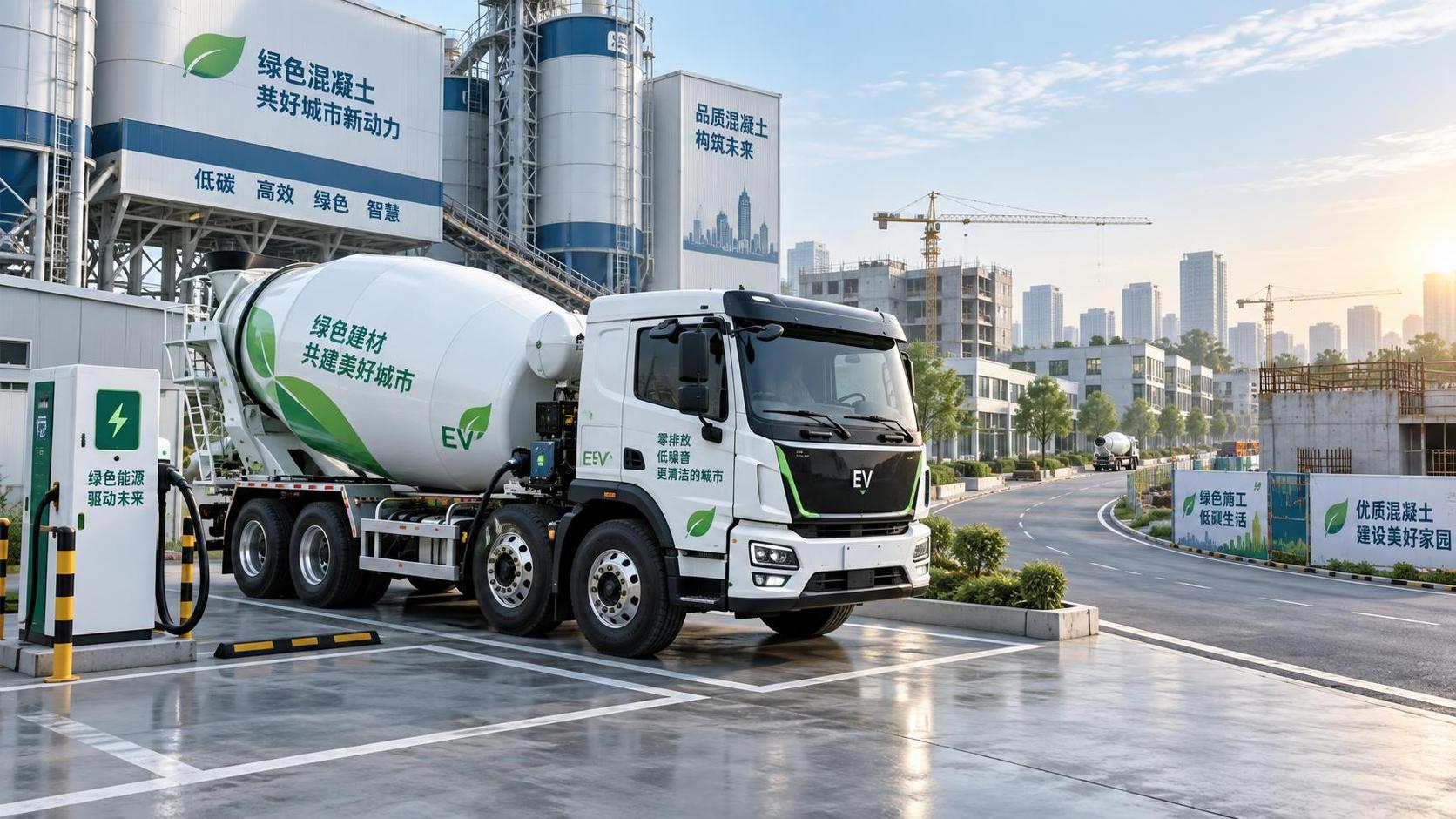
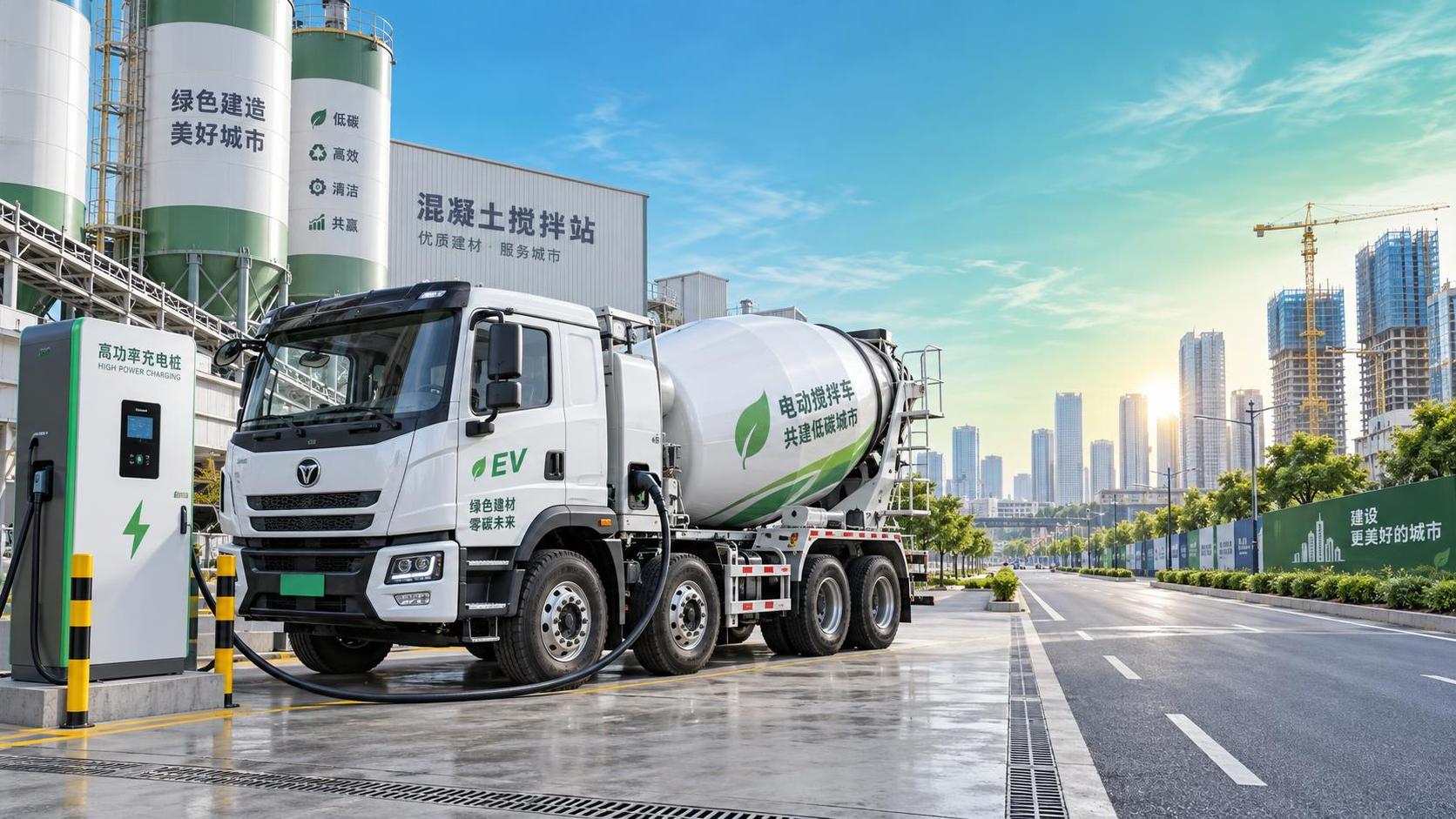
Mixer trucks are among the strongest candidates for electric adoption.
They often operate on repeat urban routes between batching plants and construction sites.
Electric mixers can reduce noise during early-morning delivery and lower emissions near residential districts.
Drum rotation electrification is especially valuable because it reduces idle fuel consumption.
Concrete batching plants
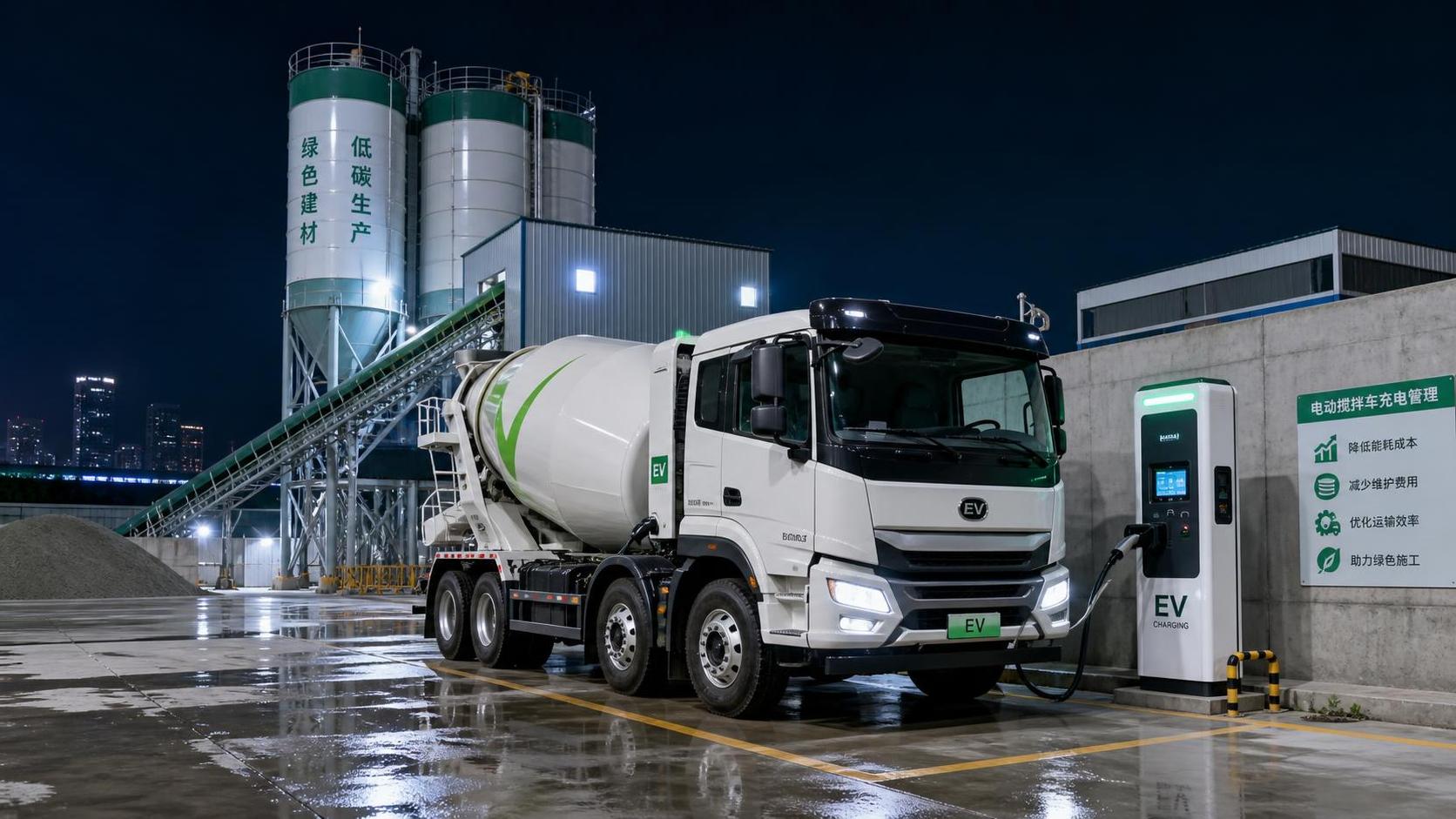
Batching plants benefit from grid power, automated weighing, enclosed conveyors, and intelligent dust suppression.
Here, heavy equipment electrification connects directly with green concrete production and traceable material quality.
Smart plants can integrate solar power, storage, and demand-response systems where grid conditions allow.
Concrete pump trucks
Pump trucks face high power peaks, especially during long-distance or high-rise concrete delivery.
Hybrid and plug-in systems may dominate before fully electric platforms become common at larger capacities.
Electric auxiliary systems can improve boom control, reduce site noise, and support precise pumping performance.
Rotary drilling rigs and piling machinery
Deep foundation machines are harder to electrify because torque demand changes with soil, rock, and pile depth.
However, urban piling projects increasingly value low vibration, low noise, and reduced local emissions.
Electric-hydraulic subsystems, grid-assisted operation, and hybrid energy buffers will gain attention in 2026.
4. How should electrified equipment be evaluated before adoption?
Heavy equipment electrification should be evaluated through working reality, not nameplate specifications alone.
The best starting point is a duty-cycle map.
This map records distance, load, idle time, peak power, shift duration, charging windows, and site access limits.
Battery capacity matters, but energy recoverability matters too.
Regenerative braking, optimized hydraulics, and intelligent idle control can reduce required battery size.
Charging strategy is another critical variable.
Depot charging suits mixer trucks with fixed return points.
Grid-tied operation may suit batching plants and some stationary foundation equipment.
Mobile fast charging can help remote sites, but it adds planning complexity and capital cost.
Evaluation checklist
- Confirm real duty cycle instead of relying on average daily estimates.
- Compare energy cost, maintenance cost, downtime risk, and resale assumptions.
- Verify charging access, transformer capacity, and site electrical safety rules.
- Review battery warranty, thermal management, and degradation conditions.
- Check whether telematics data supports carbon reporting and tender documentation.
A practical evaluation prevents heavy equipment electrification from becoming an expensive mismatch.
5. What risks and misunderstandings should be avoided?
Heavy equipment electrification brings strong advantages, but several misunderstandings create poor decisions.
The first mistake is assuming every machine should become fully battery-electric immediately.
Some equipment categories need hybrid stages because their load profiles remain too severe or unpredictable.
The second mistake is ignoring site power.
A high-performance electric machine can fail operationally if charging queues disrupt concrete delivery or piling schedules.
The third mistake is comparing purchase price only.
Electrified platforms should be assessed through total cost of ownership and project acceptance value.
The fourth mistake is underestimating training needs.
High-voltage safety, charging discipline, fault diagnosis, and software updates require structured management.
Common risk comparison
The strongest electrification strategies are phased, measured, and linked to project requirements.
6. How will heavy equipment electrification affect bidding and lifecycle economics?
Heavy equipment electrification changes bidding because equipment performance is now connected with environmental proof.
Low-carbon infrastructure projects often request emissions data, noise-control plans, and equipment compliance documentation.
Electrified fleets can provide stronger evidence when telematics records energy use and operating hours accurately.
Lifecycle economics depend on utilization.
High-use urban mixer trucks may recover additional cost faster than rarely used specialized equipment.
Batching plants can gain value through stable electric operation, dust control, automation, and quality consistency.
Pump trucks and foundation machines may need selective electrification to balance power density and commercial return.
Decision table for 2026 planning
When these indicators align, heavy equipment electrification becomes a strategic asset rather than a compliance expense.
FAQ Summary: Quick Answers on Heavy Equipment Electrification
Conclusion: How to prepare for the 2026 electrification wave
Heavy equipment electrification in 2026 is a practical transformation of machines, jobsites, and project economics.
The strongest opportunities appear where duty cycles are measurable and charging can be planned with confidence.
Concrete mixer trucks and batching plants will likely advance fastest.
Concrete pump trucks, rotary drilling rigs, and piling machinery will move through more selective electrification pathways.
A disciplined roadmap should begin with data, not assumptions.
Map actual workloads, calculate total ownership cost, verify charging options, and define carbon-reporting requirements.
Then compare full-electric, hybrid, and electric-auxiliary solutions by application.
For deep foundation and concrete systems, the next advantage belongs to integrated intelligence.
Machines must pump higher, drill deeper, place piles quieter, and document every efficiency gain.
Heavy equipment electrification is therefore not only a technology trend.
It is becoming a new foundation for low-carbon construction competitiveness.
Industry Briefing
Get the top 5 industry headlines delivered to your inbox every morning.